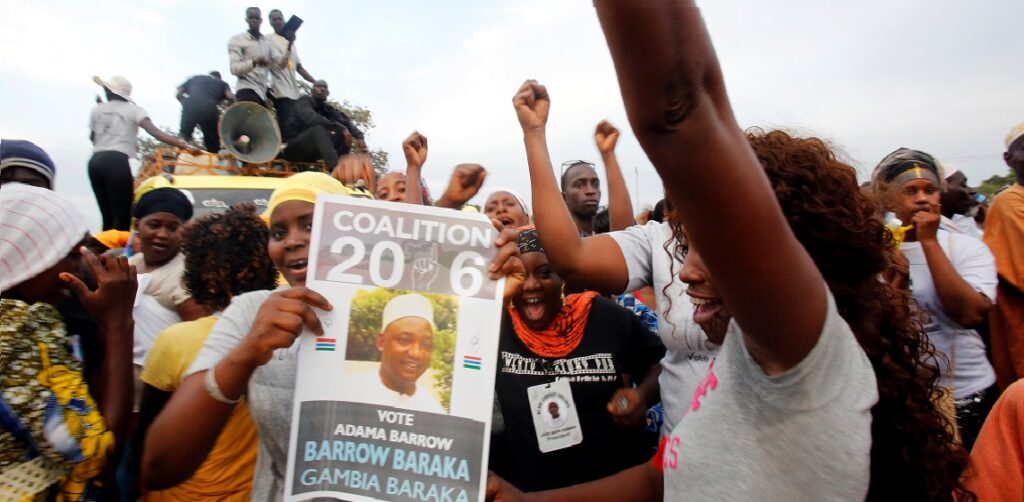
In The Gambia, political ambition often arrives in borrowed, ill-fitting, ill-timed, and poorly prepared clothing.
Every election season, a parade of hopefuls emerges from obscurity, forming parties overnight, joining coalitions for relevance, or angling for cabinet seats. Their sudden visibility is not a sign of readiness; it is a symptom of opportunism.
The presidency is not a raffle prize; it is the pinnacle of public trust. Serious contenders do not wait until the eve of elections to declare their intentions, which is why many of these individuals perform poorly.
However, remember that every incredible journey starts with a single step.
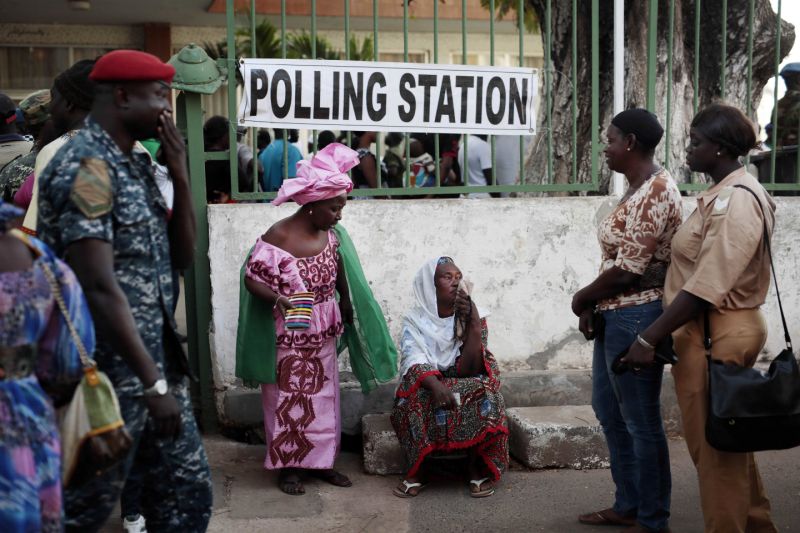
Starting small is not a sign of weakness but a testament to your commitment and dedication. It is the first step towards a successful political career, a journey that requires patience and long-term planning.
This patience and long-term planning will guide you, reassuring you that success is not immediate but achievable. Remember, every incredible journey starts with a single step.
As 2026 approaches, a wave of youthful energy is stirring in The Gambia. Many educated and professional young Gambians are considering forming political parties, and others are busy with alliance and coalition building. This is not foolishness; it is a signal. However, signals must be followed by substance.
It is not merely about seizing power or harboring oversized ambitions; it is about learning from the cautionary tales of past parties.
A good politician must be humble, loyal to the people, and resistant to division. This humility and loyalty will anchor you, keeping you connected and empathetic to the community’s needs. Civic engagement is not just a hashtag; it is a habit. Understanding the political landscape is crucial. Serious contenders are already mobilising.
The NPP under Adama Barrow, the UDP led by Ousainou Darboe, and the intellectual trio of PDOIS Halifa Sallah, Sidia Jatta, and Sam Sarr are laying the groundwork for The Gambia through party ideologies, programs, and visions. Talib Bensouda’s Unite Movement for Change may also emerge as a significant force.
The rest? They are “sosalasso” parties, lacking a clear roadmap or ideology, that only generate noise. They fund the commotion, deny the ambition, and hope the crowd will follow the echo.
Understanding this political terrain will keep you informed and prepared, allowing you to face the challenges and opportunities that come your way.
I welcome the ambition of educated youth and elite professionals with impressive credentials. However, let us be clear: power does not concede to ambition, credential obsession, or the allure of money without a conscience. It yields only to grassroots organisation, effective political communication, credibility, and sacrifice.
Politics is built from the bottom up. It is not a sprint to the State House; it is a pilgrimage through communities, through service, and through earning trust. Numbers dictate destiny, and visibility is currency. If the people do not know you, or if those they trust do not vouch for you, you are likely to fail spectacularly.
For example, Senegalese populist politician Ousmane Sonko did not stumble into prominence; he started small with conviction and a vision. He contested a parliamentary seat in 2017, served as a member of the National Assembly from September 14, 2017, until September 12, 2022, and became the mayor of Ziguinchor in January 2022 after winning the local elections that month.
He built a movement and earned 15% of the vote in his second attempt. He was not a part-time politician; he was a populist with eloquence and practical communication skills. He owned a newspaper and was active on social media. He was a dedicated, full-time politician.
In contrast, consider Adama Barrow’s rise in 2016, backed by a coalition of seasoned opposition leaders who defeated a 22-year dictatorship.
In the 2021 election, Barrow won a landslide victory due to the fragmentation of the opposition and the full utilisation of the incumbent’s power through a coalition of various political parties, including the Yahya Jammeh APRC faction and the NRP led by Minister Hamat Bah. This election was a turning point in Gambian politics, demonstrating the power of coalitions and the importance of a united opposition.
Barack Obama did not leap from obscurity to the Oval Office. His 2004 DNC speech was not magic; it was the result of building momentum. Before that, he was focused on earning trust, establishing credibility, and mastering the art of public persuasion.
We must forget romantic notions of godfather politics. Community leaders and opinion leaders matter. They are influential figures in their communities, often with a large following and the ability to sway public opinion.
You need their blessing or at least their neutrality. Respect for community leaders is not just a formality; it signifies your commitment to serving the people and understanding their needs. Eat the banana before the plantain.
Start small. Become a community leader and participate in grassroots services. Politicians should understand the terrain. Many inexperienced politicians have ambition without a solid political base.
For example, in the 2021 presidential elections, Essa Faal, a resident of Banjul, could not win Half Die with his vote tally. He should have consulted late Pap Cheyassin Secka and his National Liberation Party. Love does not win elections.
The Gambia needs more than ambitious politicians; it requires integrity, history, and selfless service. Halifa Sallah embodies these qualities, while many newcomers do not. If they cannot lead, they should support those who can.
As December 5, 2026, approaches, where is the machinery to challenge the incumbent? Where is the vision? Where are the programs and policies that serve as an alternative to the current government?
However, the “Sosalasso parties” excel at neutralising opposition but fail to deliver their promises. Their wealth may buy airtime and create echo chambers on social media, but it cannot purchase trust. They should instruct their unruly supporters to respect Adama Barrow. He may be independent, but he is not invisible.
The Gambia must confront its existential challenges. Major political parties like the NPP, UDP, PDOIS, and the youth-driven Unite Movement for Change have the best chance to redirect the nation. Let the rest either align themselves or fade away. We await the day when the “Sosalasso politicians” mount the podium and cry, “Save the Gambia!”
May their names be etched in gold—if not in the streets, then in the memory of those who dared to dream.
In the landscape of Gambian politics, coalitions are often seen as a solution to fragmentation, a call for unity, and a symbol of democratic maturity. However, a paradox emerges: an abundance of alliances can lead to a lack of strategic coherence. Instead of undermining the incumbent’s power, excessive or poorly conceived coalitions frequently enhance it. It is vital to approach coalitions with a strategic mindset, ensuring they promote the common good rather than individual ambitions.
This paradox is not exclusive to The Gambia; it appears across Africa. For instance, in Kenya, the 2018 “handshake” between President Uhuru Kenyatta and opposition leader Raila Odinga aimed to foster stability but ended up blurring political distinctions, diluting opposition messaging, and strengthening the incumbent’s hold on power.
Similarly, in South Africa, the 2024 Government of National Unity between the ANC and DA intended to stabilise governance. However, ideological disagreements and fragile provincial coalitions led to frequent leadership changes, undermining credibility and confusing the electorate.
The Gambia offers a cautionary tale about this dynamic. In 2016, a grand coalition of seasoned opposition leaders united by purpose and principle successfully defeated Yahya Jammeh’s 22-year dictatorship.
This victory was not accidental; it resulted from strategic unity, ideological clarity, and grassroots mobilisation. However, by 2021, the opposition landscape had fractured due to competing ambitions, personality-driven movements, and socialist parties lacking a clear roadmap, which weakened their collective strength.
Adama Barrow, once the coalition candidate, became the incumbent and capitalised on this disarray. The lesson is clear: unity without strategy amounts to mere noise.
Coalitions should be founded on shared values, not desperation, and based on ideological coherence rather than opportunistic arithmetic. When alliances are hastily formed just months before elections, they often collapse quickly, leaving voters disillusioned and resulting in low turnout, ultimately benefiting the incumbent.
Moreover, coalitions can force parties to compromise their core messages. In trying to satisfy everyone, they often fail to inspire anyone. The outcome is a diluted platform, vague promises, and a lack of emotional resonance with the electorate. While voters may conceptually support the alliance, they may struggle to connect with its individual parts, leading to fragmented loyalty and an illusory sense of momentum.
In contrast, movements like PASTEF in Senegal demonstrate the power of incremental growth. Ousmane Sonko did not rely on coalitions to build his base; instead, he began small, contested a parliamentary seat, and established a movement grounded in youth engagement and effective communication. His rise was organic, strategic, and sustainable.
For Gambian opposition parties, the way forward lies not in forming numerous alliances but in strengthening their credibility. They must clarify their ideological positions before creating coalitions, engaging with communities, earning trust, and developing consistent messaging.
They should resist the urge for last-minute unity and instead invest in a long-term strategy. The incumbent benefits when the opposition is fragmented, reactive, and disorganised. To challenge power effectively, emerging politicians must understand that coalitions are not shortcuts but serious commitments that deserve careful consideration.
As December 5, 2026, approaches, the critical question is not how many alliances can be formed but how many can endure. The Gambia deserves more than electoral theatrics; it deserves leadership based on integrity, strategy, and service.
Let the new generation of politicians take note. They should start small, build wisely, and unite with purpose, not panic. Only then can they mount a credible challenge and provide Gambians with the leadership they deserve.
To be an aspiring presidential candidate, start now. Embark on your journey today! Begin by developing a compelling message that resonates with your audience.
Organise engaging lectures, generate excitement, and consider commissioning stunning photographs to capture attention. Let us create headlines and establish a distinguished brand identity.
Remember, effective branding goes beyond Africell; it is about crafting a meaningful presence. Collaborate with PR professionals to refine your strategy. Instead of making vague promises, focus on building a dedicated team that can transform your vision into actionable steps. Engage actively on social media, run targeted advertisements, and host memorable events to ensure you are not just a figurehead!
Greenhorn politicians take inspiration from the U.S. political model by formulating a clear core message, especially around economic issues. Invest in your public image and seek guidance from seasoned advisers.
Make relevant policy statements, showcase your ideas on significant platforms, and gauge public sentiment through polls. Do not wait for the last minute; politics is a serious endeavour. Approach it with intention and enthusiasm, start now! This guidance is on the house; future advice comes with a fee!
By Alagi Yorro Jallow








Recent Comments