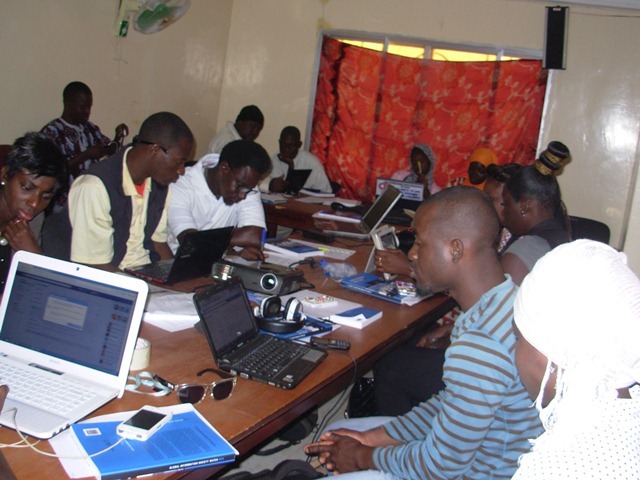
The press in a democracy is not just a mirror reflecting the society, but a magnifying glass, a spotlight, and at times, a scalpel. Its primary function is to question authority, reveal the truth, and serve the public interest.
However, in The Gambia today, a troubling question arises: who is responsible for training our journalists, given that the new generation of journalists is not adhering to the code of conduct and ethics of journalism?
Too often, media houses and practitioners have abandoned their civic mandate in favour of political image-making and propaganda, and sometimes function as activists or PR Consultants. They act not as watchdogs, but as cheerleaders—engaging in personal branding for politicians, echoing their talking points, and amplifying their personas.
This is not journalism. It is “Jaliba journalism”: a performance of praise, repetition, and spectacle that entertains but does not inform. For instance, when a journalist interviews a politician and instead of asking tough questions, praises the politician’s achievements, it is a clear example of ‘Jaliba journalism’.
To invite a politician and party surrogates who masquerade as pundits into your studio is not a privilege; it is a responsibility. It demands tough questions, critical follow-ups, and editorial independence.
However, what we witness instead is a troubling trend: journalists who treat interviews as platforms for flattery rather than scrutiny. The line between activism, journalism, and public relations has blurred, and in many cases disappeared.
Let us be clear: Civic journalism and PR are not interchangeable. Professional journalism is rooted in verification, accountability, and public service. It seeks to uncover facts, challenge narratives, and empower citizens. Public relations, by contrast, is designed to craft strategic messaging, promote personalities, and manage reputations.
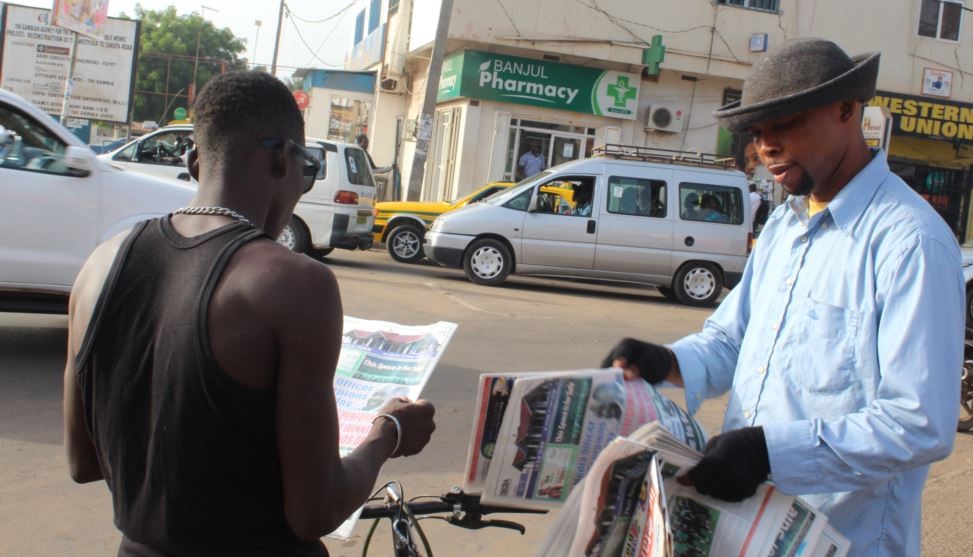
When journalists adopt the tools and tone of PR firms, they betray their profession and mislead their audiences. This confusion is not accidental; it is systemic.
Many media houses lack editorial guidelines, ethical training, and institutional independence. Some operate under financial duress, making them vulnerable to political patronage and paid propaganda. In such environments, the journalist becomes a broker of access, not a guardian of truth.
It is crucial that we, as journalists, uphold our independence and resist these pressures. Our independence is not just a privilege, but a powerful tool that empowers us to uphold the truth and serve the public. We must remember that we are the gatekeepers of information, and it is our responsibility to ensure that the public is well-informed.
Consider the proliferation of paid political advertisements disguised as news. These are not neutral messages—they are targeted campaigns designed to shape public perception. For instance, a news segment that presents a political event as a neutral report when, in fact, it is a paid promotion is a clear example of this issue. When media outlets fail to distinguish between editorial content and promotional material, they become complicit in propaganda.
In response to ongoing challenges in effective strategic public communication and propaganda, the Gambian government has increasingly turned to professional public relations firms to advance its agenda. The government allocated a staggering D40 million to seven carefully chosen media houses and content creators over a one-year contract, with each recipient receiving more than D5 million to promote government initiatives and activities.
This contract bypassed parliamentary oversight, stirring significant public controversy. Critics have argued that such a move opens the door to propaganda, noting that these funds could have been used more wisely to strengthen the state broadcaster.
The media firms involved—Star TV, QTV, Paradise TV, Eye Africa TV, The Fatu Network, Sparkling Media, and Fandema Multimedia—provide managed messaging, tailored narratives, and image control, which fundamentally undermines the principles of independent journalism.
Consequently, public discourse has shifted toward spin at the expense of critical scrutiny. While the government’s engagement with these digital media firms, according to the government, may bridge the information gap between the government and the public, offering greater access to government policies and projects, it raises serious ethical concerns.
However, the funding was transferred via virement (a transfer of funds) and excluded from the ministry’s budget, effectively evading necessary parliamentary scrutiny.
Many critics view this as a misuse of public funds, insisting that the money should have been allocated to enhancing the state-owned public broadcaster’s capabilities.
This not only raises questions about the government’s transparency and accountability but also about the media’s independence and integrity.
As we approach another election cycle, the stakes are even higher. When individuals with ulterior motives enter journalism to become Jalibas, the danger is not just professional—it is democratic.
Gambian journalists and media houses have a legal right to support a politician or party, as protected by law. However, they also bear profound ethical obligations: to uphold impartiality, integrity, and most importantly, public trust. It is our duty to uphold these principles, and the weight of this responsibility cannot be overstated.
The Gambia Press Union must rise to this moment. It should enforce strict ethical guidelines and a binding code of conduct, especially for those who are veering towards partisan praise.
By implementing and enforcing these guidelines, we can restore credibility and integrity to our profession, thereby paving the way for a brighter future for Gambian journalism. The Union’s role in this is crucial, and it gives us hope that we can overcome the current challenges and uphold the integrity of our profession.
News-gathering must remain separate from editorial opinion. While journalists are entitled to private views and votes, these must never influence their reporting. Upholding this principle is crucial to maintaining the objectivity of our news, and our credibility hinges on the perceived independence that distinguishes news from opinion.
Media houses must clearly label editorials, columns, and endorsements so that the audience can distinguish opinion from fact. Regardless of editorial board endorsements, the news department must deliver balanced, fair, and unbiased coverage.
The core ethical challenge lies in balancing a journalist’s rights as a citizen with the profession’s duty to uphold public trust. In this tension, the prevailing standard must be clear: objectivity and integrity must always outweigh political allegiance. This commitment to balance and fairness ensures that our audience is always well-informed and enlightened.
Suppose Gambian journalism is to reclaim its role as a watchdog of democracy. In that case, it must reassert its independence, sharpen its editorial standards, and resist the seduction of access and proximity to power. Interviews must be interrogations, not endorsements.
Coverage must illuminate, not embellish.
Moreover, above all, the press must remember: its loyalty is to the people, not the politician. The future of our democracy depends on it. This is not just a duty, but a noble mission that should inspire and guide our every action.
By Alagi Yorro Jallow






Recent Comments