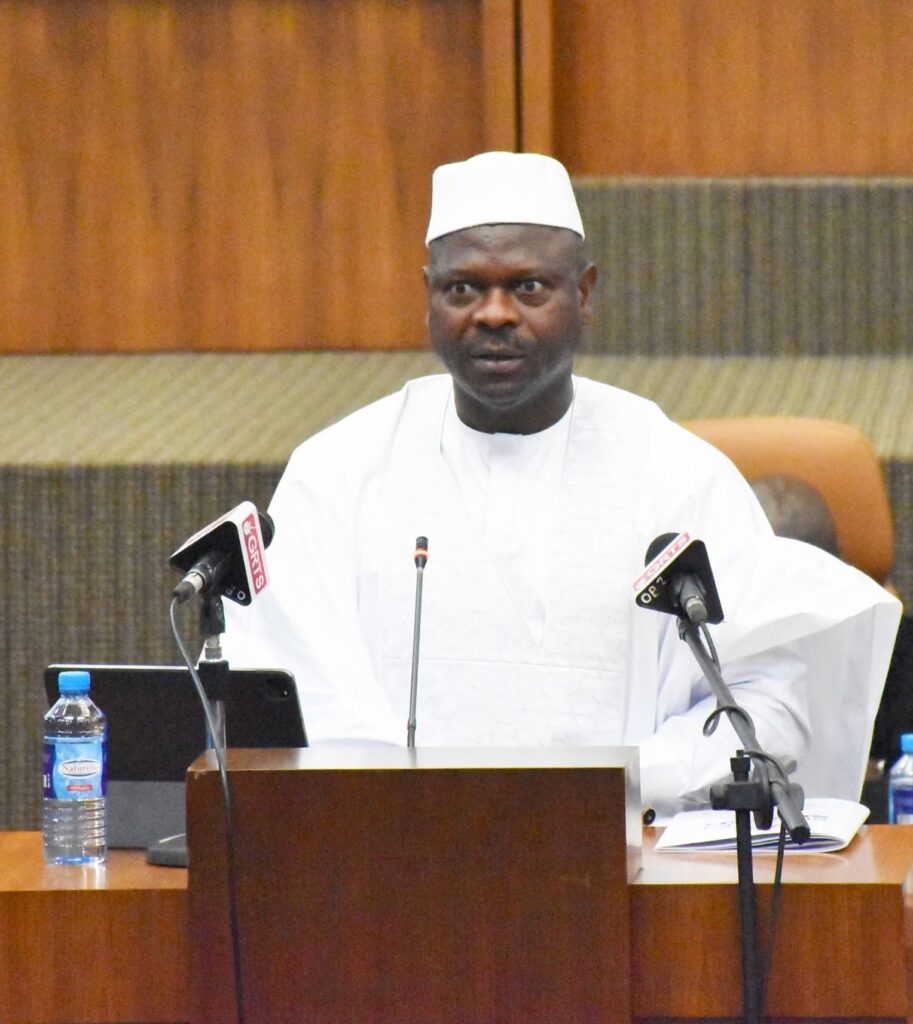
The Finance Minister has just unveiled the 2025 Appropriation Bill, with total expenditure of D47.4 billion, a 21 per cent increase from 2024. While civil servants and pensioners see increases, and agriculture and health are emphasised, the underlying reality remains unchanged: impressive numbers mask a persistent disconnect between government promises, frail economic realities, and public understanding. The main challenge is not the delivery of figures, but the failure to make their implications clear and relatable to citizens.
This persistent failure of commentators, especially our resident economists, to pierce the illusion of the emperor’s new clothes underlines a broader issue. They present Keynesian models and fiscal frameworks as if they were sacred texts, even when reality mocks them. Future generations will laugh at the credence our era gave to these models, just as we now scoff at alchemy.
Journalists cannot be blamed alone. They lack the training to decode GDP growth projections (expected at 5.6 per cent in 2025), inflation forecasts (7.5 per cent projected by the IMF), or debt sustainability risks (public debt still hovering at 70 per cent of GDP).
Media houses should enlist economists to simplify these numbers and break down the budget into human terms: what does a D2.6 billion deficit mean for the market woman in Serrekunda or the unemployed youth in Niumi?
The problem is not the absence of critique, but the absence of translation. Richard Parker of Harvard reminds us that the public processes news through moral and human-interest frames, while economics underplays institutions and collective action.
In The Gambia, this disconnect is glaring. The 2025 budget boasts of resource mobilisation, gender-responsive allocations, and climate tagging, but who explains to the ordinary citizen how these affect bread prices, transport fares, or hospital queues?
Our political debate remains shallow. We argue whether VAT should be 17.5 per cent or 20 per cent, yet ignore the deeper question: what is the moral purpose of taxation? Should it fund debt interest payments (D5.88 billion in 2025), or should it build schools and hospitals?
Economists must bear their share of blame. They know the debt bubble, the youth unemployment crisis, and the fiscal exuberance of past regimes, yet remain silent or complicit. Journalists are scapegoated for failing to report what they cannot decode.
The need for collaboration becomes obvious: the moral lesson is clear, truth in economics is not in the numbers alone, but in their translation into human impact. Without economists willing to simplify and journalists empowered to question, budgets remain theatre grand speeches masking fragile realities.
This essay exposed the failures of economists and the unfair scapegoating of journalists; the essay must point toward solutions. The 2025 Budget Speech has once again reminded us that numbers alone do not feed the nation. Budgets are moral documents; they reveal not only how money is spent, but what a government values. Yet in The Gambia, translating these values into public understanding remains broken.
Economists must step down from their ivory towers and speak in the language of the people rather than engage in politics. A projection of 5.6 per cent GDP growth means little to the farmer in Basse unless it is explained in terms of more tractors, better roads, or cheaper fertiliser.
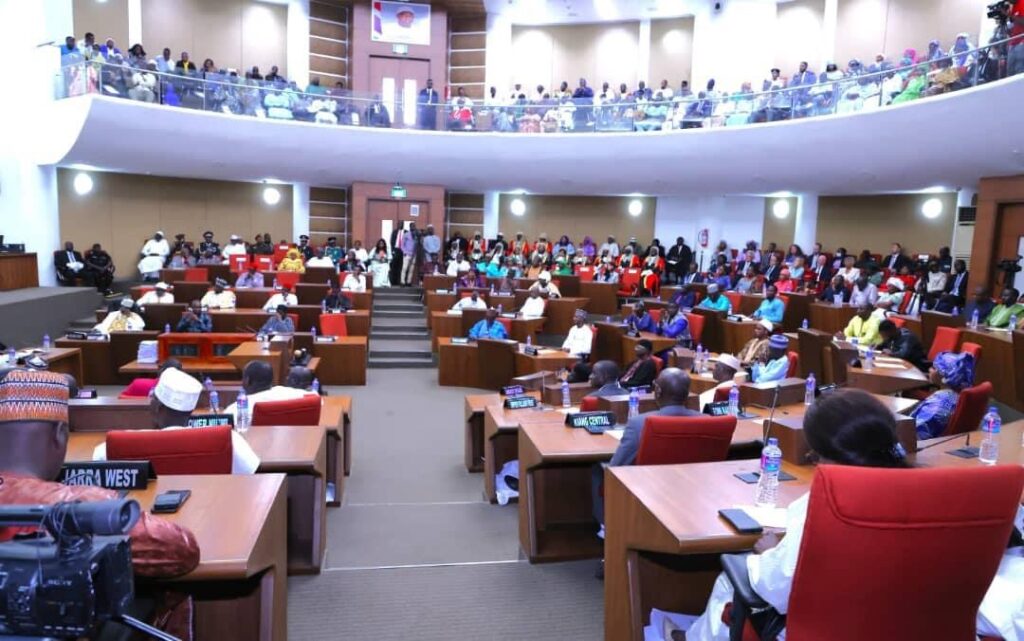
A 7.5 per cent inflation forecast is not an abstract figure; it is the rising price of rice, oil, and transport fares. Debt at 70 per cent of GDP is not a statistic—it is the weight of austerity borne by unemployed youth and struggling families.
Economists must become translators of truth, not careerist politicians or guardians of jargon. Their role is not only to critique government policy but to simplify, contextualise, and humanise economic data so that citizens can hold leaders accountable.
Journalists, meanwhile, must reclaim their role as storytellers of impact. While they cannot be expected to master macroeconomic theory overnight, they can partner with economists to break down the budget into narratives that resonate. A civil servant’s 30 per cent salary increase is the story of a teacher in Niumi finally able to afford her children’s school fees. A minimum pension of D1,000 restores the dignity of an elder who no longer depends on charity.
Journalists must frame the budget as a human-interest story that reflects Gambians’ lived realities. Collaboration between journalists and economists turns budgets from technical documents into tools for engagement and accountability. Journalists should break down complex data, expose policy contradictions, frame policies in moral terms, and empower citizens to demand accountability.
If economists must translate numbers and journalists must tell stories, the logical next step is to build structures that enable this collaboration. The 2025 Budget Speech has once again shown us that figures alone cannot sustain democracy. Budgets must be democratised—not only in their drafting, but in their reporting.
Training Programs for Journalists – Media houses should partner with the University of the Gambia to create short courses in economic literacy.
Economists as Public Educators – Economists should hold forums and radio programs to explain budgetary implications in plain language.
Civic Forums for Participatory Budgets – Civil society should convene participatory budget forums where citizens debate allocations and priorities.
Media-Economist Partnerships – Media houses should establish standing partnerships with economists as regular contributors during budget season. Embedding Moral Frames – Reporting must embed moral frames: pensions as dignity, salaries as justice, climate allocations as stewardship.
An African proverb teaches: “Wisdom is like fire; people take it from others.” Economists hold the fire of knowledge, journalists carry the flame into the public square, and citizens warm themselves by its light. If the fire is kept hidden, the people remain cold.
The lesson is central: budgets cannot serve justice or accountability if they remain incomprehensible. Economists must teach, journalists must translate, and citizens must demand translation.
Only then do the Finance Minister’s numbers become more than theatre—they offer true hope. Sharpening this argument is key to real reform.
By Alagi Yorro Jallow








Recent Comments