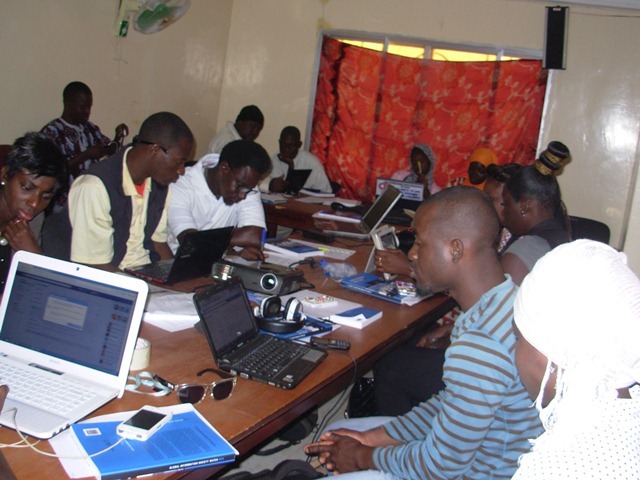
In any democracy, especially one as fragile and emergent as The Gambia’s, the press is not merely a mirror to society but a moral compass, a watchdog, and a forum for public reason.
However, today, the lines between journalism and politics are increasingly blurred, eroding public trust and compromising the integrity of the fourth estate. The infiltration of political actors into newsrooms and the quiet normalisation of partisan journalism have created a media landscape where truth is often filtered through ideological lenses. This is not just a professional lapse; it is an urgent civic crisis that demands immediate attention.
It is no coincidence that many editorials in our newspapers read more like campaign literature than journalism. Too often, these pieces are not authored by trained reporters or editors, but by English teachers moonlighting as columnists, activists posing as analysts, or worse, politicians masquerading as journalists.
The result is a media ecosystem where the public is fed narratives shaped not by facts, but by factional loyalties. This phenomenon is not unique to The Gambia.
In Senegal, for instance, Mamoudou Ibra Kane, former Managing Director of E-Media Group, and Madiambal Diagne of Avenir Communication, both made the principled decision to resign from their media roles before entering politics.
Their actions reflect a recognition of the ethical imperative: one cannot simultaneously serve as a journalist and a politician without compromising the integrity of both roles.
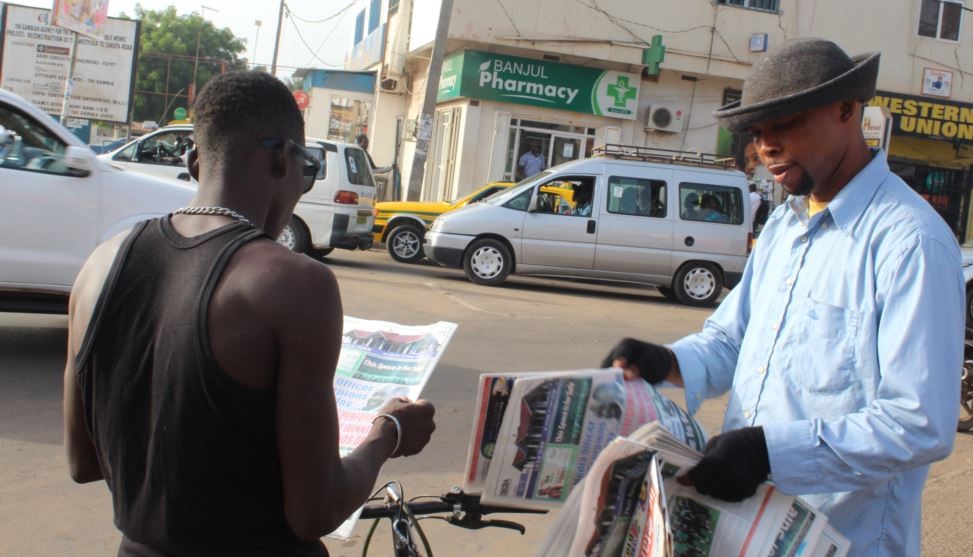
Journalism demands independence; politics demands allegiance. To conflate the two is to betray the public trust.
There was a time when Gambian journalists stood as vanguards of truth, risking their lives to expose dictatorship, defend press freedom, and uphold democratic ideals. These were not just reporters; they were civic architects, shaping public consciousness and resisting tyranny with their pens.
However, in the post-dictatorship era, a new breed of media practitioners has emerged, one that often blurs the line between journalism and activism, between reporting and campaigning.
Many of these “new democratic journalists” claim neutrality, cloaking themselves in the language of professionalism.
However, their editorial choices, selective silences, and disproportionate coverage often betray subtle political leanings. They may not wear party colors, but their narratives echo partisan talking points. This form of covert bias is more insidious than overt partisanship; it deceives the public into mistaking advocacy for objectivity.
This crisis is not confined to West Africa. Across the globe, from the United States to Eastern Europe, the weaponization of media by political actors has become a defining feature of the post-truth era. In the U.S., the revolving door between political operatives and media pundits has blurred the boundaries of impartial reporting.
In Hungary and Turkey, state capture of media outlets has turned journalism into a tool of propaganda. These global parallels should serve as a cautionary tale for The Gambia: the erosion of media independence is often the prelude to democratic backsliding.
The roots of this malaise are both structural and systemic. Many media practitioners in The Gambia lack formal journalism training. Some enter the field through political patronage or personal ambition, with little understanding of the ethical codes that underpin the profession.
For them, the media is not a platform for public service but a springboard for political relevance or personal branding. Economic precarity compounds the problem. Underfunded newsrooms, unpaid reporters, and volunteer-based operations create fertile ground for manipulation.
In such conditions, the temptation to trade editorial independence for financial survival or political favor is immense. When journalists become dependent on political patrons for their livelihoods, the truth becomes negotiable.
This crisis demands urgent and coordinated action. Media regulators, journalism schools, and professional bodies such as the Gambia Press Union must prioritise ongoing training in ethics, fact-checking, and editorial independence, especially in rural and underserved regions.
Clear codes of conduct must be enforced, and journalists who wish to enter politics should be required to resign from their media roles formally. The continuous development of ethical standards is crucial in maintaining the integrity of journalism.
Equally important is the public’s role.
Citizens must become critical consumers of news, questioning not just what is reported, but how and why. Media literacy should be integrated into civic education, empowering audiences to detect bias, demand accountability, and reward integrity. The public’s vigilance can be a powerful force in ensuring the integrity of journalism.
Whether subtle or overt, political bias in journalism corrodes the foundations of democracy. It misinforms the public, polarizes discourse, and undermines the credibility of the press. The silence of supposedly neutral journalists and the loud partisanship of openly biased ones are two sides of the same coin: both betray the public trust.
The Gambian media must return to its core mission: truth, fairness, and public service. Journalism is not a stepping stone to political power; it is a sacred trust with the people.
To preserve that trust, we must draw a firm line between the newsroom and the campaign trail. Only then can journalism reclaim its rightful place as the conscience of the republic.
Let this be a call to action for all stakeholders in the media sector, from journalists to policymakers to the public: it is time to address the crisis of political bias in journalism and restore the integrity of the fourth estate.
By Alagi Yorro Jallow




Recent Comments