A fragmented opposition cannot survive a simple majority system. Without a second round, legitimacy becomes a mathematical illusion. For years, Gambians poured their energy into resisting a third term that the Constitution already forbids.
Meanwhile, the real threat to democratic legitimacy—the absence of a second round of voting—remained untouched. In a fragmented opposition landscape, a simple plurality does not produce a national mandate; it produces a mathematical winner.
This essay explains why The Gambia must shift its focus from personalities to electoral architecture before it is too late.
In Gambian politics, we have perfected the art of debating the wrong issue at the right time. We chase noise, not substance. We mobilise around the loudest controversy, not the most consequential reform.
And so, while the nation spent years shouting about a hypothetical third term that the Constitution already forbids, we ignored the one structural flaw that continues to shape our political destiny: the absence of a second round of voting in presidential elections.
The tragedy is that we fought the wrong battle. The third term debate was moral, emotional, and symbolic, but it was never strategic. The Constitution already settled it.
Meanwhile, the real danger—the one that determines who governs this country—sat untouched in plain sight. The Gambia elects its president through a simple plurality, a first-past-the-post system where the candidate with the highest number of votes wins, even without reaching 50 percent.
In a fragmented political landscape, this is not democracy; it is arithmetic masquerading as legitimacy.
Under this system, a candidate can win the presidency with 35 percent or even 30 percent of the vote if the opposition is divided.

There is no constitutional requirement for an absolute majority, no threshold of 50 percent plus one, and no second round to ensure that the winner commands a national mandate.
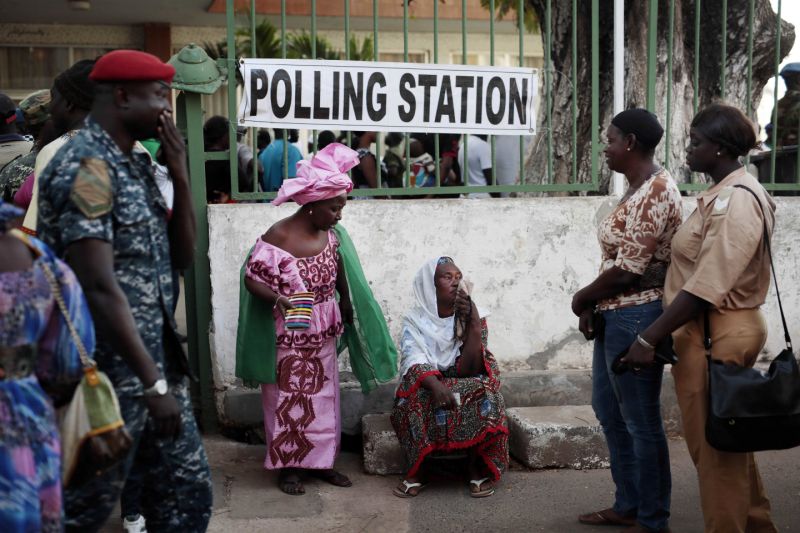
The Independent Electoral Commission conducts a single-round election, counts the marbles, and declares the highest total the victor. This is the operational reality of our democracy, and it gives the incumbent a built-in advantage that no amount of rallies, press conferences, or moral outrage can overcome.
This is why coalitions under a simple majority system do not hold water in a fragmented opposition environment. They are born out of desperation, not design. They collapse under the weight of ego, mistrust, and competing ambitions because the system itself does not incentivise unity.
A second round forces political actors to negotiate, compromise, and build alliances. A simple plurality encourages them to gamble on fragmentation, hoping to win with a minority of the electorate.
In such a system, the incumbent does not need to persuade the nation; he only needs to divide the opposition.
A second round of voting is not a luxury. It is the foundation of electoral legitimacy in a multi-party democracy. It ensures that the president enjoys a genuine mandate, not a mathematical accident.
It compels coalition building, strengthens public trust, and reduces the power of incumbency. Without it, elections become a contest of fragmentation, not a contest of ideas. The winner emerges with constitutional authority but without national legitimacy.

This is the reform that the civil society and the opposition should have championed. Instead of pouring energy into resisting a third term that was already unconstitutional, they should have united around electoral architecture—the rules of the game that determine the outcome long before the first marble is cast.
Imagine if the same mobilisation, the same civic outrage, and the same national focus had been directed toward amending the Constitution to introduce a two-round system. We would have reshaped the political future of this country.
Instead, we defended the Constitution where it was already strong, and ignored the point where it was dangerously weak.
If The Gambia is serious about democracy, then the next national conversation must shift from personalities to structures.
We need a two-round presidential election system, a 50 percent plus one legitimacy threshold, and a constitutional amendment that aligns with democratic best practice across Africa and beyond.
Democracy is not protected by noise; it is protected by design. And design begins with the rules that govern how leaders are chosen.
A president elected by a minority of voters may be constitutional, but he is not legitimate in the eyes of the nation. Legitimacy is not a gift; it is engineered.
The Gambia deserves leaders chosen by more than arithmetic. It deserves a system that forces unity rather than rewarding fragmentation.
It deserves elections that produce stability, not controversy. Until we fix the structure, we will continue to fight the wrong battles while losing the right ones.
By Alagi Yorro Jallow








Recent Comments