
The ongoing Parliamentary Select Committee investigation into the sale of former President Yahya Jammeh’s assets is transforming into a spectacle of partisanship, where media theatrics and political ambitions overshadow the vital mission of uncovering the truth.
This inquiry stands as a glaring example of a troubling trend in our political landscape.
In The Gambia, these committees are constitutionally obligated to probe matters of public interest. However, recent developments in the investigation into Jammeh’s assets reveal a distressing shift from genuine inquiry to political theatre.
Intended as a profound exploration of corruption and abuse of office, this process has become a platform for political grandstanding, media manipulation, and targeted strategies. This is not a looming threat; it is a pressing reality that demands our immediate attention and action.
The phrase “parliamentary inquiry as Parisian theatre” powerfully illustrates the transformation of these proceedings into dramatic performances. Rather than committing to impartial fact-finding, we witness selective outrage, choreographed media narratives, and overt political signaling.
The Committee’s public hearings, magnified by national media and social platforms, have morphed into arenas for political figures to display their relevance and ambition, distracting from the inquiry’s essential purpose. This shift is glaringly evident in the behaviour of certain Committee members who remain silent in National Assembly debates.
Their sudden rise in eloquence and aggression during televised inquiries indicates a calculated strategy to seize media-driven political relevance rather than fulfil their civic responsibilities.
The treatment of lawyer Amie Bensouda, the former lead counsel of the Janneh Commission, is a stark example of the misuse of power in these inquiries. Summoned as a witness, she selflessly provided extensive documentation at her own cost.

However, Committee members accused her of withholding records and demanded full disclosure within an unreasonably short timeframe. The confrontational tone and the attempt to coerce her into accepting a pre-written summary of her interview transcript are tactics that not only undermine the Committee’s credibility but also leave the public with a palpable sense of injustice.
Parliamentary inquiries are not arenas for legal prosecution; they exist to uncover facts, not to intimidate witnesses. The aggressive stance toward Amie Bensouda, a respected legal professional, undermines the Committee’s integrity and raises serious questions about its true objectives.
The inquiry’s intensity takes on even greater significance when viewed against the backdrop of Minister Hamat Bah’s remarks at an NPP rally in Sukuta, where he labeled Mayor Talib Bensouda’s “Unite for Movement” as the “biggest threat and danger” to the ruling coalition.
He urged supporters to “fight head-on” against this movement, signalling an escalation in political tactics as we approach the 2026 elections. This framing of Talib Bensouda as a political adversary, along with the Committee’s treatment of his mother, underscores a troubling pattern: the conversion of parliamentary inquiry into a battleground for political rivalry.
The inquiry risks becoming a weapon for political retaliation rather than a genuine mechanism for accountability.
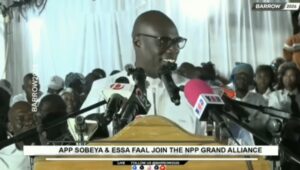
Public media, once a vital tool for civic education, is increasingly being hijacked for partisan messaging. Figures like Essa Faal, former lead counsel at the TRRC, exemplify this troubling trend. His shift from legal advocate to political actor is marked by a strategic use of national media to shape narratives, signal allegiance, and cultivate a populist base.
Social media exacerbates this problem. Platforms like Facebook and Twitter amplify selective clips and confrontations—often devoid of context. This not only creates misinformation about the inquiry’s nature but also significantly distorts public understanding and breeds distrust in our democratic institutions.
We must recognise and address these alarming trends before they erode the foundations of our democracy.
Proceedings of parliamentary inquiries must be conducted in camera when necessary, particularly when public spectacle jeopardises the dignity of witnesses or compromises the objectivity of the investigations.
Media engagement should be principled, prioritising facts and findings over partisan theatrics. Witnesses deserve respectful treatment, and their testimonies must never be distorted into pre-scripted narratives.
Committee members must adhere to the highest ethical standards and draw clear lines between political ambition and public service. Upholding these principles is vital to maintaining the integrity of the inquiry and preserving public trust, a cornerstone of our democratic process.
Politicians must avoid using inquiries as a means to settle personal scores and should instead embody the spirit of truth-seeking and genuine public service.
The Jammeh asset inquiry transcends a mere legal proceeding; it serves as a critical test of The Gambia’s democratic maturity. If Select Committees devolve into platforms for political theatre, they risk undermining public trust and the very justice they are supposed to uphold.
The future of civic accountability hinges on our ability to restore the sanctity of these institutions, rather than allowing them to devolve into partisan spectacles. Reform is not just necessary; it is a beacon of hope for a more accountable and just future.
By Alagi Yorro Jallow




Recent Comments