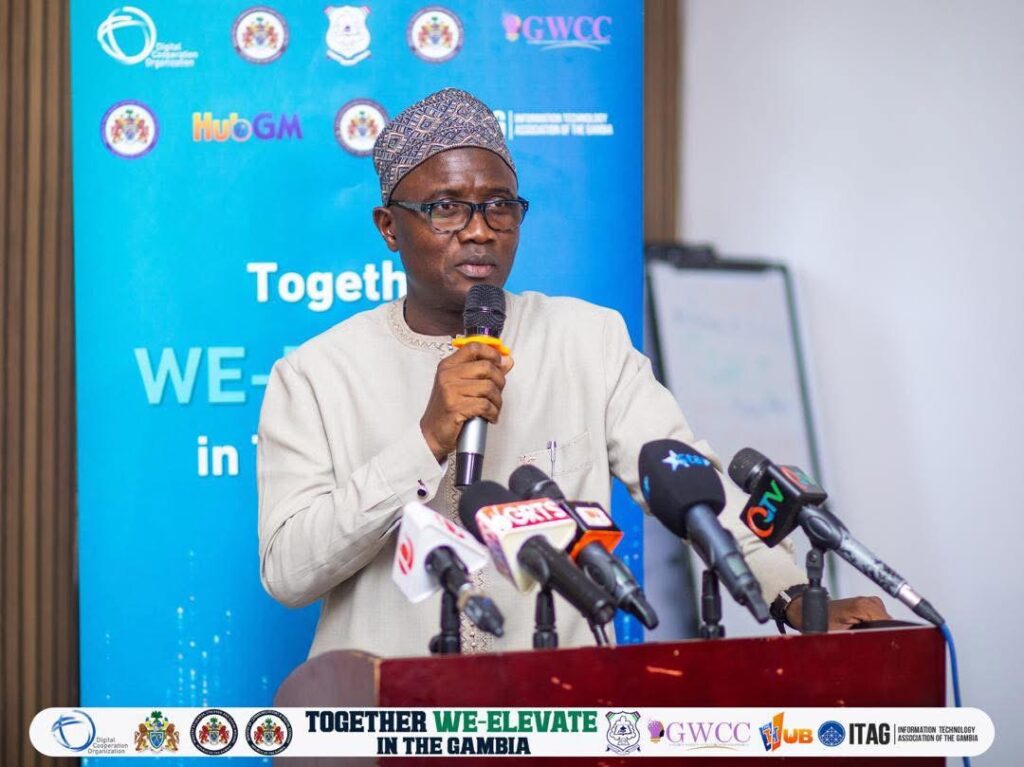
Lamin Jabbie, Minister of Communications and Digital Economy of The Gambia, has called on West African countries to strengthen data governance systems to support digital transformation, economic growth, and public trust.
He made the call while officially opening the West Africa Regional Data Governance Workshop held in Banjul, which brought together policymakers, experts, and delegates from several West African countries.
Addressing participants, Minister Jabbie emphasised the growing importance of data in modern governance and economic development.
“In the 21st century, data is the heartbeat of our development. It is the fuel of our digital economy and the foundation upon which we build trust with our citizens,” he said.
The workshop, organised in partnership with UNESCO and Smart Africa Alliance, aims to help anglophone West African countries translate continental data governance frameworks into practical national policies and strategies.
Jabbie noted that the initiative forms part of regional efforts to implement frameworks such as the African Union Data Policy Framework and the Smart Africa Data Governance Blueprint.
According to him, effective data governance has become a key policy priority as countries expand digital services and generate increasing volumes of data.
“Data governance supports economic growth, strengthens public institutions and protects the rights of citizens. It enhances decision-making, improves service delivery and enables the responsible use of emerging technologies such as artificial intelligence,” he said.
He also highlighted The Gambia’s recent progress in strengthening its digital governance framework, pointing to the enactment of the Data Protection and Privacy Act 2025, which he described as a major milestone in protecting citizens’ personal data.
The legislation was assented to by Adama Barrow, President of The Gambia, on 7 November 2025.
However, Jabbie stressed that passing legislation is only the first step.
“A law on paper is only the foundation. That law is only as strong as the systems and the people who manage it. We must now build the institutions, the technical capacity and the culture of accountability required to make it effective,” he said.
The minister further urged regional cooperation, warning that without harmonised standards, African countries risk falling behind in the rapidly expanding digital economy.
He noted that Africa’s digital transformation market is already valued at over $30 billion and projected to grow significantly in the coming years, highlighting the need for policies that ensure data is treated as a strategic national asset.
Mr Jabbie also called for stronger cybersecurity frameworks, improved digital literacy, and the development of regulatory institutions capable of enforcing data protection policies.
“When we protect a citizen’s data, we are protecting their dignity. Data governance is not just about technology, it is about trust and honesty,” he said.
Representatives from Nigeria, Ghana, Sierra Leone, and other West African countries attended the workshop to exchange experiences and explore strategies for strengthening regional data governance frameworks.
Officials from UNESCO and Smart Africa also stressed that responsible data governance is essential for building inclusive digital economies, supporting innovation, and safeguarding citizens’ rights.
The workshop is expected to provide a platform for policymakers and experts to develop practical strategies that will strengthen data governance systems across West Africa and support the region’s digital transformation agenda.
By Adama Makasuba







Recent Comments