
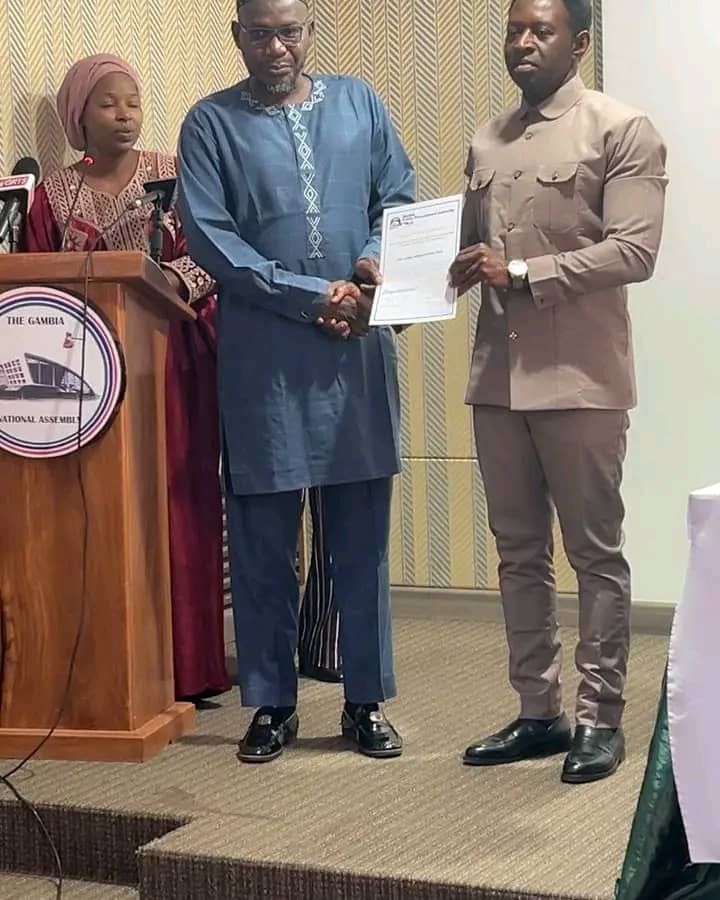
The Gambia Public Procurement Authority (GPPA) held its fourth authorisation ceremony at the National Assembly Complex in Banjul, formally authorising additional public institutions and raising the total number of authorised procurement bodies to 57.
The newly authorised organisations include the University of Education (formerly Gambia College), Gambia Competitive Consumer Protection, Gambia Bureau of Statistics, Food Safety and Quality Assurance Services, Gambia Investment and Export Agency, Gamhia Bereau of Statistics and the Gambia Fire and Rescue Service, among others.
Addressing the ceremony, GPPA Director Foday M. Jaiteh highlighted the authority’s ongoing digital transformation efforts.
He said the agency had more than doubled its revenue through digitalisation, closing previous loopholes and streamlining compliance processes.
“Digital services are our only way forward,” Jaiteh said.
“Government institutions can now submit documents for approval through our portal, removing the need for physical visits. We are also introducing a payment gateway, allowing organisations to pay for bidding documents online, further enhancing efficiency and accessibility.”
Mr Jaiteh emphasised the strategic benefits of a fully digital procurement system, which will provide comprehensive data on government spending, youth and women-led enterprises, and other key metrics.
“Over 60% of the national budget is spent on procurement,” he noted.
“If we can get procurement right, we can address many of our economic challenges effectively.”
The ceremony also featured remarks from Ebrima Sanyang, Director of Procurement, who said public procurement represents one of the largest channels through which public resources are translated into goods, works, and services.
Mr Sanyang highlighted that all major hospitals and 18 out of 22 ministries, including the offices of the President and Vice President, have met the required capacity standards.
“The legal framework under the DPP Act 2022 mandates a comprehensive capacity assessment before authorisation,” Sanyang explained.
“Institutions must demonstrate proper governance, staff competence, procurement planning, and compliance. Authorisation is for performance, not entitlement, and can be revoked if standards are not maintained.”
Mrs. Jamila Odu, Manager of Compliance and Procurement Practices, outlined the criteria for authorisation, including the establishment of contract committees, specialised procurement units, qualified personnel, and adherence to procurement principles such as transparency, fairness, and value for money.
Adding his perspective, Abdoulie Jallow, Permanent Secretary at the Ministry of Finance and Economic Affairs, underscored the importance of procurement as a tool for effective policy implementation and public accountability.
“Public procurement remains one of the most critical instruments of government policy,” he said.
“How these resources are planned, awarded and managed directly influences service delivery, economic growth, and public confidence in government.”
Mr Jallow praised the authorisation of the additional institutions while reminding all 57 authorised bodies that decentralisation aims to encourage competitive bidding and fair access, particularly for women-owned businesses.
He also highlighted the need for further capacity-building for armed and security services, local government authorities, and some educational institutions that have not yet attained authorisation status.
The ceremony marked a significant milestone in GPPA’s ongoing efforts to digitalise and professionalise public procurement in The Gambia, with the authority calling for continued government and development partner support to achieve a fully electronic procurement system.
By Adama Makasuba





Recent Comments