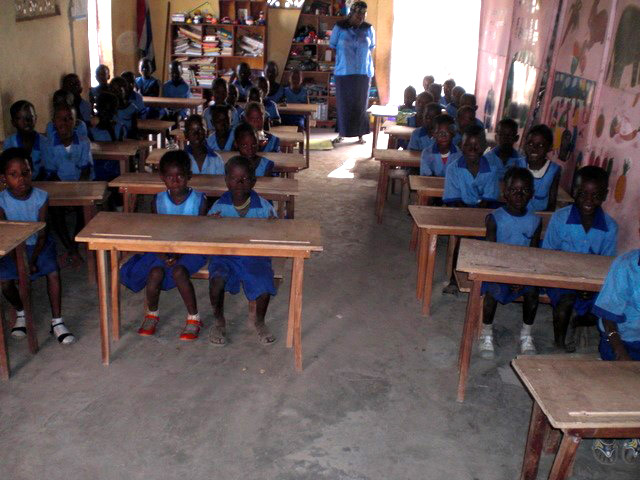
The Gambian government has approved a major shift in its education system, with seven local languages set to be introduced as mediums of instruction in early schooling.
The new policy, adopted by Cabinet on Thursday and spearheaded by the Ministry of Basic and Secondary Education (MoBSE), marks a significant departure from the country’s long-standing reliance on English as the sole language of instruction from kindergarten through to university.
Under the Learning in Language Policy (2025–2030), early-grade learners will now be taught not only in English but also in Jola, Mandinka, Manjak, Pulaar, Serer, Soninke, and Wolof — a move officials say could transform foundational learning.
MoBSE described the policy as “a bold step” towards a more inclusive and equitable education system, arguing that children learn best when taught in a language they understand.
The ministry said the shift is backed by global research showing that early education in a child’s first language improves comprehension, strengthens literacy and numeracy, and reduces dropout rates.
The policy also extends to learners with hearing impairments, formally recognising sign language as part of classroom instruction to ensure no child is left behind.
By integrating national languages into the curriculum, developing culturally relevant materials, and training teachers in multilingual instruction, MoBSE says the reform aims to boost confidence, participation, and long-term academic success.







Recent Comments