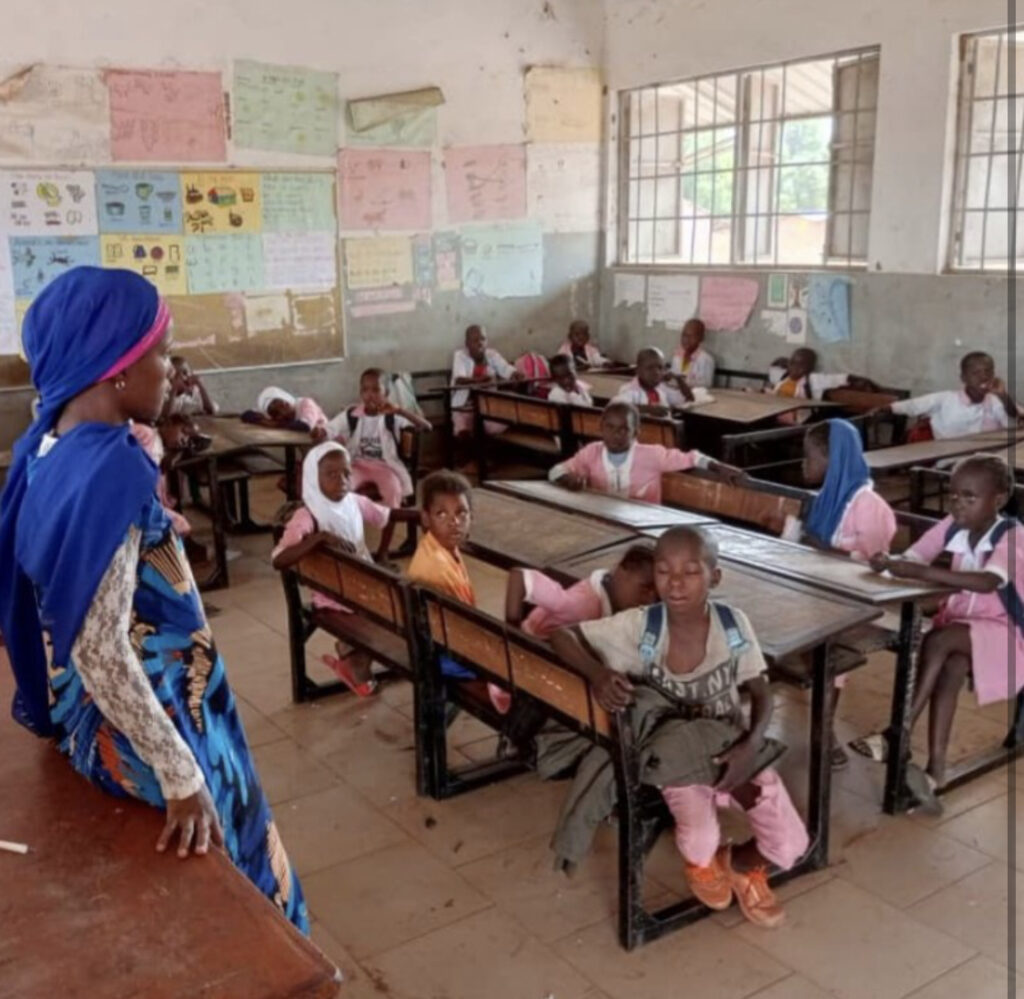
The Gambian government is set to introduce seven national languages as mediums of instruction in early grades, as part of efforts to improve foundational learning outcomes among young learners.
Mandinka, Pulaar, Wolof, Sarahuleh, Serer, Jola and Manjack will be used in Early Childhood Development (ECD) and the first three grades of Lower Basic Education in communities where they are most widely spoken.
The move forms part of the Foundational Learning Programme supported by the World Bank under the RISE Project and implemented by the Ministry of Basic and Secondary Education (MoBSE).
The Gambia’s education system follows a 3-6-3-3-4 structure, beginning with three years of Early Childhood Development. However, studies over the years have shown persistent weaknesses in foundational learning, particularly in literacy and numeracy.
An Early Grade Reading Assessment conducted in 2016 revealed that lower-grade pupils scored an average of just 20% in reading comprehension. Further concerns were raised by the Education Service Delivery Indicators 2020, which found that about 90% of 10-year-olds were unable to read and understand a simple text.
The National Assessment Test results from 2022 showed average scores of 40.22 in English and 38.37 in mathematics for Grade 3 pupils in public schools, with learning outcomes lowest in poorer, inland and upper regions.
Education experts say these challenges contribute to high repetition and dropout rates and affect performance at higher levels. The 2023 WASSCE results indicate that only about 20% of candidates obtained five credits or more, including English and mathematics.
The Ministry of Basic and Secondary Education aims to ensure that at least 80% of children meet minimum learning standards. As part of reforms, the ministry has developed a new competency-based curriculum that is ready for pilot implementation.
The curriculum places strong emphasis on early-grade reading and proposes the use of both national languages and English during the early years of schooling.
In preparation, MoBSE conducted a nationwide language-mapping exercise to identify the most widely spoken languages in school communities and assess stakeholders’ views on mother-tongue instruction. Based on the findings, seven national languages were selected for use as mediums of instruction at the foundational level.
A major component of the programme is the engagement of Learning Masterminds and partner organisations to implement the Foundational Learning component of the Gambia RISE Project.
The initiative targets learners from ECD levels 2 and 3 to Grade 3 across all eight regions of the country and is expected to reach more than 430,000 pupils in over 1,200 public early childhood and lower basic schools, with girls accounting for 53% of beneficiaries.
Education officials say strengthening learning during the early years is critical to improving overall education quality, supporting lifelong learning and expanding future opportunities for Gambian children.
By Adama Makasuba




Recent Comments