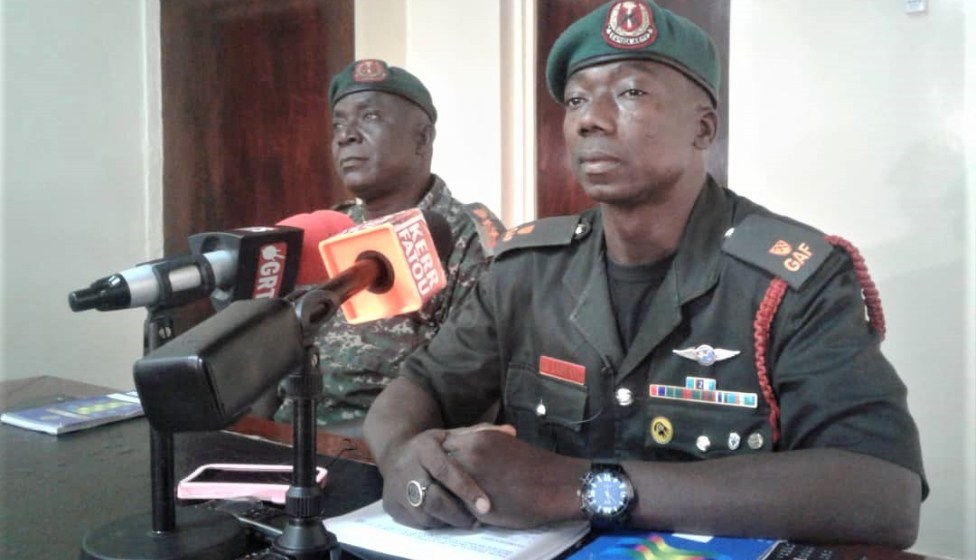
The Gambia Armed Forces (GAF) has condemned the alleged mass killing of vultures by one of its personnel, describing the act as a serious violation of its values and a breach of national and international laws.
Lance Corporal Jallow Alieu, along with a civilian accomplice, Ebrima Khan, is accused of killing vultures for ritual purposes.
Both men are currently in custody, Lance Corporal Jallow with the Military Police and Mr. Khan with The Gambia Police Force.
In a statement signed by Acting Public Relations Officer Captain Kemo Kanuteh, the military said the alleged act “goes against The Gambia Armed Forces’ values, professional standards, and commitment to environmental protection and biodiversity conservation.”

According to initial reports, the suspects were allegedly involved in hunting vultures to use their heads for ritualistic purposes. The Armed Forces condemned the act as “ungodly” and disassociated itself from such behaviour.
“As a disciplined institution, the GAF upholds the highest standards of conduct, both in service and in the wider community,” Captain Kanuteh said.
“The Chief of Defence Staff and the High Command unequivocally condemn this ungodly act and disassociate the Gambia Armed Forces from such behaviour.”
The killing of vultures, a protected species under Gambian law, violates the Wildlife Conservation Act, the Animal Welfare Law, and international protocols on wildlife protection, the statement added.
Captain Kanuteh stressed that GAF has “zero tolerance for actions that violate these laws and harm the country’s wildlife and endangered species.”
An investigation is underway, and GAF has promised that those found culpable will face “appropriate disciplinary measures in accordance with military regulations and national laws.”
The Gambia Armed Forces reiterated its commitment to environmental stewardship and collaboration with national institutions and the public.
“We remain committed to working closely with government institutions, environmental agencies, and the public to ensure the protection of wildlife and natural resources across the country,” he added.
By Adama Makasuba







Recent Comments