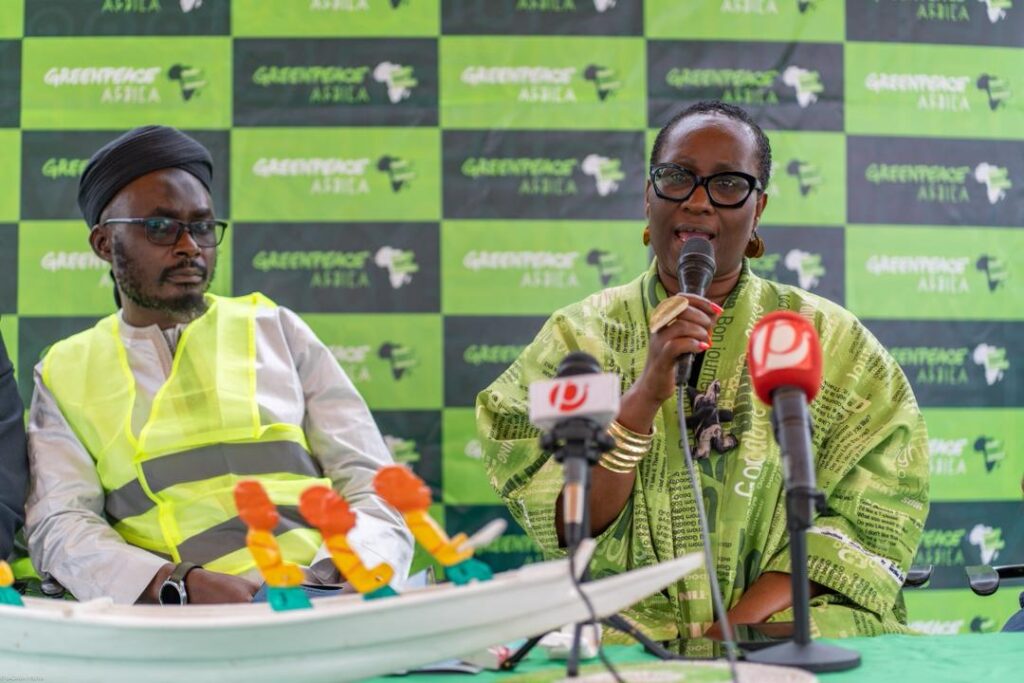
Greenpeace Africa has launched its “Sentinels of the Sea” mission in The Gambia, describing the ocean as a lifeline for coastal communities and warning that industrial and illegal fishing is rapidly depleting fish stocks across West Africa.
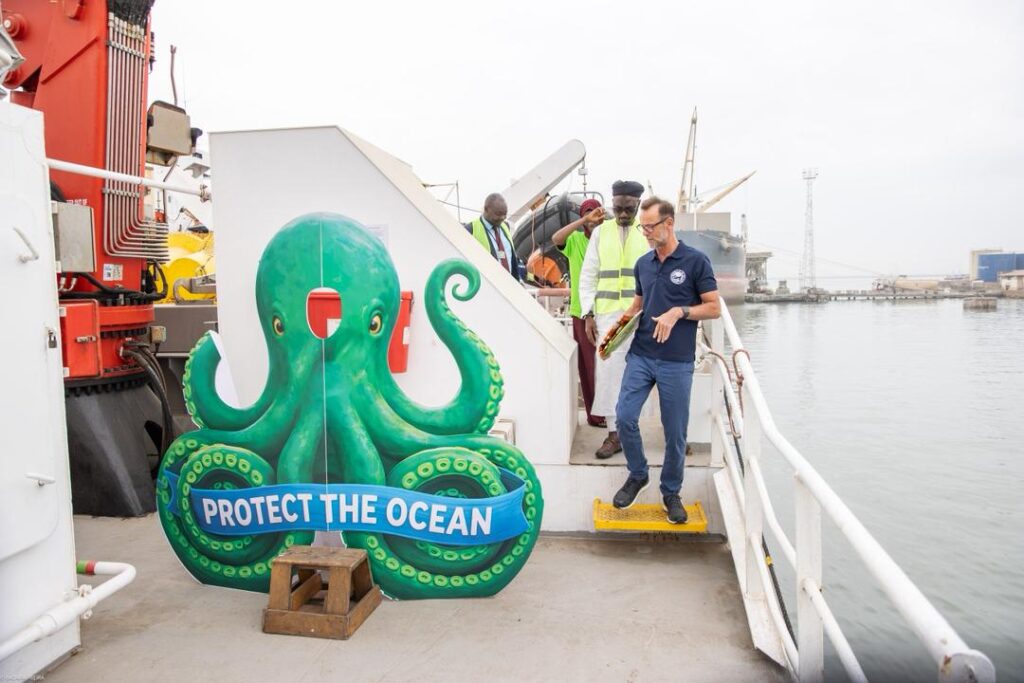
The message was delivered in Banjul aboard the Arctic Sunrise in a speech by Greenpeace Africa Executive Director, Dr Oulie Keita, read on her behalf by the organisation’s Communications Director, Fadima Cisse.
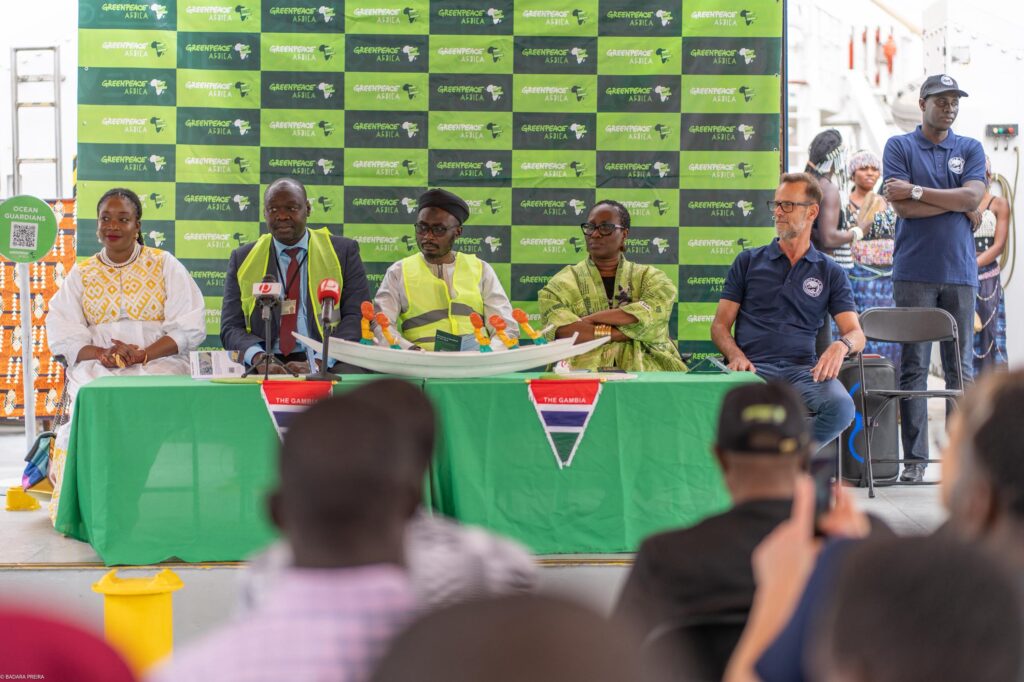
Addressing community leaders, fisherfolk, youth representatives, journalists and partners, the organisation said the sea is central to livelihoods, culture and food security in The Gambia and across the region.
“In The Gambia and across West Africa, the sea feeds families. It creates jobs. It carries history and culture,” the statement said, adding that for coastal communities the ocean is “food on the table” and “dignity at work”.
Greenpeace Africa said the mission links local realities to global decisions, stressing that what happens far offshore affects the daily lives of small-scale fishers.
“What happens beyond the horizon matters. It decides whether a fisher’s net is full or empty the next morning,” the speech stated.
The organisation noted that communities across West Africa are reporting the same challenges, including fish becoming harder to find, rising living costs, and livelihoods under threat.
Greenpeace Africa blamed the situation not on nature, but on human activity, accusing industrial and illegal fishing of emptying waters faster than they can recover.
“This is not nature failing us. It is people failing the ocean,” the speech said.
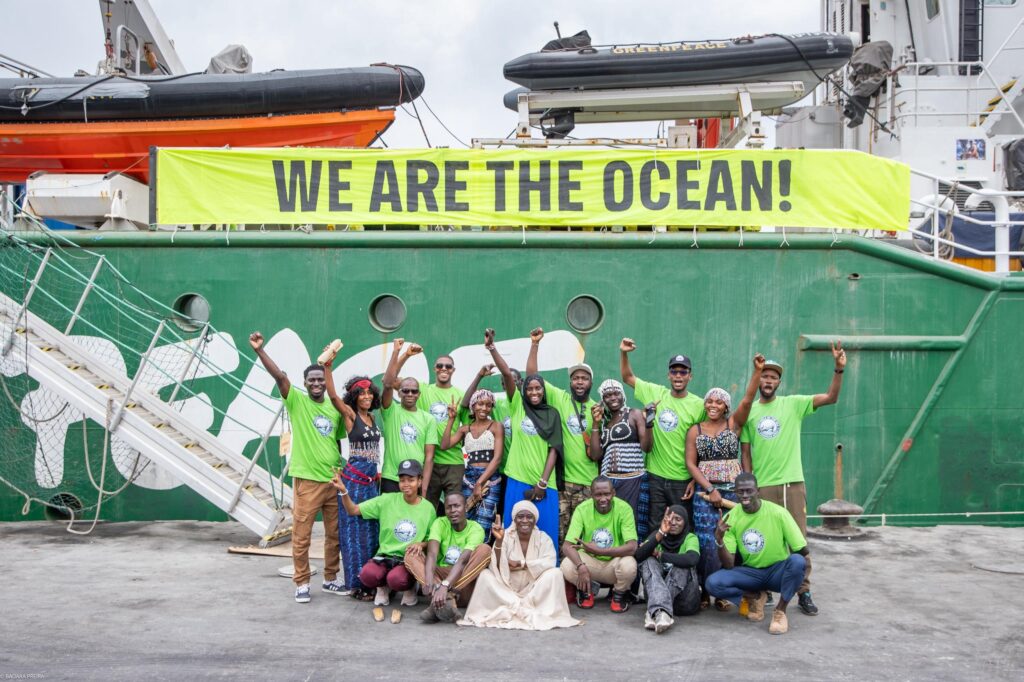
As part of the Sentinels of the Sea mission, Greenpeace Africa said it intends to work with small-scale fishers by training community monitors, supporting those who report illegal fishing, and strengthening community-based protection efforts.
The organisation also clarified that its presence in The Gambia is not intended to replace government authorities, but to work alongside them and ensure communities remain at the centre of ocean protection.
“This is about working together and putting communities at the centre of ocean protection,” the speech said.
Greenpeace Africa also linked the mission to the High Seas Treaty, saying the treaty’s entry into force represents a major step in global ocean protection, but warned that laws alone are not enough without enforcement.
“But laws alone do not protect the ocean. Enforcement does,” it added.
The organisation called for an ECOWAS-led, fully protected marine area within the Canary–Guinea Current, describing it as one of the richest ecosystems on Earth and a critical lifeline for millions in the region.
Greenpeace Africa said the Open Boat event in Banjul reflects its approach to ocean protection, emphasising dialogue between communities, authorities, scientists and the media.
“Ocean protection must be open, inclusive and built on dialogue,” the speech stated.
It concluded by describing ocean protection as a matter of justice and survival, warning that it is not a luxury but essential for food security, jobs and the future of children.
“Together, from the coast to the High Seas, we can protect the ocean. For today. And for generations to come,” the statement said.
By Adama Makasuba






Recent Comments