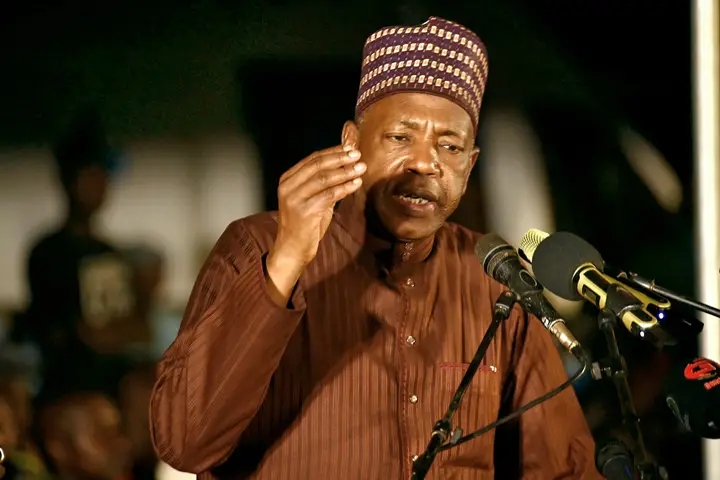
The Gambia’s land sector is set for a major shake-up as government considers either expanding the mandate of the Land Commission or replacing it entirely with a new National Lands and Surveys Agency, Minister of Lands and Religious Affairs Hamat Bah has revealed.
Speaking at a press conference in Banjul, Mr Bah said the National Land Policy provides a clear framework for reform but warned that its success depends on creating a strong, well-resourced and technically competent institution to drive implementation.
He said lessons from study tours to Ghana and Sierra Leone showed that while all three countries have land commissions, The Gambia’s commission has a more limited mandate and operational capacity.
“In Ghana and Sierra Leone, land commissions operate with fully functional secretariats and specialised technical departments, supported by decentralised regional and district structures,” he said, noting that Ghana’s model stands out for its clear division of duties and institutional autonomy.
Mr Bah explained that government is currently weighing two institutional options.
One is to revise the Land Commission Act to expand the mandate of the existing commission and establish a fully operational secretariat with departments covering land registration, legal affairs and alternative dispute resolution, cadastral mapping, surveys and valuation, planning and monitoring, corporate services and administration.
The second option would involve abolishing the current Land Commission and establishing a National Lands and Surveys Agency, headed by a Director General or Executive Secretary and governed by a board, with policy oversight retained by the Ministry.
He stressed that under either option, regional and district structures would be created to enhance service delivery, alongside a comprehensive review of land-related laws and the enactment of new legislation where required.
The minister said government is also seeking World Bank support to strengthen coordination, implementation and monitoring of the National Land Policy, particularly through a reinforced Programme Coordination Unit.
Plans are also underway to establish a multi-sectoral steering committee comprising permanent secretaries of land-related ministries, as well as representatives from the private sector, development partners, civil society and academia.
Outlining the current implementation outlook, Mr Bah said a tender for the National Land Information System attracted nine firms, with evaluation and contract signing expected in early 2026.
Reviews of the Physical Planning and Development Control Act, land laws and the development of a Resettlement Policy are also scheduled to begin between February and March 2026, subject to World Bank approval.
On capacity building, he revealed that 10 staff are currently pursuing long-term studies abroad, while dozens more have benefited from GIS and remote sensing training, with additional support planned in areas such as surveying, valuation, physical planning and engineering.
Government is also preparing a pilot for systematic land rights registration, constructing regional land offices, and planning a nationwide public awareness campaign on land administration and registration processes.
To anchor the reforms, the Ministry plans to establish a Directorate of Planning, Programmes and Budgeting, as well as a proposed Directorate of Border Management, aimed at strengthening coordination, integrated land-use management and regional collaboration.
Mr Bah said the reforms are critical to restoring order, transparency and public confidence in land administration, adding that government remains fully committed to implementing the National Land Policy.
By Adama Makasuba







Recent Comments