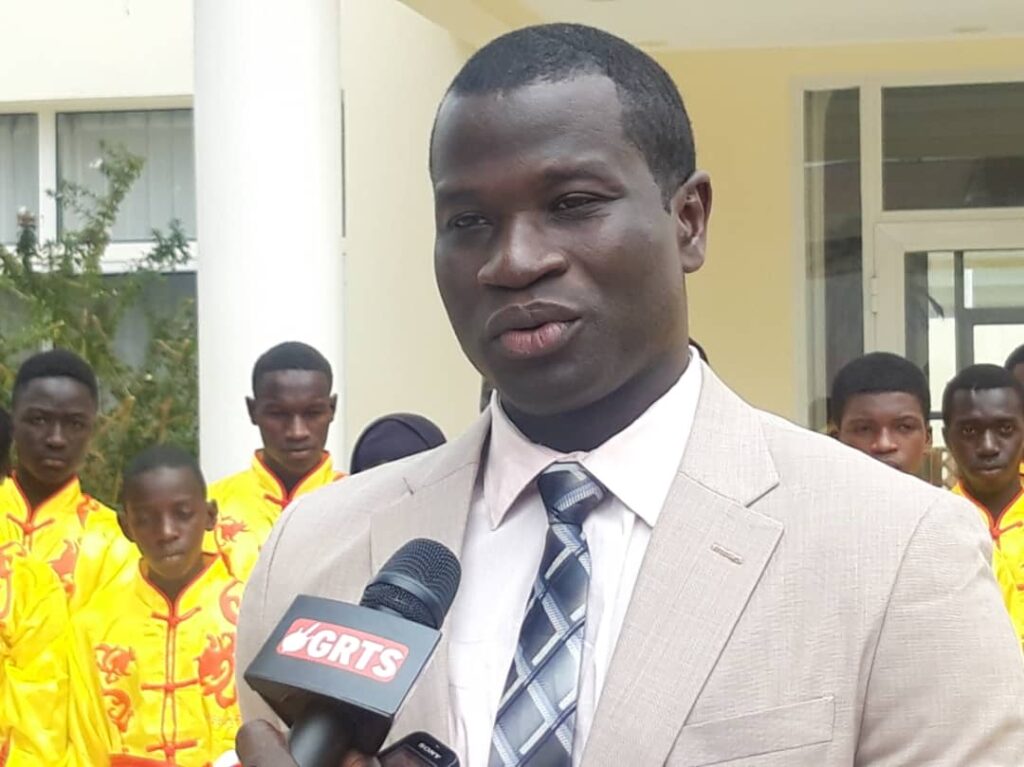
The Ministry of Youth and Sports has signed a cooperation agreement with Special Olympics Gambia to expand inclusive sports programmes for people with intellectual disabilities across the country.
Speaking at the signing ceremony, Youth and Sports Minister Bakary Y. Badjie said the memorandum of understanding aligns with the government’s long-term plan to broaden sports development and ensure equal participation for all Gambians.
“We’ve gone through the MOU and it fits right within what we as a ministry, and as a government, envisage in the area of sports development, particularly inclusive sports,” Mr Badjie said.
He praised Special Olympics Gambia for its work in raising awareness and improving opportunities for people with intellectual disabilities in both schools and communities.
Although the ministry’s support has not always been financial, he said the Ministry of Youth and Sports and the National Sports Council have provided consistent technical and moral support to the organisation.
Mr Badjie said cooperation has strengthened significantly over the past three years, pointing to the Berlin Games, the torch run and various summer programmes.
He said these initiatives contribute meaningfully to the ministry’s goal of making sports fully inclusive.
“Inclusion means everyone is involved, no matter the person’s condition or intellectual disability,” he said.
He added that many families still hide children with disabilities because of stigma, but sport has the power to break those barriers.
The minister described sport as an effective tool for empowerment, explaining that it challenges young people with disabilities to push themselves beyond perceived limitations.
He referenced a video shown at the event of a young woman rising from a wheelchair and walking with the help of railings.
“By the time she reaches that point, she has already won a medal for herself,” he said. “It removes the mindset that they have limitations and encourages them to reach higher.”
Representatives from Special Olympics International warned that memorandums of understanding are often signed and forgotten. They said they intend to ensure the agreement is fully implemented, especially because people with intellectual disabilities remain among the most marginalised globally.
They said their teams will work with schools, train teachers, and distribute manuals and workbooks as part of the programme. A baseline study will also be conducted to measure attitudes before and after the project to assess its impact.
Officials described the isolation experienced by many children with disabilities as a universal challenge and said the partnership aims to tackle that exclusion directly.
Regional Special Olympics leaders praised the Gambian chapter for its strong performance on the continent and said Gambians “can be very proud” of the work done so far.
The agreement is expected to support the Ministry of Youth and Sports’ broader push to make sports a platform for empowerment, visibility and inclusion for people with intellectual disabilities.
By Adama Makasuba


Recent Comments