During Yahya Jammeh’s 22-year dictatorship, only a small minority of Gambians took the risks of resistance, while many educated professionals remained silent, cautious, or complicit.
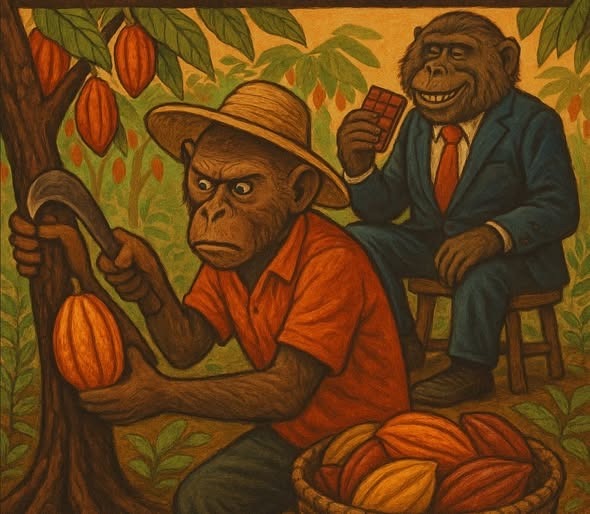
Today, similar patterns are re-emerging as elections approach. Democracy cannot thrive if some citizens bear the sacrifices while others wait for appointments after victory. An old West African proverb captures this truth: “Monkey dey work, baboon dey chop.” The monkey does the hard work, and the baboon enjoys the reward. Though crude, the proverb reflects an uncomfortable reality in Gambian public life.
The proverb highlights a persistent reality in politics, power, and public service across many African countries, including The Gambia. It shows how some people shoulder burdens, take risks, and face consequences, while others arrive later to reap the rewards.
This dynamic is evident in The Gambia’s democratic struggles under former President Yahya Jammeh and continues under Adama Barrow, especially in the current rush to secure appointments after elections.
This essay argues that The Gambia’s democracy has long been shaped by civic asymmetry: during Yahya Jammeh’s tenure, a small group paid the cost of democratic resistance while many prominent Gambians remained disengaged; under Adama Barrow, the same pattern now appears in the rush to await appointments after elections.
The monkey does the hard work, while the baboon enjoys the reward. Crude as it may sound, the proverb captures an uncomfortable truth about Gambian public life.
During Yahya Jammeh’s twenty-two years in power, a relatively small group of journalists, activists, civil society actors, opposition politicians, students, and ordinary citizens carried the burden of democratic resistance. They endured arrests, intimidation, job dismissals, financial hardship, exile, and relentless pressure.
However, many prominent Gambian figures, diaspora members, and the educated and professional class, along with retirees, remained on the sidelines. Some preferred to focus on careers and professional advancement. Some maintained strategic silence. Others adopted the posture of neutrality.
Today, as another election cycle approaches, a similar pattern appears to be re-emerging: yesterday, some waited for democracy; today, some wait for juicy appointments. The question is whether The Gambia can afford to let this cycle continue.
A few openly legitimised or rationalised authoritarian rule. Then democracy arrived, and suddenly many of yesterday’s fence-sitters became today’s democrats. They became commentators. Analysts. Consultants. Board members. Economic experts, advisers. Public intellectuals. Guardians of democratic values. The struggle carried risks. The rewards arrived later.
Too often, those who bore the risks and those who received the rewards were not the same people. This pattern is particularly relevant today because it seems to be repeating itself.
Many educated Gambians who avoid active participation in political parties, electoral campaigns, grassroots mobilisation, and political organisation increasingly position themselves as spectators rather than participants. They do not organise, campaign, build political movements, or contest elections. Yet they follow politics obsessively from a safe distance, waiting to see who wins.
Once victory becomes visible, many suddenly become available for national service through appointments, advisory positions, diplomatic postings, board memberships, commissions, authorities, councils, and directorships.
Yesterday, some waited for democracy. Today, some wait for appointments. The names have changed. The political actors have changed. But the underlying culture often remains remarkably similar.
This is not an argument that every lawyer, doctor, lecturer, engineer, banker, economist, or international civil servant should become a politician. Nor is it an argument that public appointments should be reserved for former activists. Democracies need competent professionals. Governments require expertise. Nations need technocrats. But democracies also require citizens willing to participate before victory is secured.
More than two centuries ago, Alexis de Tocqueville warned in Democracy in America that democratic societies survive not simply through institutions and constitutions, but through citizens’ active engagement in public affairs.
Nearly two centuries later, Robert Putnam, in Bowling Alone, reached a similar conclusion. Democracies weaken when citizens retreat into private life and abandon civic engagement. Likewise, Albert O. Hirschman, in Exit, Voice, and Loyalty, argued that societies function best when citizens choose “voice” by participating in public affairs rather than withdrawing into private concerns.
Political participation, therefore, is not simply about voting every five years. It is about accepting responsibility for the direction of one’s country. The challenge facing The Gambia is not a shortage of expertise; it is a shortage of participation. The country’s most pressing democratic problem is the reluctance of many educated people to engage before the outcome is known.
The democratic space Gambians enjoy today did not emerge spontaneously. Men and women created it and paid high costs. Late Deyda Hydara and other persecuted journalists became symbols of press freedom, making the ultimate sacrifice for independent journalism.
Journalists faced harassment, arrests, threats, exile, and attacks on media institutions. One particularly instructive example is Ebrima Sillah, one of the few cabinet ministers who, as a pro-democracy activist, endured exile and persecution and paid a personal price. Most of his colleagues in the cabinet were not active in the democratic struggle yet benefited from lucrative appointments.
Long before becoming a Cabinet Minister, he worked as an independent journalist and BBC correspondent under increasingly difficult conditions. His home was attacked and set ablaze in a 2004 arson attack documented by international press freedom organisations.
He later reported repeated arrests and harassment before being forced into exile. The attack on his home and the wider campaign of intimidation against him became part of the broader story of press repression during the Jammeh years. Whatever one thinks of his subsequent record in government, the historical point remains important.
Before democratic victory produced Cabinet positions, board appointments, diplomatic postings, and public recognition, Ebrima Sillah had already paid a personal price. That distinction matters.
Indeed, one could argue that among those who have occupied senior public offices since 2017, very few possess a record of sacrifice comparable to the journalists, activists, opposition figures, and ordinary citizens who confronted authoritarianism when doing so was dangerous.
Similarly, before becoming President, Adama Barrow was not a newcomer who emerged after victory was secured. He spent years inside opposition politics through the UDP and participated in opposition activities at a time when such involvement carried consequences.
The broader lesson is not about personalities. It is about civic responsibility. History should distinguish between those who participated in the struggle and those who appeared after success had already been achieved. What happened after the democratic transition is equally instructive.
Many individuals who had never attended opposition meetings, financed democratic initiatives, publicly challenged authoritarianism, endured exile, or visibly participated in the struggle suddenly emerged as important figures of the democratic era.
They became commentators, analysts, advisers, consultants, board members, commissioners, diplomats, public intellectuals, and government officials.
Again, the issue is not competence. The issue is civic asymmetry. Too often, those who carried the risks of democratic change became a minority among those who later enjoyed its rewards.
Many highly educated and professionally accomplished Gambians who remained absent during the difficult years of democratic struggle later became highly visible within the architecture of the new democratic order. Their expertise may be valuable. Their achievements may be admirable.
Yet a legitimate question remains: Should those who bore the risks of democratic change become a minority among those who reap its rewards? This is where the old proverb regains its force: Monkey dey work—baboon dey chop.
Every democratic transition produces what might be called “peacetime heroes.” These are individuals who emerge after the principal risks have passed. They are often highly educated.
Many possess impressive international credentials. Some have worked at the United Nations, the European Union, the World Bank, the African Development Bank, prestigious universities, international NGOs, and global institutions.
Others have worked at established think tanks and consultancy firms. Their expertise may be valuable. Their achievements may be impressive. Their contributions may even be necessary. The issue is not competence. The issue is civic asymmetry.
Too often, politics becomes divided between those who carried the risks and those who later collected the rewards. One group organised. Another managed. One group confronted uncertainty. Another arrived after certainty emerged. One group built democratic space. Another inherited it. The monkey does not complain because others eat. Complaints begin when those who never joined the hunt gradually dominate the feast.
The phenomenon does not end with elections. It often continues into governance. One of the most striking features of contemporary Gambian public life is the expectation among some retired professionals, former civil servants, technocrats, consultants, and members of the educated elite that public appointments should naturally follow every political transition.
Many never participate in political parties. They avoid electoral campaigns. They dismiss partisan politics as noisy, dirty, or beneath them. They contribute little to the difficult work of building party structures, organising communities, mobilizing voters, or developing political programs.
Yet when elections are won, many suddenly become available for national service. Board appointments. Commissions. Authorities. Councils. Diplomatic posts. Advisory positions. Task forces. Special committees.
The expectation seems to be that while others engage in the difficult business of politics, they should remain comfortably detached and enter public life only after securing power. This raises an important democratic question. Should public service be understood primarily as a reward or as a responsibility?
Democracy certainly requires expertise. Governments cannot function without competent administrators, economists, lawyers, engineers, accountants, and development specialists.
But democracy cannot thrive if participation and reward become completely disconnected. A healthy political culture requires a reasonable relationship between civic contribution and public responsibility. Those who build democratic institutions should not become strangers within them.
Nor should democratic participation be permanently outsourced to activists, journalists, youth organisers, grassroots campaigners, and ordinary voters while others wait for appointment opportunities.
The danger is not merely unfairness. It is the development of what might be called a Boardroom Republic, where politics becomes the work of a few while governance becomes the privilege of a different few. In such a system, citizenship gradually gives way to entitlement. The result is precisely what the old proverb warns against.
The concern today is that the old culture of political fence-sitting is reappearing in democratic form. Under dictatorship, some citizens remained neutral while waiting for democracy. Under democracy, some citizens remain neutral while waiting for appointments.
The behaviour changes little—only the context changes. Many educated Gambians remain detached from party politics, community organising, voter mobilisation, policy development, and electoral participation.
Some openly dismiss politics as dirty, divisive, or beneath them. Yet many remain intensely interested in who wins. That contradiction deserves examination.
A democracy cannot be sustained indefinitely by a small minority of activists, journalists, youth organisers, party loyalists, and ordinary voters. At the same time, a much larger educated class remains largely absent from both political struggle and electoral participation.
The late Ghanaian scholar and Prime Minister Kofi Abrefa Busia repeatedly argued that democracy requires citizens prepared to engage in public life, not merely educated observers commenting from a distance. The same lesson remains relevant to The Gambia. Citizenship responsibility does not begin after elections. It begins before elections.
Recent developments in Ghana offer a useful lesson. The government moved to discontinue automatic monthly allowances for members of many governing boards and public institutions, regardless of whether they performed substantive work.
The broader principle behind such reforms deserves serious reflection across Africa. Public appointments should not function as retirement packages, political pensions, supplementary income schemes, or rewards for proximity to power. They should serve the public.
The lesson for The Gambia is not necessarily to replicate Ghana’s reforms in every detail. The deeper lesson is that democratic citizenship should not culminate in the pursuit of allowances, sitting fees, board memberships, and official perks.
Appointments should be based on competence, commitment, accountability, and measurable contribution. More importantly, democratic participation should precede democratic rewards.
For if too many citizens stand aside during political struggle, remain absent during elections, avoid the difficult work of political organization, and appear only when appointments become available, democracy risks becoming a spectator sport.
And spectator democracies rarely produce strong republics. They produce waiting rooms filled with aspiring appointees.
The Gambia does not suffer from a shortage of educated people. It suffers from a shortage of educated citizens willing to transform expertise into public responsibility before the outcome is known. A university degree is a personal achievement.
Democratic citizenship is a public responsibility. There is nothing wrong with serving on boards, commissions, councils, authorities, diplomatic missions, or government institutions. Competent professionals are essential to national development.
But a healthy democracy cannot thrive if participation is delegated to a small minority while rewards are distributed to a much larger group.
History remembers those who stood up when standing up was costly. History remembers those who spoke when silence was safer. History remembers those who organized when defeat appeared more likely than victory. As Martin Luther King Jr. reminded us, history remembers not only the words of enemies but the silence of friends.
And as Dietrich Bonhoeffer warned, silence in the face of wrongdoing can itself become a form of complicity. The question confronting The Gambia’s educated class is therefore not whether they support democracy in principle. Most undoubtedly do.
The more difficult question is whether they are prepared to participate when participation carries costs. For history has a remarkable way of distinguishing between those who built the house and those who arrived after construction was complete.
Those who joined the struggle. And those who waited for the appointments. Those who worked. And those who came to eat. Monkey dey work—baboon dey chop. The challenge before The Gambia is to build a political culture in which citizenship comes before appointment, participation comes before reward, and democratic responsibility comes before democratic privilege.
By Alagi Yorro Jallow





Recent Comments