As polling day on December 5, 2026 approaches, the question is simple: will power be pursued through prophecy and mysticism, or through ideas, organization, competence, and the people’s consent? In a democracy, prophecy does not grant power; only the people’s vote does.
The Gambia’s renewal will not emerge from Jahanka spirituality, Jola witchcraft, ritual baths at Kachikally, midnight ceremonies, or the guidance of “Serer Saltigué or Saltigi”—the traditional high priests, priestesses, and diviners of the Serer people—or from “Tilibonka” soothsayers.
True democratic progress and electoral success come through determined political struggle, well-crafted programs and policies, visionary and charismatic leadership, effective transformation, and organised efforts for socio-economic freedom and political emancipation. It is time to fight for our future!
Yahya Jammeh’s defeat stands as one of the clearest democratic lessons in Gambian history. For more than two decades, an aura of supernatural power, religious symbolism, and political mystique surrounded the presidency.
Yet when the decisive moment arrived, neither prophecy nor mysticism determined the nation’s future. Gambians did. Twenty-two years of carefully cultivated mystique were ultimately overturned not by magic, but by millions of fingers marked with indelible ink.
It was a profound reminder that in a democracy, the ballot is more powerful than destiny, and the people’s voice speaks louder than prophecy.”
Yahya Jammeh’s fall remains The Gambia’s most compelling reminder that while mysticism may influence politics, it cannot ultimately defeat democracy; a simple democratic act overturned twenty-two years of cultivated supernatural authority: citizens casting their votes.
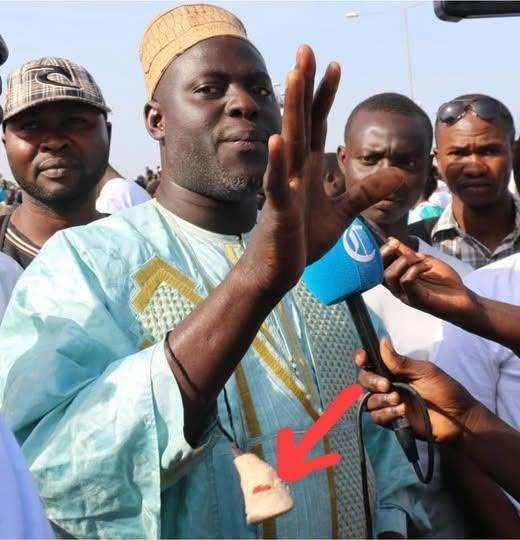
As presidential campaigns are ongoing, Gambians once again find themselves revisiting a familiar political theatre. A candidate appears clutching an object prescribed by a spiritual adviser.
Another arrives wearing a particular cap said to carry symbolic significance. Yet another is instructed to carry a blessed chewing stick throughout the day, avoid handshakes, or observe rituals believed to protect electoral fortunes.
Such stories, whether whispered in compounds, discussed in attaya circles, or circulated on social media, have become part of Gambian election folklore.
Their persistence is striking because only five years ago, the country seemed to be moving in another direction. The days of consulting Jahanka marabouts, seeking counsel from self-proclaimed psychic sheriffs, visiting Serere soothsayers, or listening to Jola clairvoyants for electoral fortunes appeared to be fading into the background of political life.
The era of burying dogs, goats, rams, and cows to improve political prospects seemed to be roaring toward extinction. Even the belief that success at the ballot box could be secured through ritual baths at Kachikally or midnight ceremonies appeared increasingly out of step with a new generation of voters more interested in jobs, governance, and accountability than in metaphysical assurances of victory.
Yet election season revives old habits. It exposes a tension between two competing visions of politics: one rooted in destiny, prophecy, and mystical intervention; the other grounded in democratic persuasion, organization, and public trust. One seeks answers from the invisible world. The other seeks them from the Gambian people.
Politics in The Gambia is changing, and changing fast. Yet every election season seems determined to revive old ghosts. Whether every story is true is almost beside the point. What matters is that such stories are instantly believable because they have become part of the political folklore of The Gambia and much of Africa.
They reveal the enduring coexistence of two worlds: one rooted in democratic politics and the other in metaphysical certainty. One seeks legitimacy from voters; the other seeks reassurance from unseen forces.
The irony is striking. At the very moment politicians stand before electoral officials to affirm faith in constitutional democracy, some are simultaneously believed to be carrying symbols of an older political tradition, one that places its confidence not in the judgment of citizens but in the intervention of destiny, prophecy, and supernatural protection.
It is a fascinating collision of worlds. The modern republic demands policy papers, manifestos, strategy, organisation, data, communication, and public trust. The metaphysical tradition promises protection, luck, favour, and destiny.
Election season becomes a stage where these visions of power perform side by side. One looks toward the ballot box. The other looks toward the unseen. Yet democracy ultimately permits only one final judge: the voter.
Politics in The Gambia is changing, and changing fast. Yet every election season seems determined to revive old ghosts. Images circulate. Rumours spread. Speculation grows. Once again, public attention shifts from policy to prophecy, from governance to metaphysics, and from democratic competition to supernatural claims.
The issue is not whether individual politicians believe in spiritual protection, blessings, or traditional practices. Such beliefs are deeply woven into the cultural fabric of many African societies and have existed for centuries.
The issue is what happens when political ambition becomes hostage to prophecy, and the pursuit of state power begins not with a vision for national development but with a prediction from a marabout or a fortune-teller.
Many political careers are said to begin not with a manifesto but with a prophecy. A future politician visits a Jahanka marabout, consults a Serere fortune-teller, seeks the counsel of a clairvoyant, or listens to a reputed spiritual authority who predicts that one day he will become president.
What begins as a mystical prediction becomes a political project. Years later, an entire campaign may be built on a prophecy uttered in a compound rather than on a vision forged through public engagement, service, and leadership.
Yet democracy was never intended to function this way. Democracy asks not what a marabout foretold but what a candidate can deliver. It asks not who has been spiritually chosen but who has been publicly tested. It asks not what destiny promises but what leadership accomplishes.
The tragedy of prophecy-driven politics is that it often creates entitlement. A politician convinced that mystical forces have already guaranteed power may begin to see elections as mere obstacles between himself and a predetermined destiny.
Every defeat becomes inexplicable. Every setback becomes a conspiracy. Every electoral loss becomes evidence of betrayal rather than a rejection by voters. But democracy contains a profound truth: nobody is born president, nobody is destined to rule, and nobody inherits a divine claim to State House. The people alone decide. The ballot box is the only legitimate fortune-teller in a republic.
The most striking Gambian example of mystic politics is the twenty-two-year rule of former President Yahya Jammeh. Throughout his presidency, Jammeh cultivated an image that extended beyond conventional political leadership.
He frequently blended religious symbolism, traditional beliefs, and claims of extraordinary powers into the exercise of state authority. His public persona drew upon elements of Jola spiritual traditions, Islamic symbolism, and narratives of supernatural abilities that portrayed him as a leader endowed with exceptional gifts and protection.
This carefully constructed mystique was not merely cultural theater. It became part of a broader political project to legitimise power, strengthen personal authority, and discourage dissent.
The image of a leader possessing mystical insight or supernatural favor created an atmosphere in which political opposition was often portrayed not merely as disagreement with a government but as defiance of a figure invested with a higher destiny.
The dangers of such politics became most visible during the state-sponsored witch-hunting campaigns that shocked the nation. Beginning around 2008 and recurring thereafter, security personnel, militias, and self-proclaimed witch doctors carried out operations in several communities across The Gambia.
Elderly villagers and ordinary citizens were rounded up, accused of witchcraft, and forced to drink herbal concoctions intended to extract confessions. Many victims suffered severe physical and psychological trauma, while some reportedly died from the abuse and its consequences.
The Truth, Reconciliation and Reparations Commission (TRRC) later documented these abuses, concluding that the witch hunts were not isolated incidents of superstition but manifestations of state power deployed through fear, coercion, and mystical narratives.
Survivors’ testimonies revealed the devastating human cost of allowing political authority to become intertwined with claims of supernatural legitimacy.
Yet the ultimate lesson of the Jammeh era is not about mysticism itself. It is about the limits of mystical power in a democratic society. For all the prophecies, spiritual symbolism, miracle claims, and cultivated aura of invincibility, Jammeh’s rule ended not through magic but through the ballot box.
In December 2016, Gambian voters peacefully exercised their democratic right and chose a different path. The outcome demonstrated a profound truth: no claim of divine favor, prophetic destiny, or supernatural authority can permanently override the people’s sovereign will.
The Gambian experience therefore stands as a cautionary tale. Mysticism may inspire followers, shape political narratives, or strengthen a leader’s personal mythology.
But it cannot substitute for democratic legitimacy. Citizens, not spirits, decide elections. Governments derive their authority from consent, not prophecy. And in the end, the ballot remains more powerful than any claim to supernatural power.
Across Africa, politics has long occupied territory between metaphysics and reality. Kings consulted diviners. Warriors carried talismans. Rulers sought spiritual legitimacy alongside political authority. These traditions are part of our history and deserve understanding within their cultural context.
But the modern democratic state operates on a different principle. Democracy transfers sovereignty from the invisible world to the citizen.
The phenomenon is not unique to The Gambia. Across Africa and the African diaspora, politics has maintained a complicated relationship with the metaphysical world.
In Benin, the historic cradle of Voodoo, politicians have been associated with traditional spiritual authorities and rites believed to confer legitimacy, protection, or political fortune.
In Haiti, where Voodoo remains an enduring cultural force, political leaders have often been surrounded by stories of spiritual consultations, symbolic rituals, and supernatural patronage.
Across the continent, electoral contests have unfolded not only in party headquarters and public squares but also in shrines, sacred groves, and the compounds of influential spiritual figures.
Senegal provides a striking example closer to home. For decades, the famous ndigal – voting guidance issued by powerful marabouts to their disciples – was one of the most formidable forces in Senegalese politics.
Presidential candidates sought audiences with religious leaders whose words could influence entire voting blocs. Political endorsements from influential marabouts were discussed with
almost the same seriousness as opinion polls.
The relationship between religion and politics became so intertwined that many observers regarded the blessing of certain religious authorities as an indispensable ingredient of electoral success.
Yet even in Senegal, history has moved in a different direction. Education, urbanization, migration, social media, and the rise of a politically conscious youth have weakened the assumption that religious authority automatically translates into political obedience.
Many younger Senegalese continue to respect their marabouts and religious leaders, but they increasingly reserve the right to make independent political choices.
They may seek spiritual guidance without surrendering their democratic judgment. Influence remains, but unquestioning political compliance is no longer guaranteed.
The lesson is clear. Across democratic societies, charismatic and mystical authority is giving way to citizen agency. Voters may still seek moral guidance, spiritual comfort, and religious inspiration, but they are less willing to outsource their political judgment to prophets, fortune-tellers, clairvoyants, or spiritual intermediaries.
Citizens are asking a different question: not what destiny has promised a politician, but what that politician has promised the nation. In the end, democracy answers with one truth: the voter decides, and the future belongs to the people who vote.
The Gambia appears to be traveling along the same historical path. Reverence for marabouts, traditional elders, and spiritual figures remains deeply embedded within society, but political legitimacy is becoming harder to secure through symbolism alone.
A new generation is emerging that cares less about prophecies of victory than about evidence of competence, less about mystical assurances than about practical solutions, and less about who a marabout has allegedly chosen than about who can govern effectively.
Indeed, one peculiar feature of African politics is that many political careers are said to begin not with a manifesto but with a prophecy. A future politician visits a Jahanka marabout, consults a Serere fortune-teller, seeks the counsel of a clairvoyant, or listens to a reputed spiritual authority who confidently predicts that one day he will become president.
What begins as a mystical prediction gradually becomes a political project. Years later, an entire presidential campaign may be built upon a prophecy uttered in a compound rather than upon a vision forged through public engagement, public service, and leadership.
Yet democracy was never intended to function this way. Democracy asks not what a marabout foretold but what a candidate can deliver. It asks not who has been spiritually chosen but who has been publicly tested. It asks not what destiny promises but what leadership accomplishes.
Yet election season has a habit of reviving old habits. It exposes the enduring tension between two competing visions of politics: one rooted in destiny, prophecy, and mystical intervention; the other grounded in democratic persuasion, organization, and public trust. One seeks answers from the invisible world. The other seeks them from the Gambian people.
Politics in The Gambia is changing, and changing fast. Yet every election season seems determined to revive old ghosts. Legitimacy does not descend from the heavens. It does not emerge from a marabout’s compound. It does not materialise through mystical intervention. It arises from the consent of ordinary men and women who freely cast their ballots. The ballot box is democracy’s only oracle. Its verdict is the only prophecy that matters.
The central paradox of Gambian politics therefore remains striking. Politicians often claim overwhelming popular support while simultaneously seeking reassurance from fortune-tellers, marabouts, clairvoyants, and spiritual advisers. If the people are already convinced, why do they need predictions? If victory is assured, why seek supernatural guarantees? Such contradictions reveal a lack of confidence not in destiny but in democratic persuasion.
Modern elections are won by entirely different means. Successful politicians rely on organization, strategy, communication, research, and public trust. They study demographics rather than dreams. They commission surveys rather than séances. They analyse data instead of interpreting omens. They build grassroots structures instead of searching for shortcuts through the metaphysical realm.
A politician seeking victory in twenty-first-century Gambia would probably benefit more from competent economists, statisticians, policy experts, and communication strategists than from an army of fortune-tellers.
Today’s campaigns increasingly resemble boardroom operations. Voters are more informed than ever before. Social media has transformed political communication. Citizens compare records, assess promises, evaluate competence, and challenge narratives. The electorate is becoming less interested in mystical claims and more interested in practical outcomes.
A young graduate searching for employment does not need a prophecy. A farmer struggling with rising costs does not require divination. A market woman confronting inflation is not waiting for a fortune-teller. They are waiting for leadership. They are waiting for solutions. They are waiting for results. This is why the future of Gambian politics belongs to realpolitik rather than ritual.
The future belongs to leaders who understand policy, economic development, governance, and communication. It belongs to those who can present coherent programs and persuade citizens through ideas rather than superstition.
The Gambia’s transformation will not come through Jahanka maraboutism, Serere fortune-telling, black magic, clairvoyance, prophetic declarations, talismans, charms, or ritual sacrifices.
It will come through stronger institutions. It will come through accountable leadership. It will come through economic reform. It will come through educational advancement. It will come through democratic participation and civic responsibility.
No marabout can substitute for policy. No charm can replace competence. No prophecy can compensate for poor leadership.
As nomination season returns and familiar debates reappear, Gambians should focus less on what a politician carries in a pouch and more on what a politician carries in a manifesto. The country faces too many serious challenges to be distracted by endless political theatre, shenanigans, and tomfoolery.
May I remind those “tangal cheeb politicians” of Chinua Achebe’s timeless observation about “the young antelope who danced herself lame when the main dance was yet to come.” The main dance of democracy has never been performed before marabouts. It is performed before the people.
And in a genuine democracy, power is neither granted by spirits nor guaranteed by prophecy. It is earned through persuasion, secured through organisation, tested through elections, and ultimately bestowed by the electorate’s sovereign will.
That is the only magic that matters. Yahya Jammeh’s fall remains The Gambia’s most powerful reminder that while mysticism may shape politics, it cannot ultimately triumph over democracy.
Twenty-two years of cultivated supernatural authority, prophetic claims, and carefully constructed myths of invincibility were undone by a simple democratic act: ordinary citizens casting their votes. In the end, the ballot box succeeded where mysticism failed. The people’s sovereign will proved stronger than any claim to destiny.
By Alagi Yorro Jallow
Photo Credit: Facebook



Recent Comments