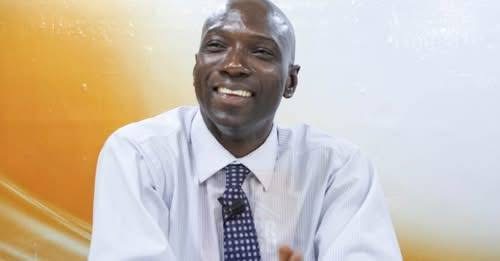
In a political landscape often dominated by legacy loyalty and populist theatrics, Dr. Ousman Gajigo’s recent remarks offer a refreshing intervention.
As an economist and leader of the emerging Patriotic Progressive Alliance (PPA), Gajigo blends electoral realism with systemic critique, positioning his party as a reformist alternative to both ruling and opposition elites.
Speaking to Kerr Fatou, Dr. Gajigo declared with conviction: “I am 100% certain that if Darboe and Barrow contest again, Barrow will win.” This is not merely a prediction; it is a rebuke of the United Democratic Party’s (UDP) post-election narrative.
By reaffirming the legitimacy of the 2021 presidential elections, Gajigo challenges the conspiracy rhetoric that has clouded public discourse. He notes that Gambians had multiple options and chose President Barrow, and that the margin of victory was too wide to attribute to malpractice.
Yet Gajigo’s critique extends beyond electoral outcomes. He acknowledges Barrow’s shortcomings but frames the need for change as structural, not personal.
“When we say change in The Gambia, it is not only Barrow,” he asserts, signaling disillusionment with the entire political class.
He reminds the public that Barrow’s first three years were effectively a UDP government, and that opposition parties must also be held accountable.
His decision to form the PPA stems from this dissatisfaction. Gajigo positions the party not as a vehicle for personal ambition, but as a technocratic platform focused on governance, economic reform, and credible leadership.
“We are not impressed by most of these political parties,” he explains, rejecting patronage politics and calling for policy substance over personality.
Importantly, Gajigo tempers his critique with respect for historical sacrifice. He acknowledges Ousainou Darboe’s role in resisting Jammeh’s dictatorship but cautions against hero worship: “There is no individual that the country is not bigger than.”
This philosophical pivot invites Gambians to move beyond personality politics and embrace collective civic responsibility.
His closing call for unity, “One party cannot do it; we should discuss and see what can benefit the country and do that”, is both strategic and idealistic. It reflects an understanding that coalition-building may be necessary for reform, but also a warning that ideological clarity must guide such alliances.
In sum, Dr. Gajigo’s remarks offer a principled critique of populism, legacy politics, and institutional stagnation.
His voice adds depth to the civic conversation and may resonate with voters disillusioned by both the ruling party and the traditional opposition.
By Alagi Yorro Jallow







Recent Comments