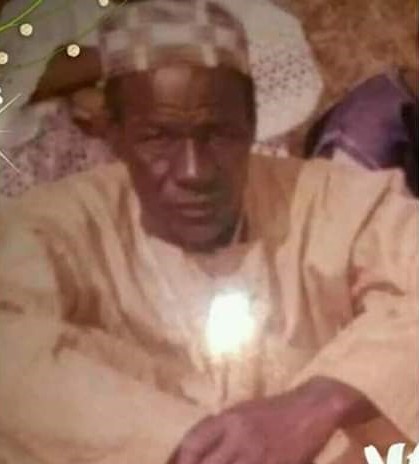
Seven years after Haruna Jatta’s killing under the Barrow administration, there has been no investigation, no accountability, and no display of institutional courage. This persistent neglect highlights Gambia’s retreat from justice for an early victim of the “New Gambia” and underscores ongoing selective justice.
Haruna Jatta was killed in 2017 during the early days of the Barrow-led coalition government, a period celebrated as the dawn of a new democratic era.
Yet, unlike other victims of state violence, his case has received no official investigation, no public inquiry, and no institutional advocacy.
The Bar Association, the National Human Rights Commission, and many self‑styled activists have spoken loudly on other national tragedies but have remained silent on Haruna’s death.
His identity as a Jola from Foni, a region that has been unfairly stigmatised, has contributed to this neglect. If “Never Again” is to be meaningful, justice must be universal, not selective.
The Gambia’s transition from dictatorship to democracy was built on a solemn promise that no Gambian would ever again be denied justice, dignity, or truth. Yet, the unresolved killing of Haruna Jatta, one of the first human rights victims under the coalition government of the Barrow administration, stands as a painful contradiction to that national vow.
Seven years later, his family remains without answers, without recognition, and without justice. The silence of institutions, activists, and the media has turned his death into a symbol of selective outrage and selective conscience in a country that pledged equality for all.
Every nation carries its moral tests, and every generation is judged by how it responds to injustice. In The Gambia, the death of Haruna Jatta remains one of the most painful and unresolved human rights tragedies of the Barrow era — a tragedy that continues to expose the cracks in our national conscience.
His killing was not an abstraction. It was a real-life extinguished, a family shattered, and a community left with unanswered questions. Yet, seven years later, the silence surrounding his case has become louder than any official statement.
The Gambia promised itself a new beginning after 2017. We promised truth, justice, and accountability. We promised that no Gambian would again be treated as invisible. We promised that “Never Again” would not be a slogan but a national covenant.
And yet, in Haruna Jatta’s case, that covenant has been broken. His death has been met with a troubling quietness — not only from the state, but from institutions and voices that have otherwise been loud and passionate in their advocacy for other victims.
This silence is not merely an oversight. It reflects a deeper problem: the selective application of justice in a country still struggling to free itself from the shadows of tribalism, political bias, and institutional timidity.
The silence of institutions and the burden of selective advocacy. In recent years, we have witnessed a surge of activism in The Gambia. Statements are issued. Hashtags are created. Press conferences are held. Marches are organised.
And these efforts are important — they reflect a society that refuses to be silent in the face of injustice. But the question remains: Why has this same energy not been extended to Haruna Jatta’s case?
The Bar Association has spoken forcefully on many national issues. The National Human Rights Commission has issued statements on a wide range of matters. Self-proclaimed activists have mobilized across the country in support of victims.
Yet, when it comes to Haruna Jatta — a citizen killed under the watch of a democratic government — the silence has been profound. This is not an accusation. It is an observation.
This is a moral challenge central to the state of justice in Gambia: If justice is to be universal, why does it still depend on the victim’s identity, origin, or alignment with prevailing political narratives?
Gambia must confront the reality that a culture of selective advocacy for victims fundamentally undermines its human rights commitments. Choosing which victims deserve justice betrays the nation’s moral foundation and hampers progress toward universal justice.
Haruna Jatta’s identity as a Jola from Foni long stigmatised in national discourse has exposed the extent of the country’s selective empathy toward victims.
This dynamic has created a dangerous blind spot that challenges the integrity of justice in Gambia. When a victim comes from a region associated with a former president, some institutions hesitate. Some activists retreat. Some journalists look away.
But justice cannot be rationed based on geography or political history. The Constitution does not discriminate. The law does not discriminate. Our humanity should not discriminate. If “Never Again” is to have meaning, it must apply to all Gambians — not only those whose stories are politically convenient.
The media, once the nation’s conscience, has also struggled with consistency. Journalism is not activism, and activism is not journalism. But both share a moral obligation to truth.
When the media amplifies some tragedies while muting others, it contributes to a culture of selective empathy.
The death of a Gambian citizen at the hands of state forces should never be a footnote. It should never be a taboo subject. It should never be overshadowed by political discomfort. A free press must be courageous enough to confront all injustices, not only those that align with its preferred narratives.
The National Human Rights Commission was created to serve as the nation’s moral compass, independent, fearless, and principled. It has spoken boldly on many issues, and its work is essential to our democracy. But its silence on the death of Haruna Jatta remains a troubling omission.
This silence does not diminish the Commission’s broader contributions, but it raises a fundamental question: Can a human rights institution remain credible if it does not address all human rights violations with equal urgency?
The NHRC has the mandate to investigate, to recommend, and to demand accountability. It has the moral authority to insist that no Gambian’s death be ignored. And it has the responsibility to ensure that justice is not selective.
Gambia stands at a crossroads: building a fair society demands rejecting selective outrage and selective justice. Only by confronting unresolved tragedies for all can democracy and long-term peace be secured.
Justice for Haruna Jatta transcends politics, tribe, and region—it embodies the challenge at the core of Gambia: protecting the soul of the nation depends on universal justice. Failing to demand justice for one citizen erodes justice for all. Silence enables impunity and betrays promises to every Gambian family.
The anniversary of Haruna Jatta’s death is not merely a date on the calendar. It is a reminder of our unfinished moral work. It is a reminder that justice delayed is justice denied. It is a reminder that “Never Again” must be more than a slogan; it must be a practice.
The call for justice is not a call for vengeance. It is a call for truth. It is a call for accountability. It is a call for equality before the law. It is a call for The Gambia to live up to its own promises. Haruna Jatta deserves justice. His family deserves closure.
The nation deserves the truth.
And The Gambia deserves a future where no citizen, from Foni to Banjul, from Basse to Brikama, is ever treated as invisible.
By Alagi Yorro Jallow








Recent Comments