
The families of the fallen officers deserve better than hashtags and Social Media Noise. Justice is not a performance. It is a process slow, deliberate, and sacred.
There are moments in a nation’s life when memory must speak, not to reopen old wounds, but to prevent new ones. The tragic killing of the police officers has shaken the country, and rightly so. These were human beings with families, duties, and dreams. Their deaths deserve dignity, sobriety, and a justice process untainted by propaganda or political opportunism.
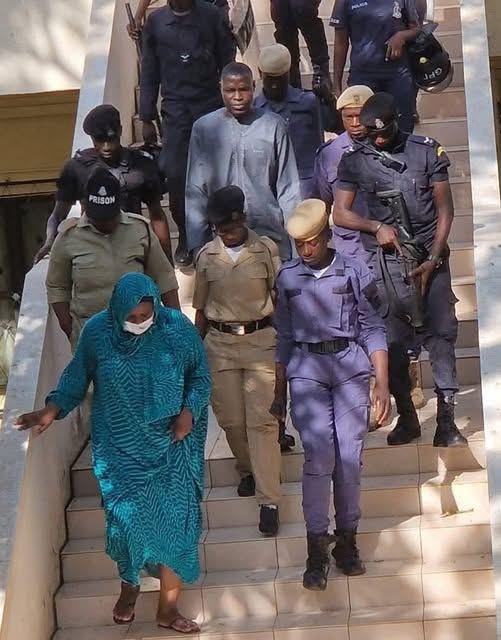
The trial has concluded. The accused has been acquitted. The appeal is ongoing. This is precisely the moment when a mature society pauses, reflects, and allows the law to take its full course.
It is more honorable to give the families of the victims space to seek closure through the courts, rather than through the noise of social media.
We must pray that justice is served for both the victims and the accused, and that the justice system identifies the real killers. Anything less is a betrayal of the dead and a disservice to the living.
Yet instead of restraint, we are witnessing a rush to weaponize grief. Hashtags, slogans, and emotional outbursts are being deployed not to honor the fallen, but to score political points and inflame tribal sentiments.
“Who killed the cops, Mr. President?” some self‑proclaimed activists demand, as if the purpose is not to seek truth but to corner a political opponent. The tragedy of this posture is not only its cynicism, but its selective memory.
This is not the first time The Gambia has faced a moment where voices were needed — and where too many chose silence. In 2013, during the height of Yahya Jammeh’s dictatorship, I wrote a reflection inspired by Pastor Martin Niemöller’s timeless warning:
“In Germany, they came first for the Communists,
and I didn’t speak up because I wasn’t a Communist.
Then they came for the Jews,
and I didn’t speak up because I wasn’t a Jew…
Then they came for me,
and by that time, no one was left to speak up.”
I wrote then: “If they come for me in the morning, they’ll go for you at night.”
It was a reminder that injustice, once tolerated, grows bold. Silence, once normalised, becomes complicity. And selective outrage, once accepted, becomes a national habit.
The atmosphere in 1930s Germany was tense. Neighbours spied on neighbours. Fear was everywhere; people identified ‘expendables’ for the state. We lived much the same way under Jammeh. People of conscience were hunted. Journalists were attacked. Radio stations were burned. Families lived in terror.
Many who now shout “Who killed the cops?” were silent when Deyda Hydara was killed, The Independent was burned, Radio One FM was attacked, Solo Sandeng was tortured, or when communities lived in fear. Silence then. Noise now. That is not activism. That is opportunism.
In 2017, as the country celebrated its so‑called “New Gambia,” I posed a challenge that remains relevant today:
“If you are a critic today, I am interested in understanding your profile of criticism during the previous tyrannical regime of despot Yahya Jammeh. Show me a post from before Facebook, a letter in the newspapers, a contribution on Gambia‑L or the mighty Gambia Post, or a photo of you holding a placard in a demonstration against Jammeh. This will help me ascertain whether you are a critic of principle or of interest. Talk is cheap today in New Gambia.”
That challenge stands. Because justice cannot be selective. Empathy cannot be seasonal. And outrage cannot be a costume worn only when it suits our politics.
Today, as the nation mourns the police officers who were killed in cold blood, we must not repeat the mistakes of selective empathy. To politicise this tragedy is to dishonor the dead. To tribalize it is to endanger the living. To weaponise it is to betray the nation.
The families of the fallen officers deserve better than hashtags. They deserve the truth. They deserve closure. They deserve a justice process free from manipulation, intimidation, or emotional theatrics.
The role of responsible commentary is not to pour petrol on an already burning fire. It is to cool the temperature, to invite rational discussion, and to remind citizens that justice is a process, not a performance. We must insist on facts, not rumors; on evidence, not innuendo; on institutions, not mobs.
Let us lower our voices and raise our standards. Let us honor the dead by refusing to turn their memory into a spectacle.
Let us allow the courts to work. Let us comfort the families with our restraint, not torment them with our theatrics.
And let us remember the lesson from Niemöller, from 2013, from 2017, and from our own history: When we fail to speak consistently, when we choose silence for some and noise for others, we create the very conditions that allow injustice to flourish. A nation that forgets this lesson risks repeating its darkest chapters.
By Alagi Yorro Jallow








Recent Comments