
The Bar Association and the National Human Rights Commission were right to condemn the State’s disregard for court orders. But their silence on justice for the police officers killed reveals a troubling imbalance in our national conscience.
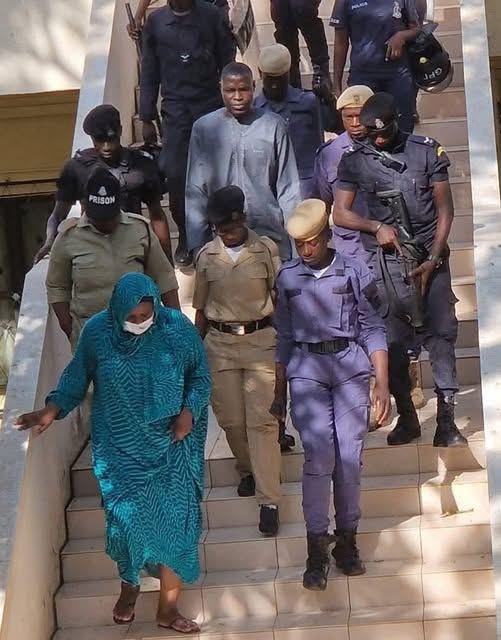
In the wake of the re‑arrest of Ousainou Bojang and his sister, Amie Bojang, two of our most respected civic institutions, the Gambia Bar Association and the National Human Rights Commission, issued strong press releases.
Their message was clear and correct: court orders must be obeyed, and the rule of law must never be optional. But in their rightful defense of due process, something essential was missing.
Neither institution spared a sentence for the police officers who were killed, nor for the families who continue to grieve in silence. Neither acknowledged that justice must also extend to those who died in uniform. Neither reminded the nation that the rule of law protects victims as much as it protects the accused.
This silence is not a minor omission. It is a moral imbalance. Justice cannot be selective. Human rights cannot be selective. Institutional outrage cannot be selective. The Bar Association is the conscience of the legal profession. The NHRC is the guardian of human rights. Their voices carry weight.
But with that weight comes the responsibility to defend all rights, not only the rights that attract public sympathy or political momentum.
The police officers who died were Gambians too. They had families. They had children. They had a constitutional right to protection under the same law that protects every citizen. Their deaths were not administrative inconveniences; they were national tragedies.
Yet in the flurry of statements, condemnations, and legal commentary, no one spoke for them. Not a line acknowledging their sacrifice. Not a sentence demanding accountability. Not a paragraph reminding the nation that killers, whoever they may be, must be brought before the courts.
This selective silence weakens public trust. It reinforces the perception that some victims matter more than others, that some tragedies deserve advocacy while others are quietly filed away.
This is not a call to silence criticism of the State. It is a call to balance. It is a call to consistency. It is a call to moral courage, the courage to say that the State must obey court orders, and also the courage to say that the killing of police officers is an attack on the Republic itself.

The rule of law is a two‑way street. It protects the accused. It protects the victims. It protects society. To emphasize one and ignore the other is to weaken the very foundation of justice.
Let this be a reminder to our institutions. Justice is indivisible. You cannot defend the rule of law on Monday and ignore its demands on Tuesday. You cannot speak for one set of Gambians and forget another. You cannot champion rights while overlooking responsibilities.
The police officers who died deserve justice. Their families deserve closure. And the nation deserves institutions that defend the rule of law in its entirety—not selectively, not partially, but fully.
By Alagi Yorro Jallow








Recent Comments