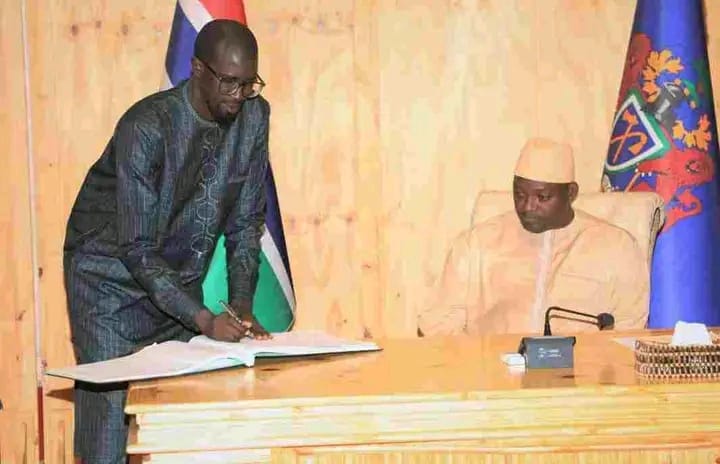
A major constitutional battle has unfolded at the Supreme Court as judges heard arguments over President Adama Barrow’s handling of former Auditor General Modou Ceesay’s removal from office.
The case, described by observers as a defining test of executive authority, centres on whether constitutional safeguards protecting the Auditor General were bypassed.
Ceesay’s lawyer argued that the 1997 Constitution clearly outlines a strict removal process, including the establishment of a tribunal and the granting of a fair hearing.
He told the court that none of these steps were followed before a successor was appointed.
Instead, the plaintiff told the court that the president offered Ceesay a ministerial portfolio in a cabinet reshuffle, a move allegedly intended to create a vacancy in the constitutionally protected office.
According to his legal team, Ceesay formally rejected the appointment and therefore never vacated his post.
Despite this, a successor was named and police later enforced the transition at the National Audit Office, an action the plaintiff described as unconstitutional interference.
The state rejected allegations of wrongdoing. Government counsel maintained that the president acted within his constitutional powers, arguing that once the ministerial appointment was made, the Auditor General’s office became vacant.
From the state’s perspective, what followed was a lawful administrative transition, not a removal.
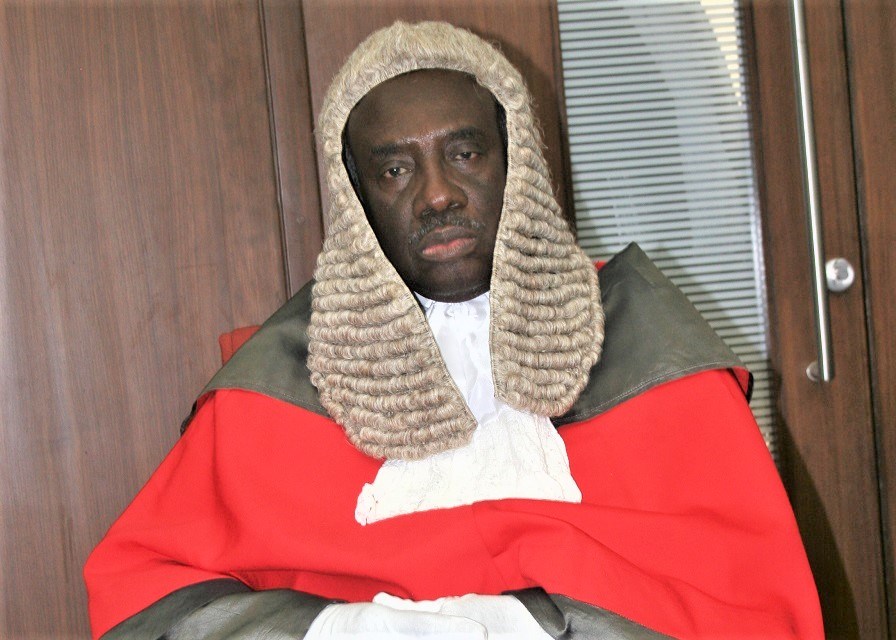
Presiding over the matter, Chief Justice Hassan B. Jallow and a full bench of justices reserved judgment after hours of legal submissions.
By Adama Makasuba






Recent Comments