A debate distorted by emotion, not standards
Every democracy suffers when public debate is hijacked by emotion, factional loyalty, and selective outrage. What we are witnessing today is not a clash of ideas but a collapse of intellectual discipline.
My recent commentary, a simple call for evidence, verification, and responsibility, has been twisted into a false narrative by those who confuse activism with journalism and political reflex with reason.
Timothy Njoya, a brilliant scholar and a skillful storyteller, presents a persuasive argument with a profoundly human touch, suggesting that “The reason Jesus refused to allow anyone he healed to become his disciple is that indebtedness is the worst kind of sycophancy; it kills reason.”
Demba Baldeh, in his latest outburst, accuses me of “exonerating” the government simply because I demanded that a former Vice President provide evidence for a serious allegation.
This is the tragedy of our public discourse: the moment you insist on standards, someone accuses you of taking sides. But standards are not partisan. They are the foundation of public trust.
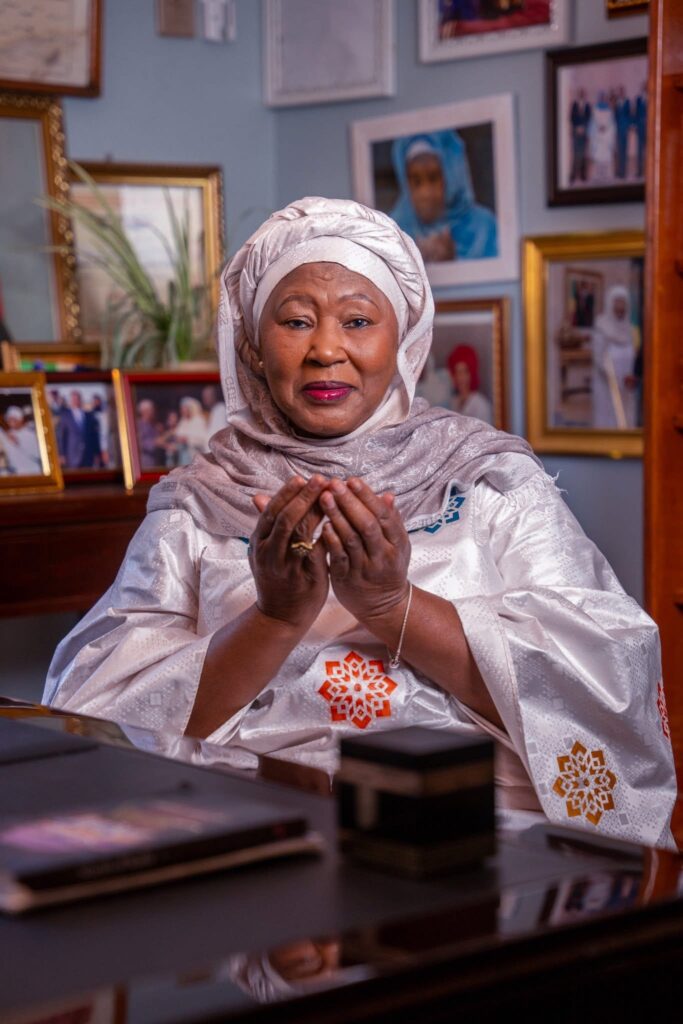
The Former Vice President’s Record Cannot Be Erased
Let us be clear: when a former Vice President makes a claim of financial diversion, the burden of proof lies with her. This is not persecution. It is the minimum expectation of public accountability.
And the public has not forgotten her record:
- The age controversy that raised constitutional questions,
- the self‑appointment as “Acting President” in a letter to the United Nations,
- the unverified accusations against Ousainou Darboe on West Coast Radio,
- the contradictory statements on national matters,
- and the unresolved issue of the 2016 Diaspora “Democracy Fund,” whose audited accounts remain missing.
These are not inventions. They are part of our national memory. When someone with such a record makes a new allegation, verification is not optional; it is mandatory.
The Crisis of Identity: When One Man Tries to Be Journalist, Activist, and Politician at Once
There is another uncomfortable truth that must be stated plainly: Demba Baldeh suffers from a chronic identity crisis that has long undermined his credibility. For years, he has used the Gainako platform not as a space for journalism, but as a stage for personal relevance, shifting roles depending on which identity brings him the most applause at any given moment.
One day, he is a “journalist.”
The next day, he is an “activist.” Then suddenly, he is a full‑fledged member of the opposition UDP.
There is nothing wrong with political affiliation. Every citizen has that right. What is wrong — dangerously wrong is the attempt to masquerade as all three simultaneously while pretending to be an impartial voice of public conscience.
You cannot be a politician masquerading as an activist, masquerading as a journalist, and then claim to be the guardian of accountability. That is not a principle. That is opportunism dressed in borrowed robes.
And it becomes even more troubling when such a person positions himself as the defender of a former Vice President whose public record is riddled with contradictions, unverified claims, and unresolved controversies. When a conflicted commentator defends a conflicted politician, the result is not truth, it is confusion.
This is why Demba’s outrage rings hollow. It is not driven by standards. It is driven by the perpetual search for relevance, the need to insert itself into every national debate, and the hope that loudness will substitute for legitimacy.
But loudness is not integrity. And relevance is not earned through noise. It is earned through consistency, principle, and truth — qualities that cannot be manufactured through activism, political allegiance, or online theatrics.
The Falsehood That I Ignore Political Money
Demba’s attempt to paint me as silent on political finance is not only dishonest — it is historically illiterate. Long before he discovered the vocabulary of “accountability,” I had written extensively on:
- The vehicle donations to the National Assembly,
- the President’s undocumented philanthropic disbursements,
- the opaque fundraising of both the NPP and the opposition,
- the UNITE vehicle and motorbike donations,
- the UDP Diaspora fundraising,
- and the urgent need for campaign finance regulation.
I even submitted a memorandum to the Constitutional Review Commission calling for legal reforms on political money. These are public records. They cannot be erased by the emotional pen of a partisan commentator.
Activism Is Not Journalism — And Confusion Is Dangerous
The core of Demba’s confusion lies in his inability to distinguish activism from journalism. Activism is driven by cause. Journalism is driven by truth. Activism seeks applause. Journalism seeks clarity. Activism thrives on outrage. Journalism thrives on verification.
When you approach every issue through the lens of political loyalty, you will always misread those who approach issues through the lens of principle. That is why Demba interprets a call for evidence as “defending the government.” He cannot imagine a world where standards apply to everyone, not just to those he opposes.
Two Wrongs Do Not Make a Truth
Demba argues that because the government has not fully disclosed the source of the D50 million, the former Vice President must be right. This is the logic of political desperation, not civic responsibility. The government must indeed provide full disclosure. But the absence of disclosure does not magically transform an unverified allegation into fact.

Accountability is not a weapon to be pointed only at your opponents. It is a mirror that must reflect everyone, government, opposition, activists, and former officials alike.
Personal Attacks Reveal More About the Attacker Than the Target
Demba’s descent into personal attacks — questioning my motives, my integrity, and my record — is not only juvenile but revealing. It exposes a struggle for relevance, a craving for validation, and a deep discomfort with principled critique.
I have spent decades in journalism, advocacy, and institutional reform. My record is public, consistent, and documented. I do not need to shout to be heard. I do not need to be insulting to be relevant. And I certainly do not need to seek validation from those who entered the media through activism and now mistake noise for credibility.
My Position Remains Unshakeable
I will continue to insist on the same principles I have upheld for decades:
- Every public figure must provide evidence for serious allegations.
- Every political party must disclose its funding sources.
- Every government must be transparent.
- Every opposition must be accountable.
- Every activist must distinguish opinion from fact.
- Every journalist must uphold standards, not sentiments.
This is not about NPP or UDP. It is not about personalities. It is about the integrity of our democracy and the credibility of our public discourse.
The Republic Deserves Better Than Emotional Activism
The Gambia cannot afford a public sphere where truth is optional, evidence is inconvenient, and outrage is currency. We cannot build a democracy on selective accountability. We cannot strengthen institutions by weakening standards. And we cannot protect the republic by defending falsehoods simply because they come from those we admire.
I will continue to speak with clarity, with memory, and with principle even when it offends those who prefer noise to truth. The republic deserves nothing less.
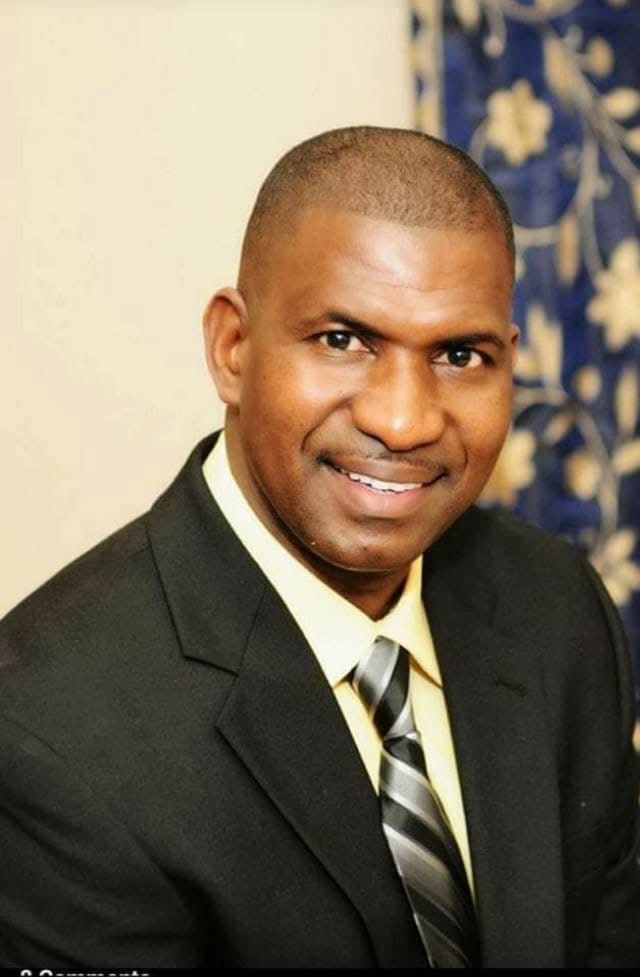
By Alagi Yorro Jallow








Recent Comments