Part 1
Six years ago, I warned loudly, clearly, and without apology that President Adama Barrow’s administration was drifting toward mediocrity, weighed down by cabinet ministers who lacked vision, advisers who lacked courage, and Attorneys General who lacked the intellectual and moral heft required to steer a transitional justice system.
I argued then that more than 75 percent of his administration needed to be dismissed, not out of malice, but out of necessity. A government cannot run on spare tires. A nation cannot be driven by passengers pretending to be drivers. Leadership is brinkmanship, and brinkmanship requires competence, clarity, and conviction.
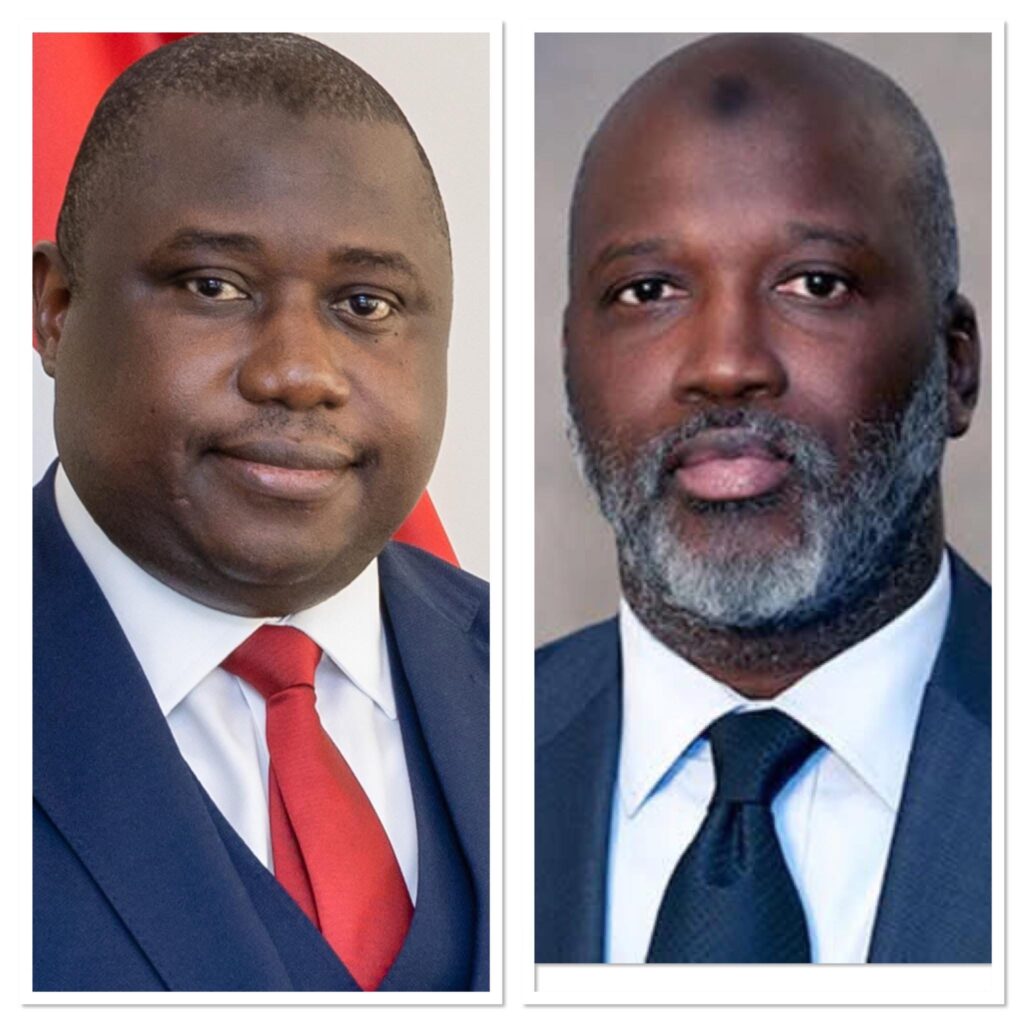
Today, in 2026, the evidence has caught up with the warning. What was once a prediction has hardened into a national reality. President Barrow’s two Attorneys General and Ministers of Justice, Abubacarr Tambadou’s successors, have proven to be the least remarkable in the history of the office, both in the First Republic and the Second. Not because they lacked eloquence, but because they lacked impact. Not because they lacked titles, but because they lacked outcomes. And in governance, outcomes are everything.
The Ministry of Justice under Barrow’s later Attorneys General has become a museum of missed opportunities, a graveyard of high‑profile cases lost in our courts, and a theatre of legal miscalculations that have embarrassed the State and weakened public confidence.
Gambians can list the cases the State has lost faster than they can name the cases it has won. From corruption prosecutions that collapsed under the weight of poor preparation, to politically sensitive cases thrown out for lack of evidence, to procedural blunders that exposed the State to ridicule, the pattern is unmistakable: the Barrow administration has not been winning where it matters.
The irony is painful. The only major international legal victory associated with The Gambia in recent years, the Rohingya genocide case at the International Court of Justice, was not driven by the domestic Attorney General’s office. It was led by the foreign law firm Foley Hoag, supported by international experts, and anchored in a global human rights coalition.
The Gambia’s role, while symbolically powerful, was operationally outsourced. Even the provisional measures granted by the ICJ in 2020 were the product of international legal strategy, not domestic prosecutorial brilliance. At home, where the Attorney General’s competence should be most visible, the record is barren.
This is not accidental. It is structural. It is the result of appointing individuals who mistake rhetoric for strategy, who confuse press conferences for performance, and who believe that the appearance of action is a substitute for the substance of action.
The art of brinkmanship, the ability to negotiate, to intimidate, to maneuver, to anticipate — is foreign to them. They bark loudly but bite softly. They threaten boldly but act timidly. They speak as if they are lions but govern as if they are lambs.
Leadership, like America’s nuclear doctrine, is sometimes about deterrence. You do not need to fire the missile; you need to be respected enough that no one dares to test you.
But Barrow’s leadership in justice has been the opposite. It fires blanks and expects applause. It issues threats it cannot enforce. It enters legal battles it cannot win. It advises the police to take actions that collapse under judicial scrutiny. It confuses political loyalty with legal competence, and the nation pays the price.
The consequences are everywhere. Corruption cases evaporate. High‑profile prosecutions crumble. Government lawyers walk into courtrooms unprepared, outmatched, and outmaneuvered. The State loses cases that any competent legal team would have secured. And the public, watching this slow‑motion collapse, loses faith in the justice system itself. From corruption to justice, nothing is working.
This is why I argued and still argue that President Barrow must dismiss the majority of his cabinet, advisers, and agency heads. Not because they are bad people, but because they are bad performers. A President cannot govern with spare tires. A nation cannot progress with leaders who are present in title but absent in impact. Many of Barrow’s ministers are busy with private agendas, personal enrichment, and political survival. They are not governing. They are not reforming. They are not delivering.
The Justice Minister and the Interior Minister, in particular, must be held accountable for the legal and operational blunders that have repeatedly embarrassed the State.
The events of yesterday, in which police acted on questionable legal advice, are not isolated incidents. They are part of a pattern of incompetence, a pattern that has weakened the rule of law and exposed the administration’s intellectual bankruptcy. We challenge any Gambian to name a single landmark domestic case won by Barrow’s two Attorneys General. The silence that follows is the loudest indictment.

A nation cannot survive on excuses. A President cannot govern on loyalty alone. A justice system cannot function on rhetoric. The time for polite criticism is over. The time for accountability has arrived. President Barrow must confront the truth: his leadership in justice has failed him, failed the system, and failed the nation.
And failure, when left unaddressed, becomes a threat to the Republic itself. The Gambia deserves better. The law deserves better. The future deserves better. And history will not forgive those who had the chance to act but chose instead to drift.
By Alagi Yorro Jallow







Recent Comments