
This commentary examines the significance of Judge Sarjo Barrow’s public intervention on the legality and necessity of the Special Prosecutor’s office. His essay, sober, principled, and grounded in constitutional reasoning, has reshaped a debate clouded by political noise and misinformation.
Judge Barrow’s reflections illuminate the structural weaknesses of The Gambia’s justice sector, highlight the chronic gaps between police investigation and prosecution, and call for a prosecutorial culture rooted in competence, mentorship, and institutional memory.
His intervention also reminds the nation that Gambian legal talent has excelled internationally at the Rwanda Tribunal in Arusha, at the International Criminal Court in The Hague, and in other global justice mechanisms, even as domestic institutions struggle to retain and cultivate such excellence.
This commentary interprets his arguments, situates them within the broader crisis of justice‑sector reform, and underscores the civic courage required for jurists to speak with clarity in a polarised environment.
A Jurist’s Voice in a Noisy Republic: Judge Sarjo Barrow and the Battle for Prosecutorial Integrity.
There are moments in a nation’s democratic journey when a single voice rises above the noise — not to inflame, not to provoke, but to illuminate. In The Gambia’s ongoing debate over the appointment of a Special Prosecutor, that voice came from an unexpected but profoundly consequential place: the bench.
When Judge Sarjo Barrow, a Gambian‑American jurist of impeccable training and judicial temperament, offered his reflections on the legality, necessity, and constitutional logic of the Special Prosecutor’s office, he did more than comment on a policy.

He restored dignity to a debate that had been suffocated by political noise, misinformation, and intellectual shortcuts.
Judge Barrow’s intervention was not partisan. It was principled. It was grounded in constitutional reasoning, institutional memory, and a sober understanding of the justice sector’s structural deficits.
His essay reminded the nation that the rule of law is not a slogan; it is an architecture. And when that architecture is weak, the entire democratic house trembles.
At the heart of his argument was a simple yet devastating point: if the state acknowledges that it lacks the capacity to prosecute complex cases, it must also confront whether it has the capacity to defend accused persons with equal competence.
This is not merely a legal question. It is a constitutional one. It goes to the core of fair trial rights, equality before the law, and the integrity of the justice system.
In raising this question, Judge Barrow did what true jurists do: he forced the nation to confront the uncomfortable truths buried beneath political rhetoric. He reminded Gambians that justice is not a performance. It is a system. And systems require capacity, competence, and institutional coherence.
But Judge Barrow did not stop there. He drew attention to a statistic that should trouble every policymaker: only 30 indictments were filed in 2025. For a country of two million people, this is not a sign of peace — it is a sign of paralysis.
It signals a prosecutorial system that is either overwhelmed, under‑resourced, poorly coordinated, or structurally incapacitated. Judge Barrow did not accuse anyone. He invited inquiry. He called for an audit of the seam between police investigation and prosecution, a seam that appears strained, under‑resourced, and institutionally fragile.
He anchored this argument in a sobering historical truth: The Gambia has been independent for 61 years, and its judiciary has existed for 61 years — yet it still struggles to build a prosecutorial system capable of handling complex cases without external reinforcement.
This, he argued, is not a failure of individuals but a failure of institutional design. A justice system that has existed for more than half a century should not be operating with the prosecutorial output of a small district court.
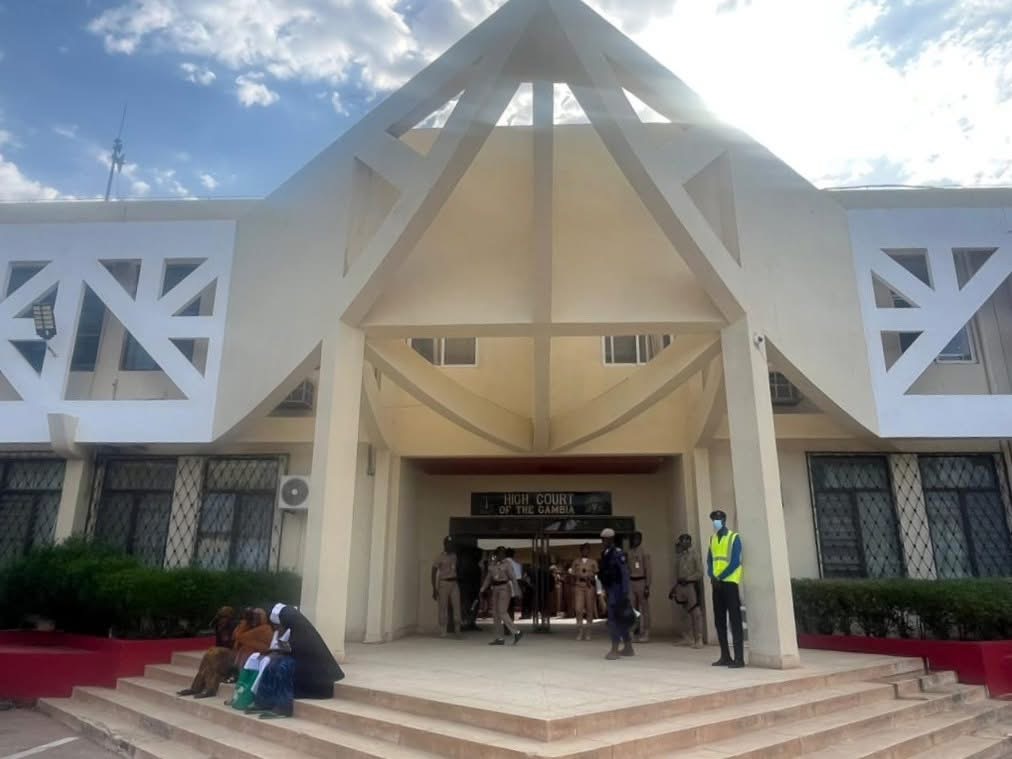
His reference to “61 years” was not rhetorical; it was a reminder that time alone does not build institutions, leadership, investment, and vision do.
This is where his intervention becomes transformative. Instead of descending into pessimism, Judge Barrow pointed to a deeper truth: The Gambia has produced lawyers and prosecutors who have excelled on some of the world’s most demanding legal stages — at the Rwanda Tribunal in Arusha, at the International Criminal Court in The Hague, and in other international justice mechanisms. Their performance demonstrated that The Gambia does not lack legal talent; it lacks the institutional structures to retain, mentor, and elevate that talent.
Judge Barrow’s point was not that Gambian prosecutors argued the Myanmar genocide case at the ICJ — they did not. That case was led by a Washington‑based law firm. His point was that Gambian legal professionals have repeatedly shown brilliance abroad while struggling to find the same opportunities at home.
From this, he drew a powerful conclusion: the Special Prosecutor’s office must be a school, not a silo. It must be a place where young Gambian lawyers learn, grow, and build institutional memory. It must be a training ground for a new prosecutorial culture — one rooted in professionalism, independence, and competence.
The Special Prosecutor, in his view, is not merely an office. It is an opportunity to rebuild the justice sector from within.
This is where the debate intersects with a broader national crisis: the chronic underinvestment in the justice sector, the politicisation of legal institutions, and the absence of long‑term reform.
For years, The Gambia has relied on ad hoc fixes, foreign technical assistance, and trial-and-error governance. Judge Barrow’s intervention exposed the limits of this approach. A nation cannot outsource justice. It must build it.
His essay also carried a moral weight that resonated beyond legal circles. In a political environment where public commentary is often driven by emotion, tribal loyalties, or partisan reflexes, Judge Barrow modeled a different kind of engagement, one rooted in scholarship, humility, and civic responsibility.
He did not attack personalities. He interrogated principles. He did not inflame tensions. He clarified them. He did not posture. He reasoned. This is why his intervention struck a national chord.
It reminded Gambians of what public discourse could be and what it must become if the nation is to mature democratically.
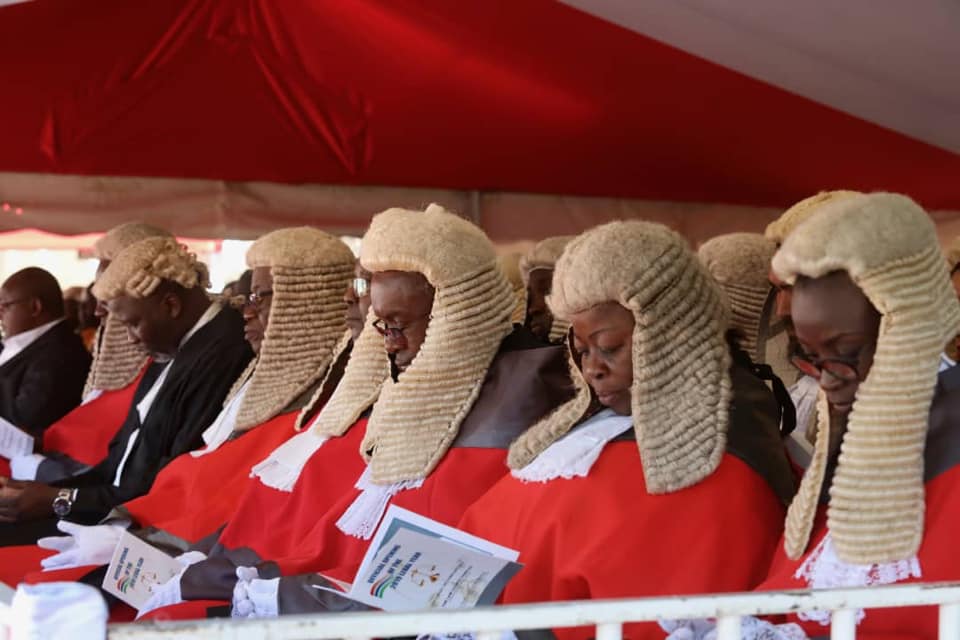
But the significance of his commentary extends even further. It exposed the intellectual vacuum that has long plagued Gambian public debate. Too often, national conversations are dominated by pundits who substitute noise for knowledge, emotion for evidence, and personal attacks for analysis.
Judge Barrow’s essay was a rebuke to that culture. It was a call to elevate the discourse, to return to substance, to reclaim the republic from the tyranny of shallow commentary.
It also revealed something else: the fragility of our institutions. When a single jurist’s essay can reset an entire national debate, it means the institutional voices that should be leading the Ministry of Justice, the Bar Association, the law faculties, and the judicial leadership have been too silent, too reactive, or too compromised. Judge Barrow filled a vacuum that should never have existed.
His intervention also aligns with a long‑standing argument I have made: that The Gambia must indigenize its justice sector, strengthen its prosecutorial leadership, and build a judiciary capable of defending the republic against corruption, impunity, and institutional decay.
The Special Prosecutor is not a perfect solution. But it is a step toward acknowledging that the status quo is untenable.
In honouring Judge Barrow’s courage, we must also recognise the civic value of what he did. He reminded the nation that patriotism is not loud. It is thoughtful. It is not performative. It is principled. It is not about taking sides. It is about taking responsibility.
Judge Barrow’s intervention is a reminder that The Gambia does not lack thinkers; it lacks thinkers willing to speak. His contribution elevates the debate, grounds it in law, and challenges the nation to confront its institutional weaknesses without shame or defensiveness. He has done what intellectuals are meant to do: illuminate, provoke, clarify, and elevate.
In a country where public intellectuals are often attacked, misrepresented, or dismissed, Judge Barrow demonstrated that knowledge still matters and that when deployed with integrity, it can shift the national conversation.
His intervention deserves more than applause. It deserves institutional follow‑through. The justice sector must be reformed. The prosecutorial architecture must be strengthened. The judiciary must be insulated from political winds.
And the nation must cultivate a culture where jurists, scholars, and professionals feel empowered to speak without fear of character assassination.
Judge Barrow’s essay was a reminder that the republic still has guardians, quiet, principled, disciplined guardians who speak not for applause but for the preservation of the nation’s constitutional soul. When a jurist speaks with courage, the nation must listen. And more importantly, the nation must act.
By Alagi Yorro Jallow








Recent Comments