Part 1
Democracy does not collapse in a single dramatic moment. It erodes quietly through loopholes, through silence, through institutions that appear powerful on paper but behave timidly in practice.
In The Gambia today, the greatest silent threat to our democratic integrity is the unregulated flow of political money. Campaign finance has become the dark artery of our politics, pumping influence, obligations, and hidden interests into the bloodstream of the Republic. The law is not silent. The problem is that the law is ignored.
The Political Parties Act and the Elections Act establish explicit requirements for financial disclosure, accountability, and regulatory oversight.
However, these provisions are often regarded as ceremonial rather than binding. Political parties act as private associations rather than public institutions, while the Independent Electoral Commission (IEC) functions more as an administrative clerk than as a regulatory authority.
Consequently, the public remains uninformed about the sources of political funding, the actors influencing leadership, and those shaping national policy. This situation constitutes not only a governance issue but a democratic emergency.
Sections 25, 26, and 27 of the Political Parties Act form the backbone of political parties’ financial accountability.
Section 25 requires every party to maintain proper books of accounts—detailed, accurate, and up‑to‑date. Section 26 obliges parties to disclose all contributions, donations, and pledges received within a financial year, including the amounts and sources.
Section 27 requires parties to submit audited financial statements to the IEC annually, prepared by a certified auditor. These provisions are not suggestions. They are legal obligations.
The Elections Act further strengthens these obligations. Section 105 empowers the IEC to regulate campaign conduct, including financial practices. Section 106 authorises the Commission to issue directives to ensure compliance. Sections 120–124 grant the IEC authority to demand financial records, investigate irregularities, summon party officials, and sanction non-compliant parties. While this framework appears robust in theory, it remains ineffective in practice.
This absence of enforcement has fostered a political environment where financial resources outweigh manifestos, ideology, and the electorate’s will.
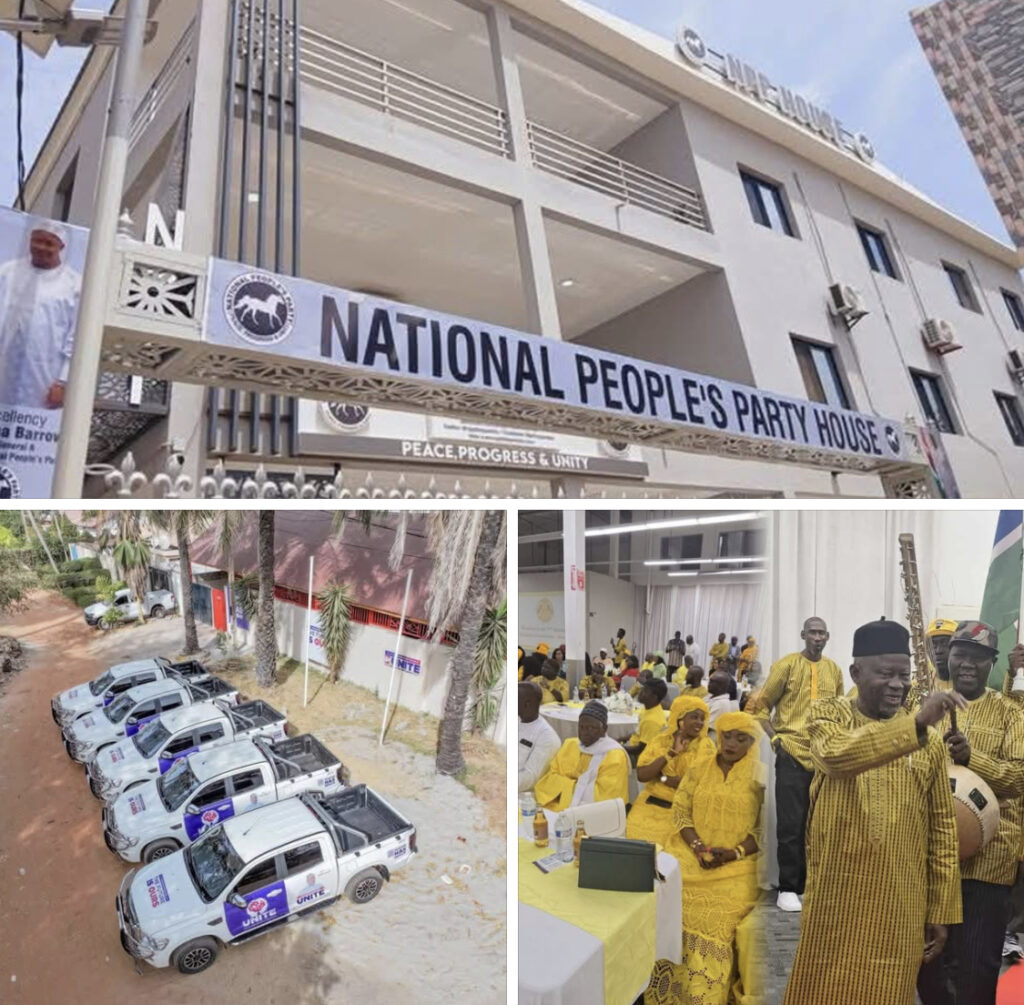
The ruling National People’s Party (NPP) has rapidly established regional bureaus and a national headquarters in Bundung, and has acquired extensive fleets of vehicles and motorbikes.

These significant expenditures, amounting to millions of dalasis, remain unexplained. The public, the IEC, and even many NPP supporters are unaware of the funding sources. Such opacity is not only concerning but also undermines democratic integrity.
Despite these multimillion-dollar expenditures, no audited accounts, donor lists, or financial statements have been made public. The IEC has not requested them, and the public remains uninformed.
The United Democratic Party (UDP) depends significantly on diaspora funding, frequently in foreign currency. Section 26 of the Political Parties Act mandates the declaration of such contributions.
However, it remains unclear whether these requirements are met, as the IEC has not published compliance reports and the party has not released audited accounts.
This lack of transparency forces the public to speculate. While diaspora funding is not inherently problematic, it raises important questions: Are these donations properly documented? Are they declared to the IEC as required? Are they subject to regulations on foreign influence? Are they audited?
Once again, neither the public nor the IEC has access to this information. The current system fosters secrecy rather than accountability.
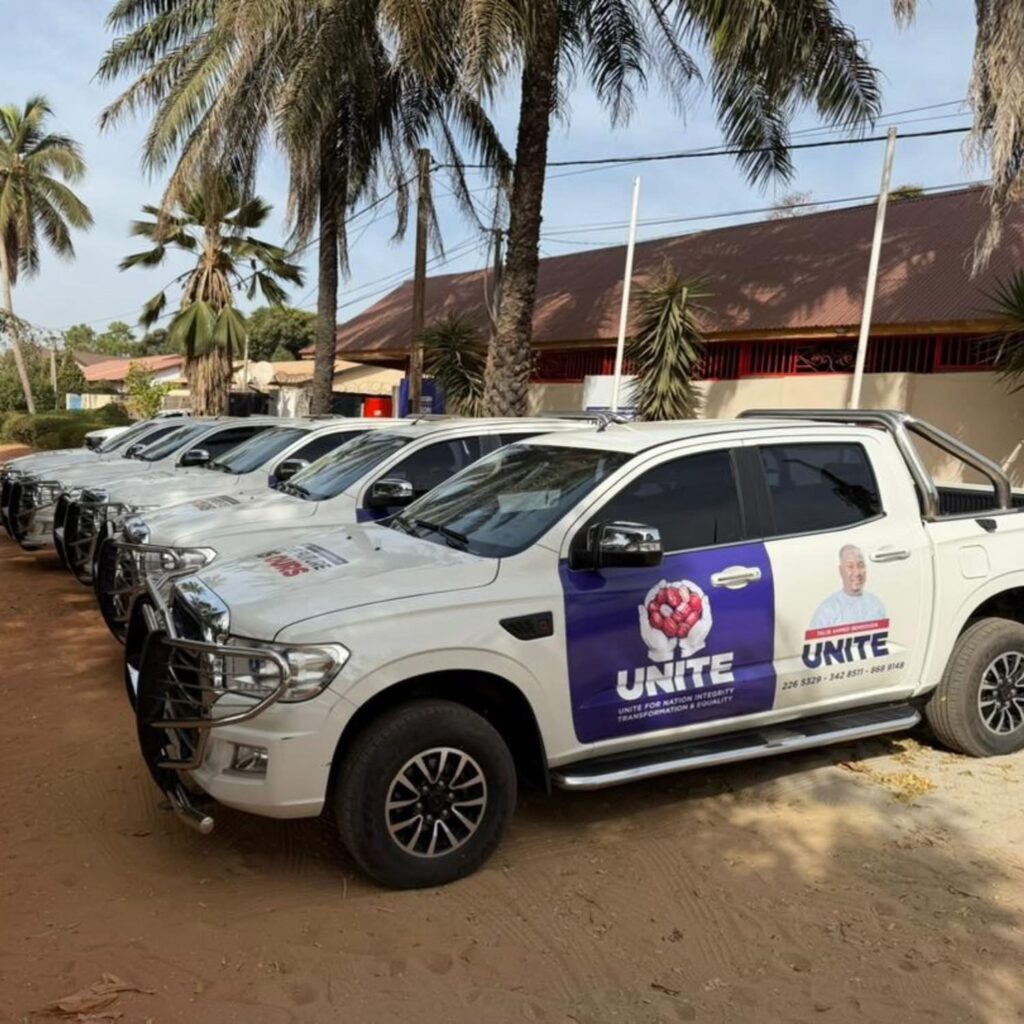
The United Movement for Change (UMC), a young political formation, recently distributed five brand‑new vehicles to its regional coordinators, in addition to motorbikes previously issued. Where does a new party acquire such resources? Who is underwriting this political investment? What interests are being cultivated behind the scenes?
Again, the law requires disclosure. Again, no disclosure has been made. Where does a new party acquire such resources? Who is underwriting this political investment? What interests are being cultivated behind the scenes? These are not rhetorical questions. They are democratic questions that demand answers.
The pattern is clear: political parties are not complying with Sections 25–27 of the Political Parties Act. The IEC is not enforcing Sections 105–124 of the Elections Act. The public is being denied the transparency the law promises.
In established democracies, political parties typically receive funding from membership dues, the sale of party cards, small individual donations, transparent corporate contributions, and state subventions.
In The Gambia, however, party cards hold symbolic rather than financial value; membership dues are minimal; grassroots contributions are limited; and state funding is absent.
This environment enables major donations from undisclosed sources, increasing the risk of state capture, foreign interference, and corruption.
The IEC must therefore transition from a passive observer to an active regulator. It cannot continue to act as a post office receiving annual reports that are filed away without scrutiny.
The Commission must enforce the law it is entrusted to uphold. It must demand full disclosure of all donations, publish party financial statements annually, audit political party accounts, investigate suspicious funding, and sanction non‑compliant parties. The authority exists in the law; what is missing is the will to enforce it.
Transparency is not a luxury. It is a democratic necessity. Some argue that donors should remain anonymous to avoid political retaliation. But anonymity is the mother of corruption.
When money enters politics through the back door, governance becomes hostage to private interests. If a business person donates millions, the public must know. If a foreign government funds a party, the public must know. If a cartel or syndicate bankrolls a candidate, the public must know. Without transparency, elections become auctions, and the highest bidder—not the most competent leader—wins.
The danger of dirty money in Gambian politics is real. The current system encourages money laundering, foreign interference, vote buying, patronage networks, and corruption in procurement. It incentivises political actors to seek funding from sources that cannot withstand public scrutiny.
It undermines national sovereignty by allowing external actors to shape domestic politics through financial influence. It erodes public trust in the electoral process and weakens the legitimacy of elected leaders.
A clean campaign finance system is possible. It would reduce corruption, strengthen political parties, level the playing field, protect national sovereignty, restore public trust, and improve policy integrity.
Donors would declare contributions on their balance sheets. Parties would declare receipts to the IEC. The public would see the full picture. This is not radical. It is standard practice in functioning democracies.
The Gambia cannot continue with a dirty‑money democracy. The IEC must rise to its constitutional responsibility. Political parties must embrace transparency.
Citizens must demand accountability. Civil society must push for reform. Parliament must legislate clear campaign finance rules with enforceable penalties. Democracy is not only about voting.
It is about knowing who pays for the politics you consume. If we fail to regulate political money today, political money will regulate our democracy tomorrow.

To understand how far behind The Gambia has fallen, one must look to our neighbors. Despite its political turbulence, Senegal has a more structured approach to campaign finance.
The Senegalese Electoral Code requires political parties to declare campaign expenditures and prohibits foreign funding for presidential campaigns. The Commission Électorale Nationale Autonome (CENA) has the authority to monitor campaign spending and demand financial records. While enforcement is uneven, the legal framework recognises the dangers of opaque political financing and attempts to mitigate them.
Sierra Leone offers another instructive comparison. The Political Parties Act of Sierra Leone requires parties to submit annual audited accounts to the Political Parties Registration Commission (PPRC).
The law prohibits foreign donations and mandates disclosure of all contributions above a certain threshold. During recent elections, the PPRC publicly reprimanded parties that failed to comply. Sierra Leone’s system is not perfect, but it demonstrates a willingness to enforce the law—something glaringly absent in The Gambia.
Compared to Senegal and Sierra Leone, The Gambia is operating in the dark ages of campaign finance. We have no spending limits, no donation ceilings, no real‑time disclosure, no published donor lists, no penalties for violations, and no enforcement by the IEC. Our laws exist, but they are not implemented. Our institutions exist, but they do not act. Our democracy exists, but it is vulnerable.
Political parties are not private entities. They are public institutions that seek to govern the Republic. Their financing is therefore a matter of public interest. When parties refuse to disclose their funding sources, they are not protecting donors—they are undermining democracy.
Money that cannot be traced cannot be trusted. Money that cannot be audited cannot be justified. Money that cannot be explained cannot be clean.
The IEC has the legal authority to demand compliance. Sections 105–124 of the Elections Act give the Commission the power to regulate campaign finance, demand records, investigate irregularities, and sanction violations.
Yet the IEC behaves as if it is powerless. It receives annual reports that are neither audited nor published. It does not investigate suspicious funding. It does not sanction non‑compliant parties. It does not enforce the law. A regulator that does not regulate is not a regulator. It is a spectator.
A transparent campaign finance system is not a luxury. It is a democratic necessity. The law already provides the framework. What is needed is enforcement.
The IEC must require full disclosure of all donations, publish party financial statements annually, audit political party accounts, investigate suspicious funding, and sanction non‑compliant parties. Parliament must strengthen the law by introducing donation ceilings, spending limits, real‑time disclosure requirements, and penalties for violations.
Democracy is not only about voting. It is about knowing who pays for the politics you consume. If we fail to regulate political money today, political money will regulate our democracy tomorrow.
The Gambia cannot continue with a dirty‑money democracy. The law is clear. The violations are clear. The silence is dangerous. The IEC must act—not as a clerk, not as a bystander, but as the constitutional guardian of electoral integrity.
By Alagi Yorro Jallow








Recent Comments