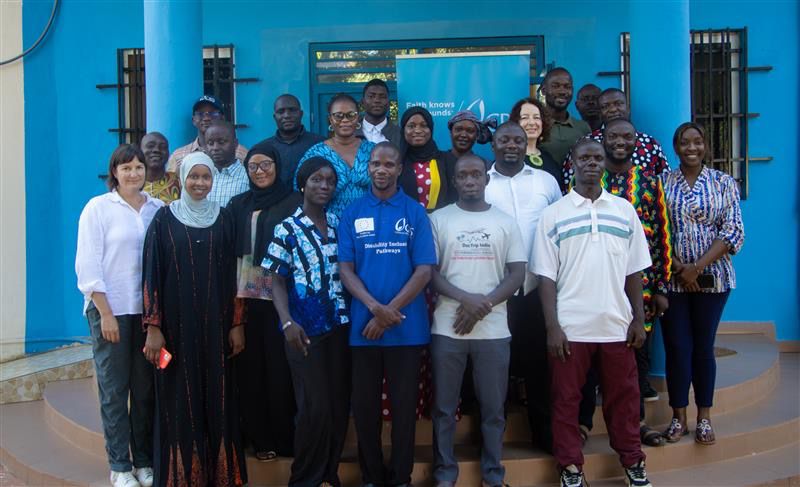
Catholic Relief Services (CRS) has begun training enumerators as part of its new project, “Disability Inclusive Pathways: Empowering Children with Disabilities Through Education, Technology and Play.”
The training aims to equip data collectors to conduct a comprehensive Gender and Disability Audit and baseline survey in schools.
CRS said the audit is a multidimensional, structured, and participatory assessment that measures how institutions address gender equality and disability inclusion in policies, programs, budgets, and practices.
The exercise will help identify gaps, document good practices, and generate recommendations to improve inclusivity in The Gambia’s education system.
The audit will examine gender-sensitive teaching methods, school infrastructure, physical accessibility, use of assistive devices, and attitudes toward students with disabilities. It will also explore challenges such as gender-based violence, classroom biases, and the availability of special education support.
“The participatory nature of the audit ensures that all stakeholders—including teachers, administrators, parents, PTAs, and students—are engaged in both data collection and analysis. It is not just an assessment tool, but also a learning tool that builds ownership of the solutions,” said Leia Isanhart, CRS’ Senior Technical Advisor for Disability Inclusion.
Enumerators will employ both qualitative and quantitative approaches, including surveys, classroom observations, school environment assessments, focus group discussions, and in-depth interviews. Findings will be shared with stakeholders, who will jointly interpret the results and develop action plans.
Training also emphasized disability awareness and respectful data collection. Enumerators were instructed to use person-first language, avoid stigmatizing terms, create accessible environments, and uphold safeguarding commitments, including informed consent, confidentiality, and reporting suspected abuse.
CRS noted that children with disabilities in The Gambia face multiple barriers to education, including inaccessible infrastructure, lack of trained teachers, and stigma. Girls with disabilities face even greater risks of exclusion and violence. The audit will provide a baseline to track progress and guide reforms.
Through the Disability Inclusive Pathways project, funded by the European Union, CRS and partners aim to improve access to quality education for children with disabilities, strengthen institutional accountability, and promote inclusive policies nationwide.
CRS, the official international humanitarian agency of the Catholic community in the U.S., has been operating in The Gambia since 1964, providing emergency relief, strengthening food security, tackling malnutrition, enhancing healthcare services, expanding education opportunities, and supporting social cohesion and peace-building programmes.
By Madi S. Njie




Recent Comments