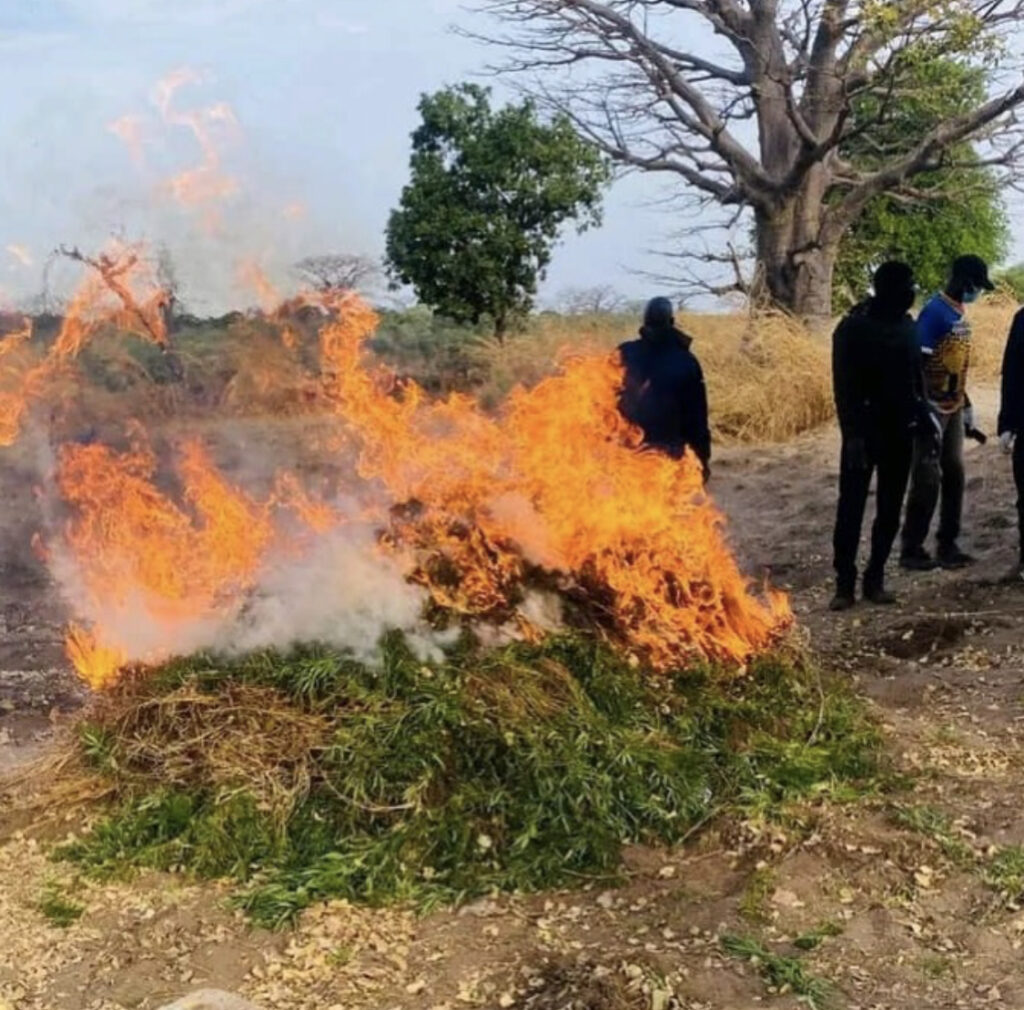
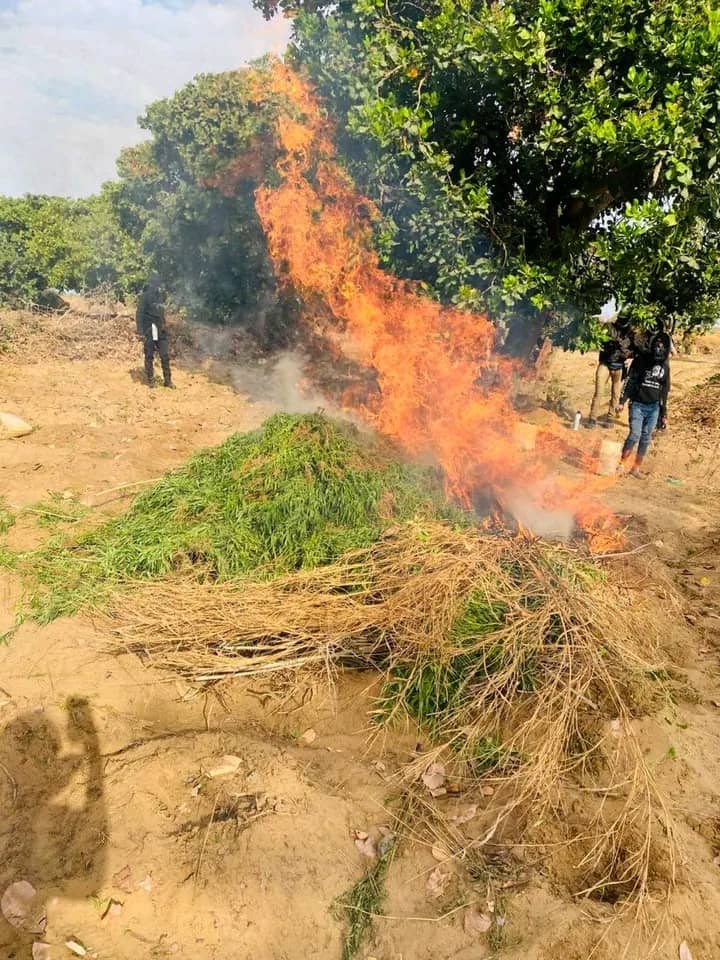
Many families in Jinak have said that they have been left with no means of survival after officers from the Drug Law Enforcement Agency The Gambia destroyed and burned around 60 cannabis farms on the island.
The operation followed an earlier crackdown in the villages targeting migrants who were reportedly preparing to travel through the “backway”.
Residents said officers first entered the area to stop the attempted migration before later returning to the villages where the cannabis farms were located.
During the second operation, the farms were destroyed and set on fire, leaving many families who depended on the crops without income.
Several affected farmers said they were forced into cultivating cannabis because other crops cannot survive on the island.
Ousman Manneh said harsh environmental conditions make traditional farming almost impossible.
“No crop survives here; anything you sow here dies. So farming cannabis is not something we want to do, but we have no choice,” he said.
Another resident said fishing, once a key livelihood for villagers, is no longer reliable due to declining fish stocks.
“We have no means of survival other than farming cannabis. That’s why we do it, but it is not something we wish to do,” the farmer added.
Jinak, an island community affected by saltwater intrusion, has long struggled with limited economic opportunities and poor agricultural conditions.
Some residents also expressed anger toward the government following the destruction of the farms.
Fatou Sonko said frustration among villagers is growing.
“I want to tell Adama Barrow that there is no vote for him in Jinak this year,” she said.
The destruction of the cannabis farms has reignited debate over poverty, migration and lack of economic opportunities in remote Gambian communities.
By Adama Makasuba




Recent Comments