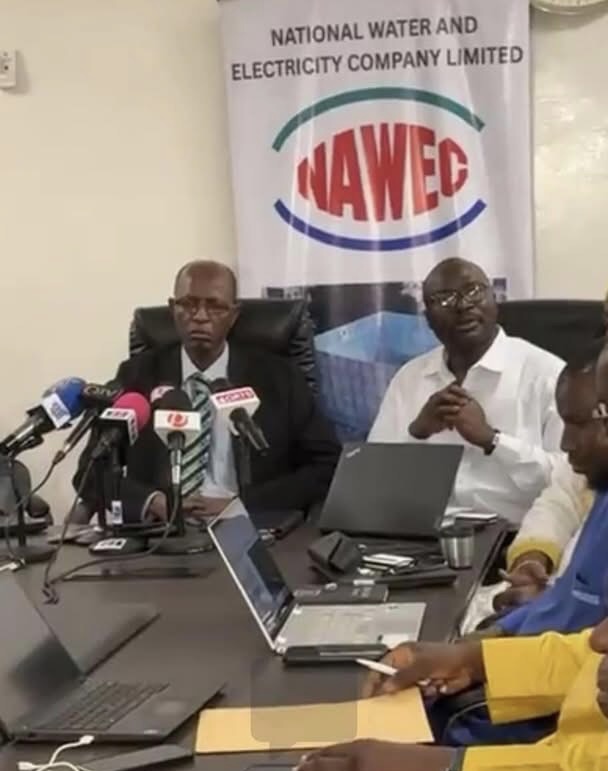
The National Water and Electricity Company (NAWEC) has blamed ongoing power cuts across parts of the country on a global energy crisis and a significant gap between electricity supply and demand.
Speaking at a press conference at NAWEC headquarters in Kanifing, Managing Director Galo Saidy said international developments, particularly tensions in the Middle East, are affecting fuel supply, logistics and electricity generation.
“If you look at what is happening in the world today, the war in Iran is going to affect everybody,” he said.
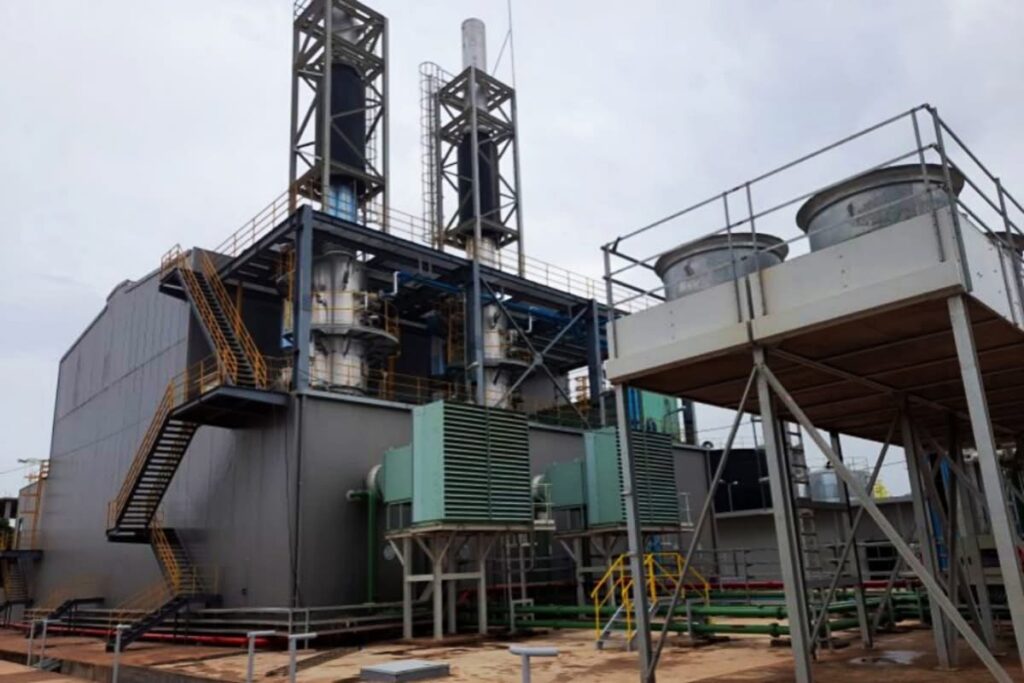
Mr Saidy explained that the load shedding introduced on 2 April followed a surge in demand that exceeded available supply.
“Our consumption got higher than what we are getting, including even our local generation. So we had to load shed,” he said, describing the situation as part of a broader global challenge affecting energy utilities.
He added that NAWEC relies heavily on imported electricity, making it vulnerable to external shocks, while efforts are ongoing to strengthen local generation capacity.
Earlier, the company’s Group Corporate Services Director, Sanna Touray, said the press briefing was convened to explain the causes of the outages and outline measures being taken to address them.
“We want the public to understand what is happening and why, and what steps we are taking,” she said.
Providing further technical details, the Operations and Planning Manager, Sana Gomez, said NAWEC is currently facing a major capacity deficit.
“Available capacity is around 78 megawatts, while peak demand is about 106 megawatts,” he said, noting that the shortfall has forced the company to remove portions of the load from the system to prevent a total blackout.
He added that more than half of the electricity supply is imported, while local generation contributes a smaller share.
Meanwhile, the Chief Operating Officer for Electricity, Pateh Sowe, apologised to customers for the disruptions and appealed for patience.
“We know it is very difficult when you are used to 24-hour electricity and all of a sudden you have to go without it,” he said.
He explained that the load shedding schedule is designed to ration limited power supply, but noted that technical challenges and manual operations can sometimes cause delays in restoring electricity.
NAWEC urged the public to conserve energy during the crisis, stressing that reducing demand can help ease pressure on the system.
The company said it is working to bring additional generators online and expand renewable energy projects as part of longer-term efforts to improve electricity supply in the country.
By Adama Makasuba





Recent Comments