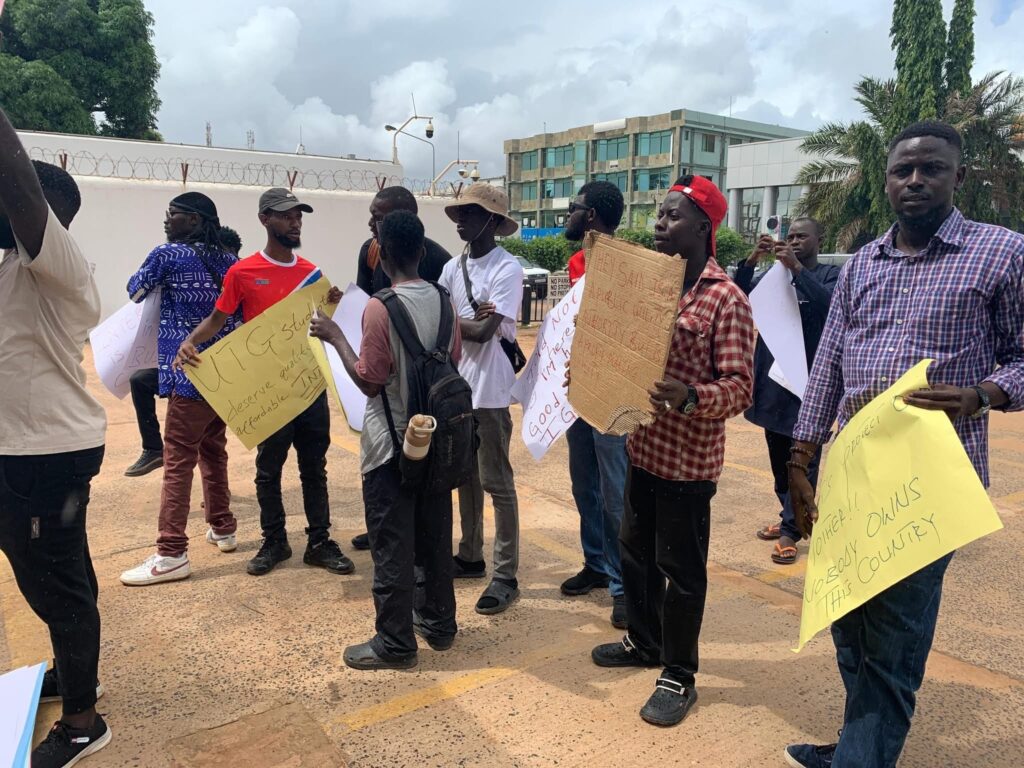
The rugged road towards authoritarian rule often surreptitiously begins with baby steps of the enforcement of laws that restrict democratic space and principles, which are frequently justified by concerns for national security and public order.
This path has previously been walked by individuals (even governments) such as Mr. Sang Corea, a notorious and enthusiastic enforcer, and Ousman Sonko, a former Minister of Interior and many others. For those who are still out there, the statute of limitations doesn’t apply – they can any day end up ‘dans la même’.
History provides valuable lessons on such matters that are unfortunately not always applied or acknowledged. The lessons are occasionally disregarded and overlooked by budding authoritarian regimes.
A series of repressing activities with significant governance consequences and the angry, ruthless and overzealous implementation of directives by enforcers can bring a governance system under the scrutiny of international jurisdiction that extends beyond local boundaries to countries as far as the USA, Switzerland, and the UK. Human rights maintain a universal recognition, even within undemocratic legal frameworks.

Some laws implemented under the guise of “security reasons” or “enforcing public order” are globally recognised as deliberately designed to serve authoritarian interests. Actions such as torture, the mistreatment and manhandling of citizens are never immune to prosecution, including in jurisdictions beyond where they occur.
Continuously documenting and reporting such incidents, made easy by social media, help preserve evidence for historical record and future consideration.
Addressing systemic issues in governance – such as corruption and queries raised in accumulating audit reports, the “gerrymandering” of the national ID card jurisdiction, costly access to affordable services and commodities, opaque contract negotiations of strategic national assets, ethnic and aggressive political rhetoric, and economic challenges impacting the cost and standard of living – is more essential for maintaining public trust and appeasing citizens.

Focusing on meaningful improvements in the conditions of the citizens is more effective than attempting to suppress citizens’ frustrations or ignoring their concerns, which may lead to further governance failures and abuses. The reliance on manufactured truth to justify murky matters of public concern serves only to increase public distrust of a complacent system of government.
Specifically, the GALA movement should be seen as an embodiment of national dissatisfaction with perennially unaddressed governance issues. It will be more useful to recognise their demands as representatives of concerned citizens.
Suppression only emboldens and generates national (and international) empathy, as they are gradually seen as victims of undemocratic laws and the attempt to curb legitimate demands.
Could a better scenario have been one of simply allowing the delivery of their letters of concern to relevant authorities and a subsequent peaceful dispersal? The other side of that is to stir and stoke more protests and resistance – and with greater frequency and preponderance.
Navigating the waters of governance in a democratic dispensation is not always about the application of the letter of the law but the consideration of its spirit. History attests to this fact.

Giving critics and criticisms and concerns of citizens a serious consideration is part of good governance.
With a trend of protests, detentions and suppression of dissent in a country, the booming voice of democracy echoes the spiritual song of “Let My People Go” – a voice that inevitably prevails.
By Lamino Lang Coma







Recent Comments