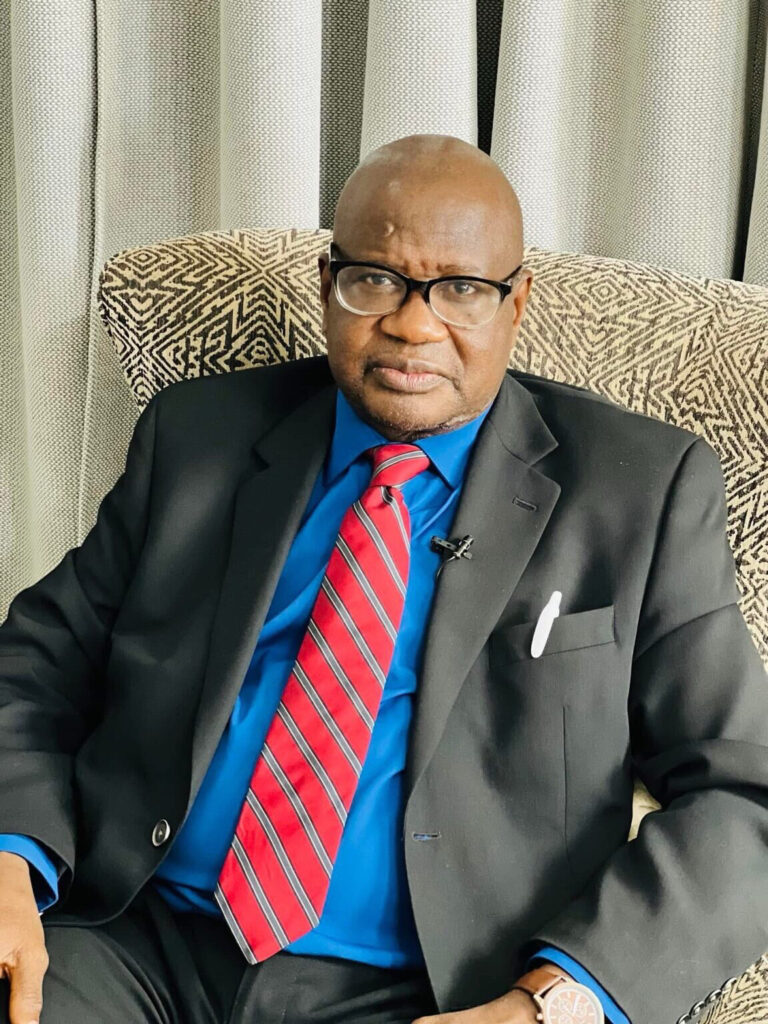
By any honest reckoning, Saihou Mballow should be celebrated as a patriot. Instead, his name is dragged through the mud by those who prefer distortion to truth.
His words in Bakoteh were not a tribal manifesto but a plain statement of inclusion, a reassurance to the Fula community that their long history of marginalisation had given way to fairer representation in government.
For this he has been branded a tribalist. It is as if we have reached the stage where even the truth is treated as a crime.
Mballow said, with unvarnished simplicity, that the President, the Vice President, the Secretary General, the head of intelligence, and senior police officers are of Fula origin.
His point was not that others are lesser, but that one community could now feel part of the national family. He followed it with the most important line: “I am not a tribalist, I am just stating the facts.” To turn this into incitement is wilful malice.
In any civilised society, such words would have been received as a gesture of inclusion. Britain itself learned this lesson long ago. When Benjamin Disraeli declared in the 19th century that the greatness of the Empire lay in its ability to embrace Scots, Welsh, Irish, Jews, and later Indians, he was not accused of division but celebrated for binding diverse peoples into a single story.
America too, after the Civil Rights Movement, adopted the principle that representation matters. When Lyndon Johnson appointed Thurgood Marshall as the first black Supreme Court Justice in 1967, African Americans took pride not because it made them superior but because it made them visible. That is the principle of inclusion. That is precisely what Mballow was underscoring.
Instead of recognising this, Gambians have chosen to pull the knife on a man whose only “crime” was to remind a community of its place within the Republic. What should have been a moment of national praise has been turned into a feeding frenzy of accusation.
Shakespeare warned of this folly in Julius Caesar, where honest words are twisted until Brutus is persuaded to stab a friend in the name of Rome. The tragedy is not Caesar’s ambition but Rome’s envy. The same envy now fuels the smear against Mballow.
And here lies the irony: Mballow has spent more than fifteen years of his life fighting for Gambian democracy abroad. In New York, he was at the head of protests, rallies, and campaigns against dictatorship when many of his current critics were silent.
He stood side by side with Gambians of every tribe. No newspaper can deny his support: he has funded, defended, and uplifted the press with both his words and his wallet. He has always been available for interviews, never once ducking questions, never once shrinking from truth to power.
I have known Saihou Mballow for two decades, and I know his family too. His brothers Sheriff and Buba, both fixtures in the tourism industry, were beloved by all. Sheriff, once Secretary General of the Tourist Guide Association, was known for his generosity to colleagues of every tribe.
Buba was even more famous, cherished across the country for his warmth and spirit. To accuse their family of tribalism is to insult the living memory of Gambians who knew them well.
If Mballow’s words were uttered in Westminster, they would have been praised as a call to representation. If they were spoken in Washington, they would have been welcomed as an expression of inclusion.
Yet in Banjul, they are twisted into hate speech. The hypocrisy is staggering. His critics know very well that recognising diversity strengthens unity, it does not weaken it. To borrow from the political philosopher John Stuart Mill, a free state is one in which every group sees itself reflected in the institutions of power. Mballow has said nothing more and nothing less.
The real danger to unity does not come from Mballow’s words but from the vindictive twisting of them. When we punish inclusion, we reward division. When we vilify a patriot, we embolden opportunists.
And when we silence truth, we invite tyranny. Mballow is not the problem. He is the evidence that Gambian democracy has space for all its sons and daughters, regardless of tribe.
The campaign against Saihou Mballow reveals not his weakness but our own. Instead of applauding his reassurance, we have chosen to crucify him. Instead of lifting up a patriot, we have sharpened the knife.
Gambians must ask themselves: are we so insecure that we cannot allow a man to take pride in his community’s place in the Republic? Must we always make heroes into villains simply because they dare to speak aloud what everyone knows to be true?
Saihou Mballow is no tribalist. He is a patriot, a democrat, and a truth-teller. His words should have been praised as a call to unity, not condemned as a threat to it. To brand him otherwise is not only dishonest, it is dangerous. In the end, the real tribalism lies not in his speech but in the malice of those who misrepresent it.
By Kebeli Demba Nyima







Recent Comments