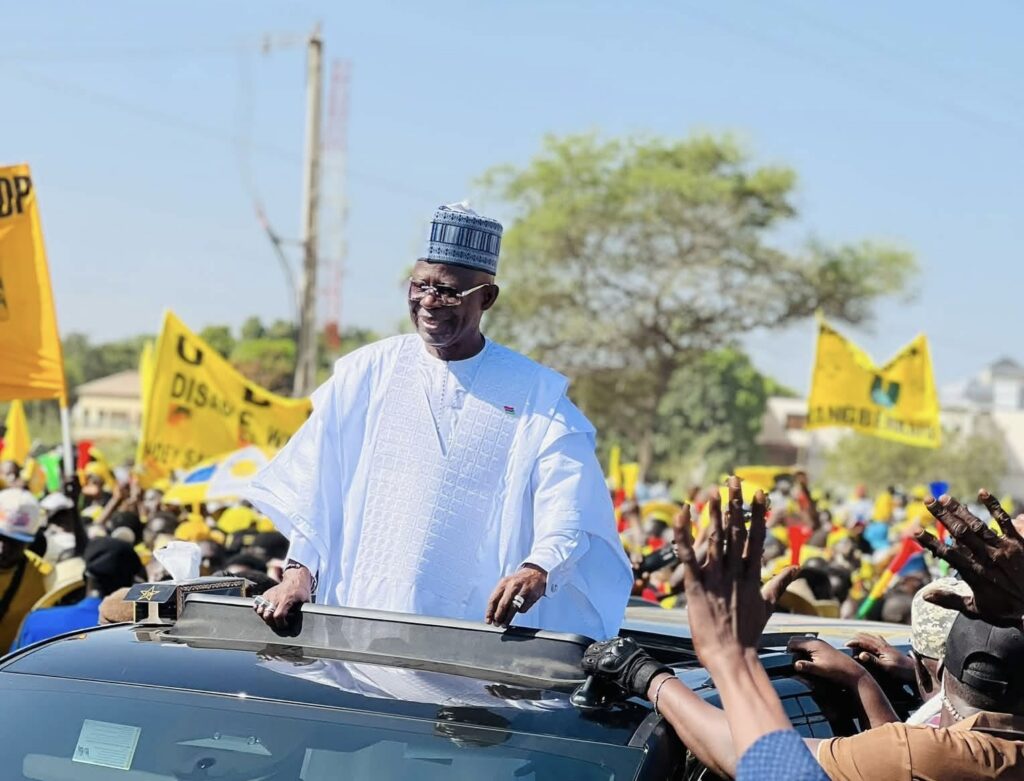
With a sea of yellow United Democratic Party (UDP) supporters behind him and three decades of political struggle, Ousainou Darboe’s final nomination is less about one election than one central truth: his democratic journey.
From 1996 to 2026, he has repeatedly returned to place his fate in the hands of the Gambian people. Whether or not he ever becomes president, his imprint on the nation’s democratic journey is already secure.
From opposition leader and lawyer to national statesman, from political prisoner to mentor of presidents and presidential aspirants, Ousainou Darboe’s final nomination is more than a routine electoral milestone.
It is a moment to reflect on three decades of democratic struggle and political perseverance, and on a legacy measured not only by offices won, but by institutions strengthened, leaders nurtured, and history helped shape.
Thirty years after first presenting his nomination papers, Ousainou Darboe told Gambians on November 9, 2026, at the Independent Electoral Commission (IEC) that this would be his final presidential contest.
More than a personal milestone, the declaration frames his career as a long democratic journey. Whether he ultimately reaches State House or not, that journey has already left an indelible mark on Gambian democracy.
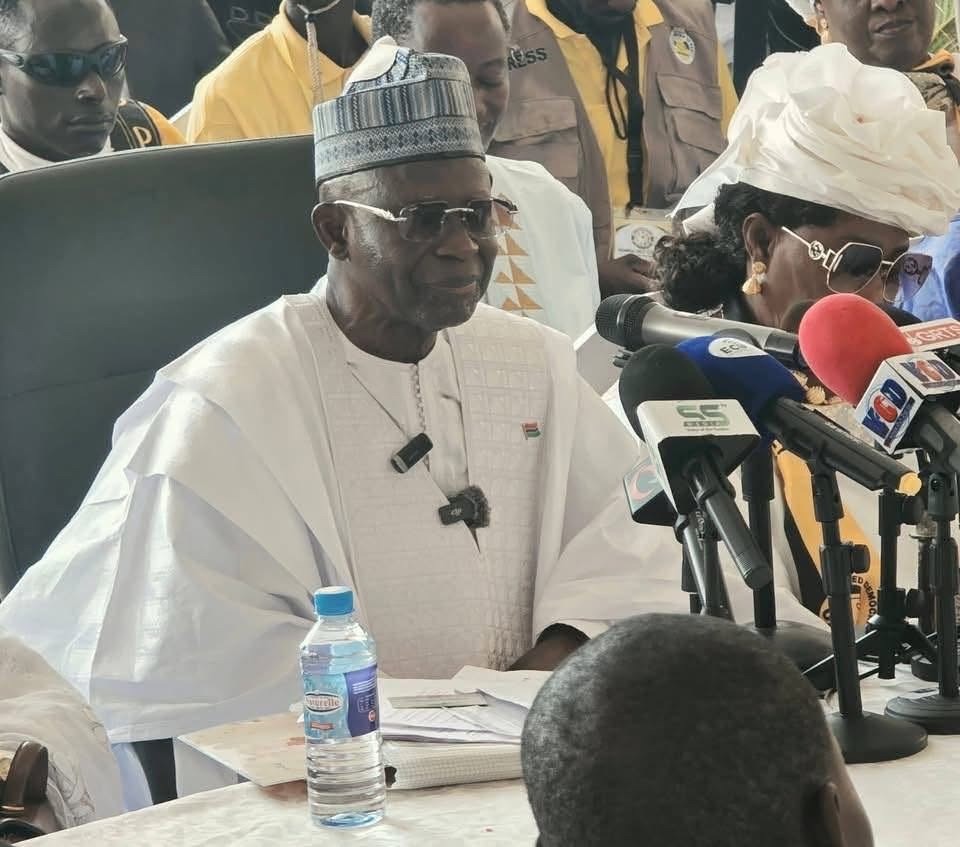
Jubilation filled the streets; a sea of yellow swept across urban Gambia, and a triumphant procession culminated in a massive gathering at the Buffer Zone. Family members, party executives, friends, and supporters accompanied Ousainou Darboe as he filed his nomination papers before the Independent Electoral Commission, having successfully met all constitutional and legal requirements for presidential candidature.
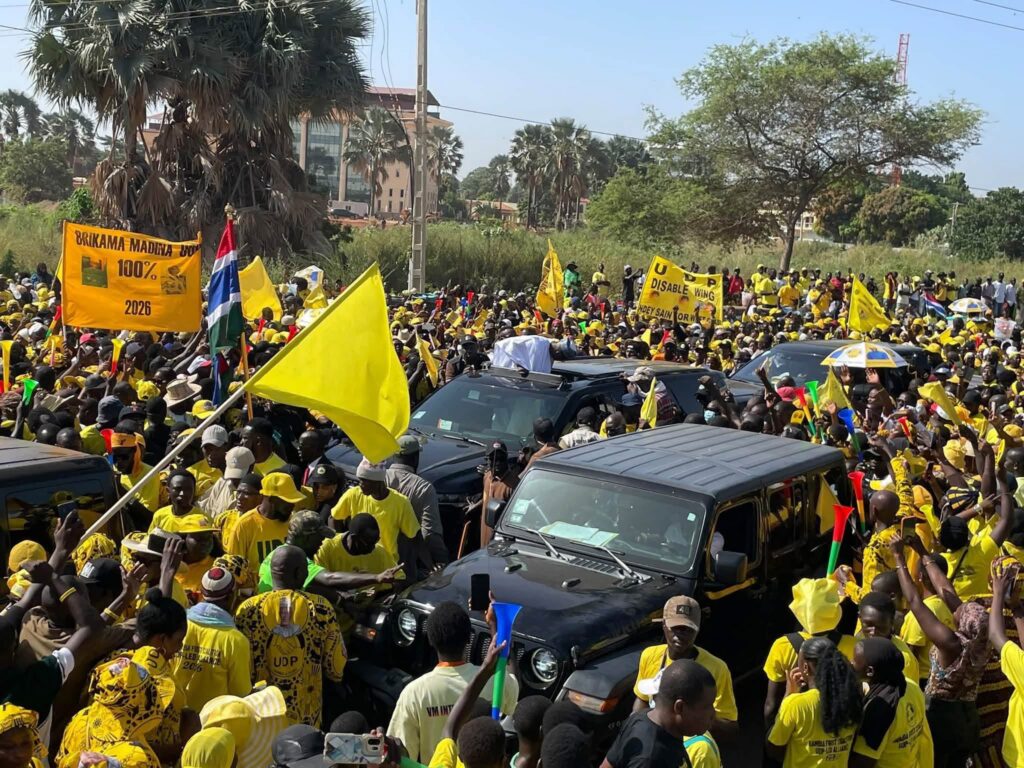
After three decades of navigating the country’s democratic landscape, the scene was familiar, yet it felt profoundly different this time. The difference was contained in a few simple but deeply emotional words.
Describing the occasion as “very historic,” Darboe told journalists that this would be “the last time” he would present his nomination papers to the electoral commission. He declared that the December 2026 presidential election would be his final contest for the presidency. For many Gambians, those words carried weight beyond party politics.
Since 1996, Ousainou Darboe has been a constant figure on presidential ballots. Through victories and defeats, years in opposition, imprisonment, democratic transition, and public service, he has remained one of the most enduring actors in Gambian public life.
Generations of Gambians have grown up knowing only one political reality: whenever presidential nominations opened, Darboe would be among those presenting his papers.
Whether one agrees with his politics or not, longevity of conviction deserves acknowledgment. Politics often celebrates winners while overlooking those who spend decades building democratic culture.
Yet history offers many examples of influential figures whose greatest contribution was not holding the highest office but strengthening the democratic process itself.
Political significance is not measured solely by electoral victory; it is also measured by democratic endurance.
The Gambian experience itself offers powerful examples. For nearly four decades, Halifa Sallah and Sidia Jatta of PDOIS helped shape the nation’s democratic discourse. They contested elections, challenged governments, educated voters, and articulated ideas that enriched public debate, yet neither man entered State House. Their contribution to Gambian democracy cannot be measured by presidential victories alone.
Likewise, the late Sheriff Mustapha Dibba, founder of the NCP and one of the most influential political figures of the post-independence era, remained a towering national figure despite never becoming president. His legacy lives not in an office he occupied, but in the political tradition he helped build.
Beyond The Gambia, history offers similar examples. In Kenya, Raila Odinga, following in the footsteps of his father, Jaramogi Oginga Odinga, contested the presidency repeatedly and became one of the principal architects of Kenya’s democratic evolution without occupying the highest office.
In the United States, John McCain, a decorated war veteran and statesman, pursued the presidency more than once but never entered the White House.
In Senegal, the renowned scholar Cheikh Anta Diop, one of Africa’s greatest intellectuals, entered electoral politics yet never won the presidency. Their influence on their respective nations nonetheless far exceeded the outcome of any single election.
Democracy ultimately remembers more than presidents. It remembers those who built institutions, defended principles, expanded political space, and gave citizens meaningful choices.
Some leave office with power. Others leave behind a legacy.
Another dimension of the Darboe story may one day attract historians’ attention. Political influence is not measured solely by the offices one occupies, but also by the leaders one helps produce.
Under Ousainou Darboe’s stewardship, the UDP became more than a political party. It became a political nursery, a training ground, and for many aspiring politicians, a baptismal home in democratic politics.
One of the great ironies of Gambian politics is that while Ousainou Darboe continues his own long journey to State House, the political party he led, the UDP, helped produce President Adama Barrow. From the same political tradition have emerged presidential aspirants such as Dr. Lamin J. Darbo and Talib Ahmed Bensouda, the two-term mayor whose national ambitions reflect the confidence and aspirations of a younger generation of political leaders.
In the grammar of African politics, one might describe this as the paradox of a political godfather whose political godson has gone on to attain, seek, or aspire to the highest office in the land.
Yet unlike the darker manifestations of godfatherism that frequently dominate African political discourse, this narrative is fundamentally about political formation rather than political control. Whether as colleagues, protégés, disciples, or successors, many of today’s prominent political actors first learned the craft of democratic politics within the movement Darboe helped build.
That may ultimately prove to be one of his most enduring contributions. Presidents leave office. Political parties rise and fall. Campaign slogans fade. But the ability to inspire, mentor, and cultivate future generations of leaders is a rarer form of political inheritance. Whatever verdict awaits him at the ballot box, Darboe’s fingerprints are already visible across a significant chapter of The Gambia’s democratic history.
In that respect, as Ousainou Darboe stands before Gambians for what he says will be the final presidential contest of his long political career, he joins a distinguished company of men whose public significance cannot be reduced to whether they ever occupied the presidency.
Darboe’s own remarks reflected that sense of unfinished mission. Reaffirming a position he says he has maintained since 1996, he pledged that his administration would continue the fight against corruption if elected, insisting that public office must serve the national interest rather than personal enrichment.
Yet the day’s emotion extended beyond policy promises. At seventy-eight, Darboe appeared acutely aware that political careers, like all journeys, have a final chapter. Every politician eventually reaches a moment when they must entrust the future to voters and history. This nomination appeared to acknowledge that reality.
The symbolism was difficult to miss. For thirty years, he has walked through the same democratic gate, bearing the hopes of supporters and the expectations of a party. This time, however, there was a certain finality, a sense that the veteran lawyer understood that history was turning a page.
Of course, the celebration and symbolism of nomination day cannot determine the election’s outcome. The yellow motorcades, the singing supporters, the enthusiastic crowds, and the electrifying atmosphere at the Buffer Zone are impressive demonstrations of political strength. But in a democracy, rallies do not vote. Convoys do not decide elections.
Ultimately, the Gambian people, acting individually and collectively through the ballot box, will render the final verdict. That is perhaps democracy’s most beautiful and humbling lesson.
Candidates can present their credentials. Parties can mobilise supporters. Campaigns can fill stadiums and dominate headlines. Yet sovereignty belongs neither to incumbents nor challengers. It belongs to citizens.
As Darboe embarks on what he says will be his final presidential campaign, Gambians may choose to reflect not only on whether he should become president, but also on what his long journey represents.
For three decades, he has remained in the arena, returning repeatedly to place his fate before the people. In an age when political commitment is often measured in election cycles rather than decades, that persistence itself tells a story.
The election remains undecided. The people remain sovereign. The future remains unwritten. But whatever verdict emerges on polling day, 9 November 2026 will likely be remembered as a poignant moment in Gambian political history: the day a veteran lawyer, opposition leader, democratic survivor, mentor, and political institution-builder walked once more to the nomination desk and quietly suggested that the journey which began in 1996 had finally reached its last mile. And perhaps that is the deeper lesson.
Democracies do not belong only to those who win. They also belong to those who endure. To those who keep faith with the ballot box through triumph and disappointment. To those who return, election after election, trusting that the people alone should decide.
Whether history ultimately records Ousainou Darboe as President Darboe or simply as Lawyer Darboe may, one day, become a secondary question. What cannot be disputed is that for three decades he has been one of the defining actors in The Gambia’s democratic journey.
He has contested against presidents, served alongside a president his movement helped nurture, and now finds himself sharing the political stage with a generation of leaders shaped, directly or indirectly, by the political house he helped build.
Few politicians are granted the privilege of witnessing their political descendants mature into national contenders while they themselves remain active participants in the democratic contest.
Fewer still do so while retaining the respect of supporters and opponents alike. And sometimes, regardless of the destination, dignity lies in simply completing the journey.
For in politics, as in life, not every enduring legacy is measured by the office one attains. The history one helps shape, the institutions one strengthens, the leaders one inspires, and the generation one leaves behind.
The final verdict, as always, belongs to the Gambian people. But whatever that verdict may be, Ousainou Darboe’s place in the story of Gambian democracy is already secure.
By Alagi Yorro Jallow




Recent Comments