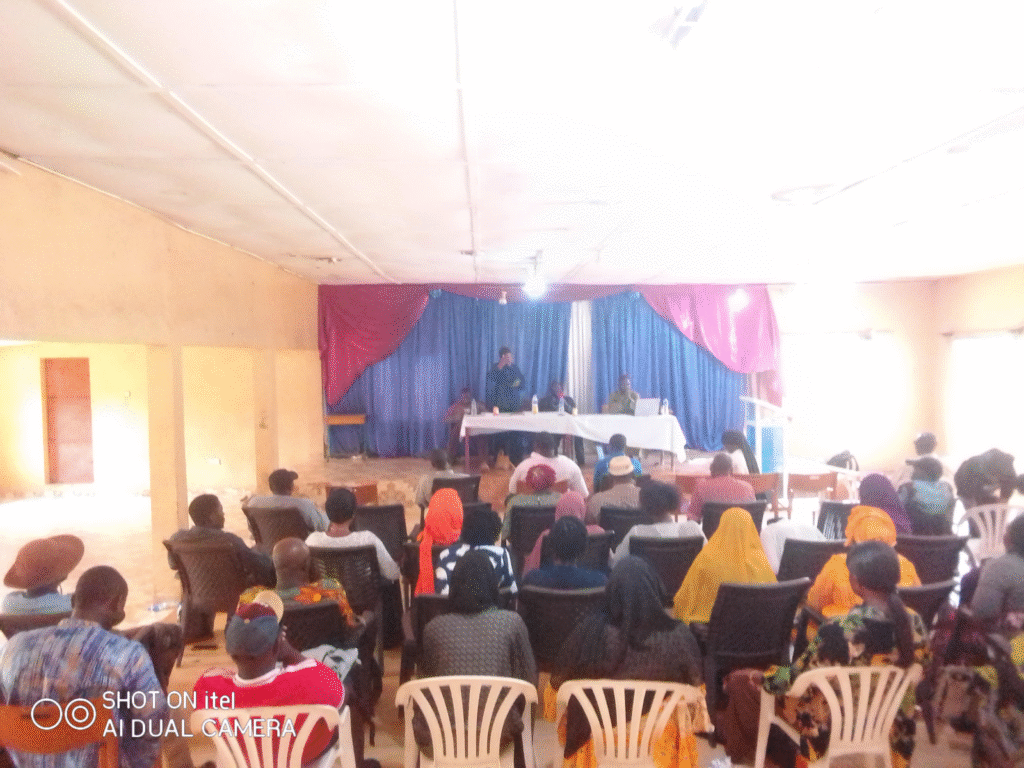
Stakeholders across The Gambia’s disability sector are calling for stronger enforcement of the Persons with Disabilities Act, 2021, as nationwide sensitisation sessions come to an end.
The week-long campaign, held from 13 to 19 November 2025 across the Kanifing Municipality, West Coast Region and other parts of the country, brought together government officials, local authorities, Organisations of Persons with Disabilities (OPDs), development partners and community representatives.
Speakers at the sessions said the full realisation of disability rights requires leadership, compliance and shared responsibility.
They also highlighted the urgent need for up-to-date and disaggregated data to guide national policies.
“We need to know how many persons with disabilities we have, their gender, age and the services they need,” one advocate said.
Principal Social Welfare Officer Modou Suwareh explained that enforcement of the Disability Act became effective between 2023 and 2024, following a two-year transition period.
He reminded public and private institutions that accessibility is now a legal requirement.
“If you are constructing a building, you must ensure it is accessible. Disability can happen to anyone at any time,” Suwareh said.
His Worship Muhammed Krubally, Chairperson of the National Advisory Council for Persons with Disabilities, announced that the Council’s Secretariat will soon be inaugurated to handle coordination, grievance reporting and government engagement.
He also reminded the public of the penalties for violating the Act: a D50,000 fine or six months imprisonment for individuals, and a D100,000 fine for institutions.
“If you don’t want to pay D50,000 or go to prison, don’t violate disability rights,” Krubally warned.
Speakers emphasised that The Gambia’s law is aligned with the UN Convention on the Rights of Persons with Disabilities, which guarantees equal access to education, employment, justice and public services.
Senior Counsel Fatoumatta Drammeh, representing the Ministry of Justice, reminded participants that persons with disabilities enjoy equal rights under the law.
“If anyone denies you access to education or a public institution, you have the right to take them to court. The justice system exists for you,” she said.
Sainey Camara, Acting Executive Director of the Gambia Federation of the Disabled (GFD), revealed that only about 3% of persons with disabilities complete basic or secondary education, calling for stronger support systems and inclusive policies.
He also announced plans for a national disability survey in 2026—the first since 1998—funded by the World Bank.
Government representatives reaffirmed their commitment to working with civil society and international partners to promote inclusion.
“This work requires collective effort. One person cannot do it alone. Let us work together to make The Gambia a safe haven for persons with disabilities,” officials said.
By Madi S. Njie




Recent Comments