Part 1
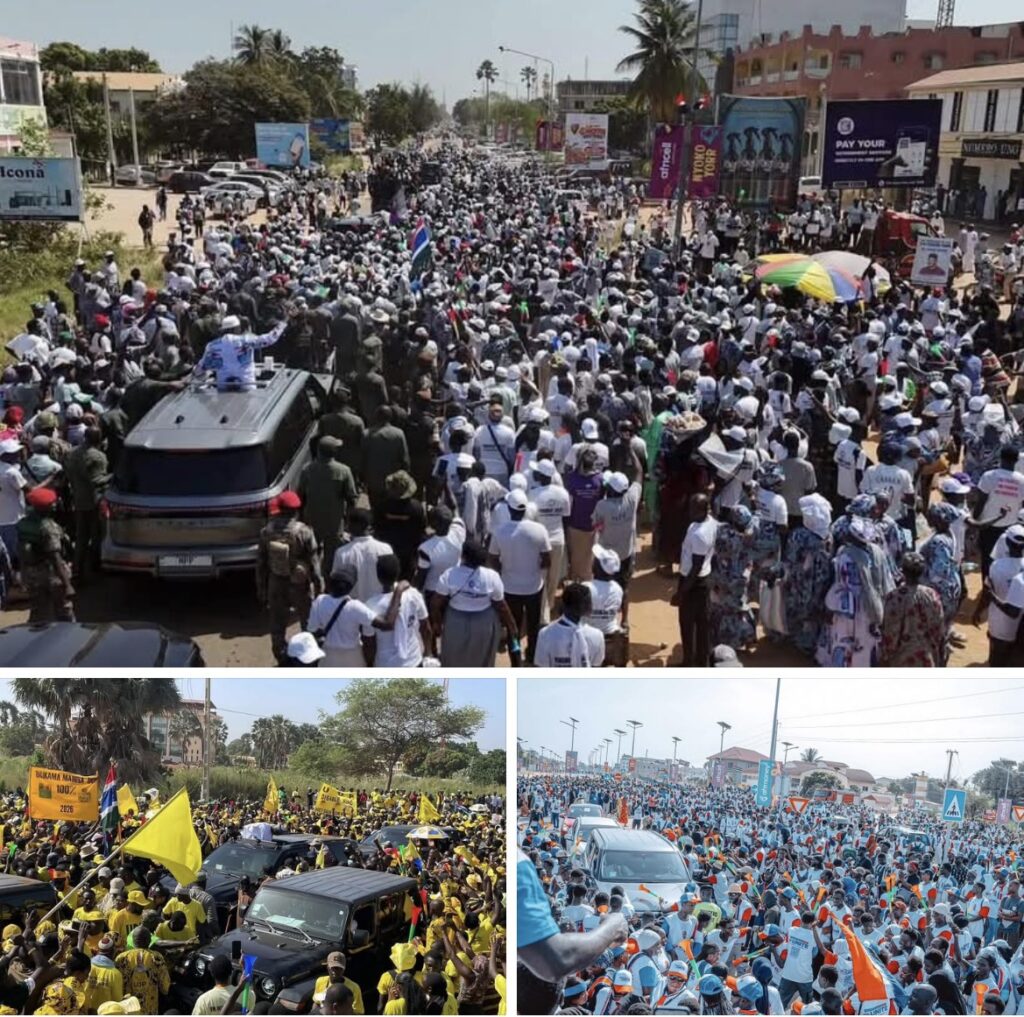
A sea of supporters accompanied President Adama Barrow to the IEC in a show of political strength. Yet the day’s deeper significance lay in his remarks on presidential term limits.
As the nation debates numbers, narratives, and momentum, the central question is whether electoral enthusiasm can become ballots. Democracies are decided not by crowds in the streets but by votes in the ballot box.
Barrow’s comments on term limits introduced the campaign’s most important constitutional debate, reminding Gambians that elections are fought not only over power but also over the rules that govern it.
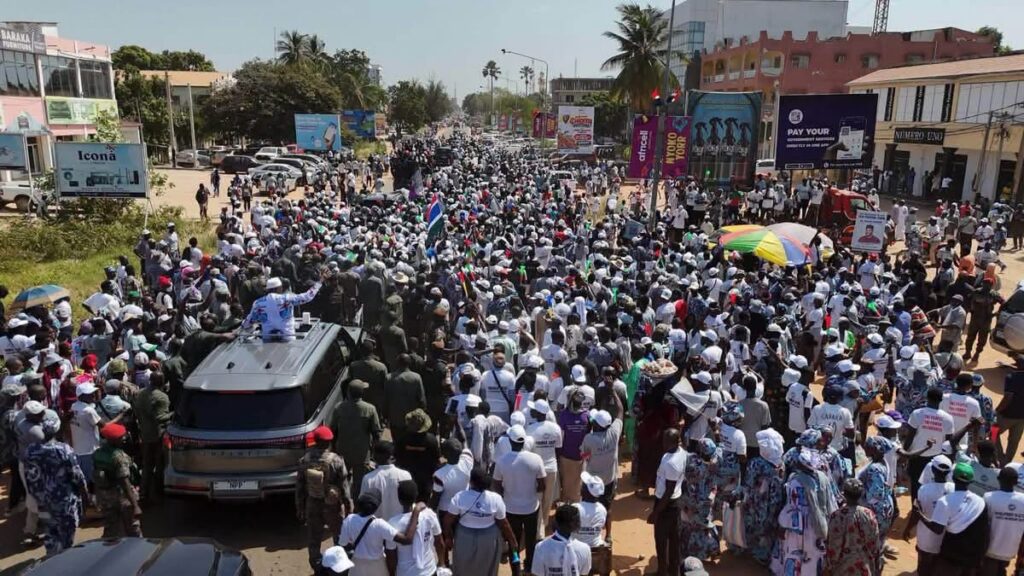
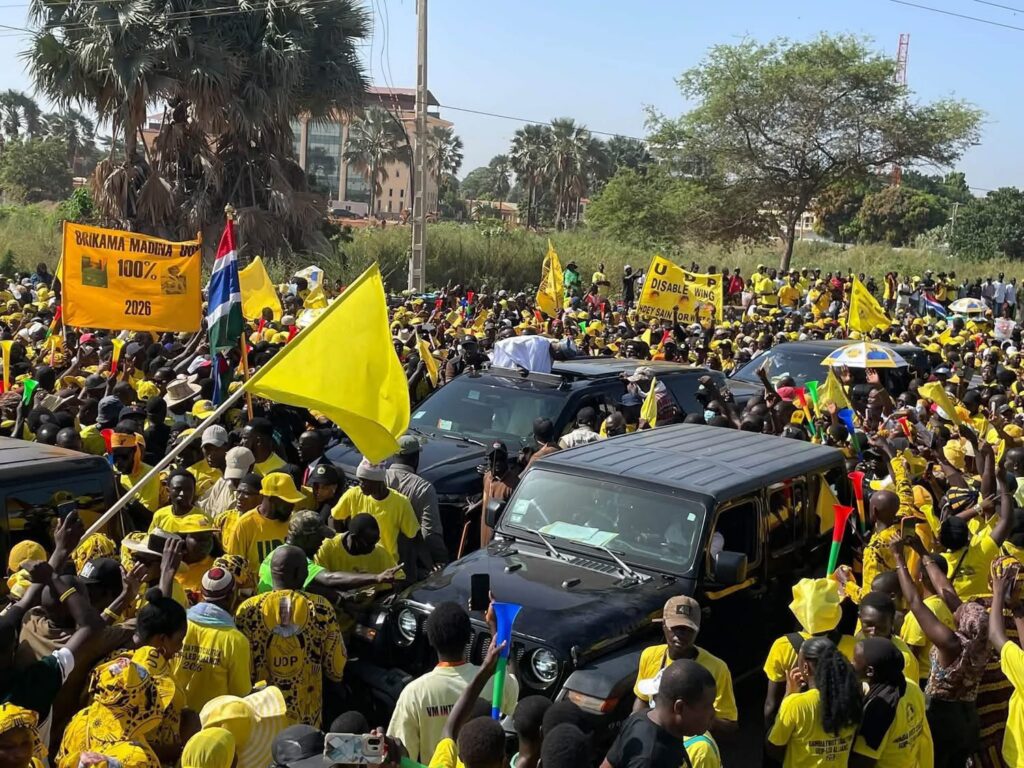
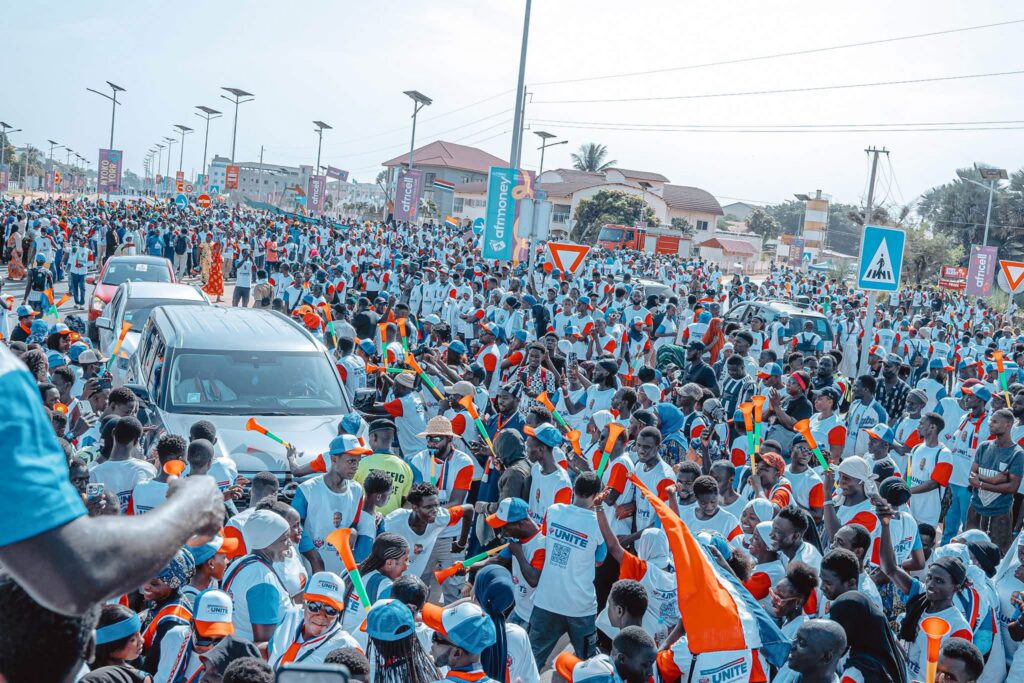
The images will endure: roads awash in party colors, convoys stretching across the Greater Banjul Area, and a president surrounded by supporters on his way to the IEC.
Yet history may remember nomination day less for the crowd than for the constitutional questions it revived.
In every democracy, there comes a moment when popularity must confront power, succession, and democratic restraint.
In every election season, politics produces two contests. One unfolds before cameras, drones, and cheering supporters. The other takes place quietly inside polling stations. One is measured by spectacle. The other is measured by votes.
President Adama Barrow’s nomination before the Independent Electoral Commission this week was the defining political spectacle of the campaign so far.
Accompanied by thousands of supporters clad in National People’s Party Ashobi and coalition colors, and escorted by a lengthy convoy stretching from Banjul to the IEC headquarters, the president turned a constitutional requirement into a display of political strength. Reports indicate that the scale of the gathering delayed his arrival at the IEC.
For many Gambians, the scenes recalled another memorable chapter in the country’s electoral history: the remarkable reception accorded to Ousainou Darboe during the closing stages of the 2001 presidential campaign. While the circumstances differ, both moments belong to that rare category of political events that transcend routine campaigning and enter the national political memory.
Yet the most consequential development of the day was not the crowd itself. It was President Adama Barrow’s remarks on presidential term limits.
For many Gambians, particularly opposition supporters, constitutional reform advocates, journalists, and civil society actors, term limits remain one of the unfinished debates of the post-Jammeh democratic transition.
Questions about executive power, constitutional restraint, and democratic succession have lingered for years in the national conversation.
Against this backdrop, Barrow’s comments after submitting his nomination papers deserve close scrutiny. Speaking to reporters, the President said that while he believes in term limits, he does not necessarily consider them the best measure of democratic governance, citing countries such as Germany and the United Kingdom.
At the same time, he pledged that if granted another mandate by Gambian voters, term limits would be incorporated into a new constitution.
Politically, the statement was significant because it offered one of the clearest articulations of the President’s position during the current campaign.
It also highlighted the central tension likely to shape the election itself. One school of thought holds that term limits are indispensable democratic safeguards designed to prevent the excessive concentration of power.
Another argues that leadership should be determined by voters rather than constitutional restrictions and that elections themselves provide the ultimate mechanism of accountability.
Regardless of where one stands, the debate goes beyond personalities. Long after the campaign caravans disperse and the election posters fade, the question of how a democratic republic should regulate executive power will remain, especially through the unresolved issue of term limits.
Meanwhile, social media has become consumed by another debate: crowd size. Supporters celebrated the nomination procession as one of the largest political mobilizations in Gambian history.
Critics questioned the figures. Others compared drone footage and photographs. Some even alleged that imagery circulating online had been digitally enhanced.
Yet no independent authority has verified the competing estimates. The numbers remain part of political messaging rather than established fact. But democracies are not governed by crowd counts. They are governed by vote counts.
This distinction is often forgotten during campaigns. Crowds create excitement. They shape perceptions of momentum. Yet the IEC does not count convoys, party colors, social media impressions, viral videos, or enthusiastic crowds. It counts ballots.
What ultimately matters is not how many people accompany a candidate to the IEC. What matters is how many citizens rise early on election day, travel to polling stations, stand patiently in line, and place their marble in the ballot drum.
A rally measures enthusiasm. A vote measures determination. A crowd measures excitement. A ballot measures commitment. That reality should give pause to both supporters and opponents of President Adama Barrow.
Tomorrow, the spotlight will shift to Dr. Lamin Darbo and the Team Gambia Coalition when they file their nomination papers. The inevitable comparisons will begin immediately. Can Team Gambia generate a similar level of public enthusiasm? Can it create a competing narrative of momentum? Can it demonstrate organisational reach and electoral viability? These questions matter. Yet they are not the most important questions.
The more important question is whether any campaign can convert public visibility into electoral participation. Political history, in The Gambia and elsewhere, repeatedly demonstrates that the loudest rally is not always followed by the largest vote tally.
Crowds often contain supporters, sympathizers, observers, curious citizens, and people drawn simply by the significance of the moment. Voting is different. Voting is personal. Ultimately, campaigns succeed not when they mobilize crowds, but when they mobilize voters.
President Barrow’s nomination succeeded because it projected confidence, organisation, and political strength. His intervention on term limits ensured that the day was remembered for more than numbers alone.
It reminded observers that this election will be fought on two interconnected fronts: the politics of perception and the politics of constitutional governance. The first will be measured by crowds. The second will be judged by history. And both will ultimately be decided at the ballot box.
For all the argument over attendance figures, convoy length, drone footage, and social media narratives, one democratic truth remains unchanged: Crowds create headlines. Votes create presidents.
By Alagi Yorro Jallow






Recent Comments