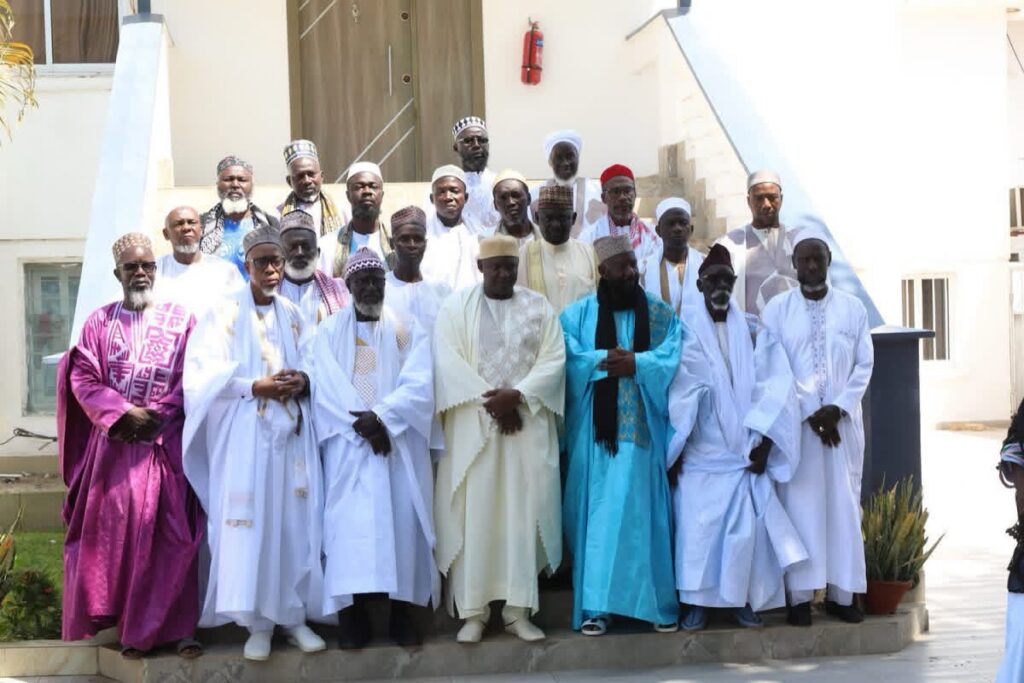
In a season of heightened political competition, social media polarisation, and growing electoral anxiety, The Gambia needs religious leaders who calm passions rather than inflame them.
This essay argues that religious leaders best serve democracy by remaining the nation’s conscience, promoting peace, truth, and reconciliation, not partisan allegiance.
As The Gambia approaches another defining presidential election, growing religious involvement in partisan politics raises important questions about the proper relationship between faith and democracy.
While religious leaders have a sacred duty to promote peace, justice, truth, and national unity, they risk weakening both religion and democratic citizenship when they transform pulpits into campaign platforms.
This essay argues that the highest calling of religious leadership is to safeguard conscience, preserve peace, and protect the Republic from division.
A democracy’s strength depends not only on free elections but also on institutions that remain above partisan conflict. As election season intensifies, religious leaders face a profound choice: remain custodians of conscience and national unity, or become participants in political contestation.
This essay contends that democratic peace depends on preserving the distance between the pulpit and the ballot box.
With the December 5, 2026 presidential election approaching, an old democratic question returns with renewed urgency: Should religious leaders publicly endorse political candidates and immerse themselves in partisan political campaigns?
This is neither an attack on religion nor an attempt to silence religious voices. Rather, it defends two indispensable institutions: religion and democracy. Both weaken when one becomes the other’s instrument.
Democracy prospers when citizens are free to make informed political choices according to their conscience. Religion flourishes when its moral authority remains independent of worldly political ambitions. Once those boundaries blur, both institutions risk losing the legitimacy that gives them strength.
Recent public debates over sermons, khutbahs, political endorsements, campaign appearances, and social media interventions by some religious figures have made this issue impossible to ignore.
More Gambians are seeing religious platforms become arenas for partisan contestation. What was once the occasional exception threatens to become a troubling norm. This development deserves sober reflection.
Religious leaders, as citizens, have every constitutional right to hold political opinions. Like all Gambians, they care about governance, corruption, poverty, justice, accountability, and national development.
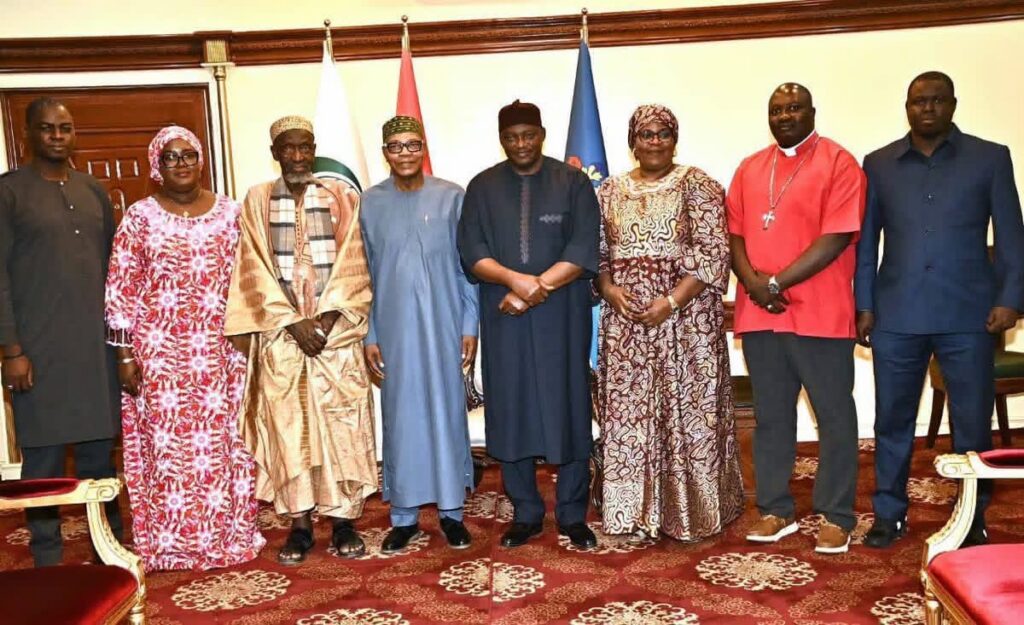
Faith traditions throughout history have addressed moral questions that affect society. However, moral engagement differs profoundly from partisan endorsement.
A religious leader may condemn corruption without campaigning for a candidate. A religious leader may advocate justice without joining a political movement. A religious leader may encourage civic participation without instructing worshippers how to vote. A religious leader may call for peaceful elections without becoming a surrogate for a political party.
The distinction is neither cosmetic nor trivial. It lies at the very heart of democratic citizenship. The mosque is not a party office. The church is not a campaign headquarters. The pulpit is not a political podium. These sacred spaces belong equally to worshippers of differing political convictions.
Every mosque includes supporters of competing political parties. Every congregation includes voters who will make different choices at the ballot box. When a religious institution becomes publicly identified with a candidate or party, some congregants inevitably feel alienated, marginalised, or pressured.
Religion should unite believers around moral principles, not divide them along partisan lines. The danger becomes particularly acute during elections. The Gambia has long been admired for its religious tolerance and peaceful coexistence.
Despite political disagreements, we have generally resisted the dangerous fusion of faith and partisan politics that has destabilised many other societies. We should never take that achievement for granted.
History repeatedly teaches that when religion becomes entangled in political competition, political disagreements soon acquire religious overtones. Criticism is interpreted as heresy. Opponents become enemies. Political loyalties begin masquerading as spiritual obligations. That path leads to neither stronger religion nor a healthier democracy.
Yet an even greater danger emerges when religious authority is used not to promote peace and moral guidance but to inflame passions, deepen divisions, and legitimise political intolerance.
Religious leadership’s responsibility extends far beyond the walls of mosques and churches. Religious leaders occupy a unique position of trust. Their words carry extraordinary influence. Their guidance often reaches hearts and minds more effectively than political speeches.
For that very reason, religious authority must never become a vehicle for hate speech, tribal prejudice, sectarian division, political intimidation, or populist agitation.
The Republic becomes vulnerable when spiritual authority is used to stigmatize communities, question fellow citizens’ belonging, inflame ethnic sentiments, or portray political contests as a struggle between saints and sinners, believers and unbelievers, patriots and traitors.
Such rhetoric is incompatible with democratic citizenship and authentic religious teaching.
The Gambia’s strength has always rested upon its remarkable ability to maintain social harmony across tribal, regional, religious, and political differences.
Any rhetoric that seeks to isolate, demonise, ridicule, or marginalise any community weakens the foundation upon which national unity rests.
Religious leaders should therefore be the first line of defense against tribalism, not its amplifiers; the strongest opponents of hate speech, not its distributors; the guardians of truth, not contributors to misinformation; and ambassadors of national unity, not participants in political polarisation.
The temptation of populism is especially dangerous during election periods. It thrives on emotion instead of reason, grievance instead of solutions, outrage instead of understanding, and division instead of dialogue.
It presents political contests as existential battles and encourages citizens to view opponents not as fellow Gambians but as enemies to be defeated.
Democracy demands the opposite spirit. It requires restraint, humility, tolerance, and coexistence. When religious leaders succumb to populism, they trade moral authority for partisan popularity. They diminish the credibility that gives them influence in the first place.
The measure of religious leadership is not the ability to excite crowds, command applause, or influence voting behaviour. It is the ability to calm tensions when others inflame them, to speak wisdom when others spread anger, and to build bridges when others seek to burn them.
The Republic does not need religious kingmakers. It needs peacemakers. This is why the role of religious leaders should be elevated, not diminished.
They should challenge dishonesty wherever it exists. They should condemn corruption regardless of who commits it. They should oppose violence regardless of who perpetrates it. They should defend justice regardless of who benefits from it.
Most importantly, they should remain independent enough to speak truth to power without becoming agents of power.
The nation needs religious leaders who can advise presidents without becoming political operatives, criticize governments without becoming opposition activists, and guide citizens without directing their votes.
At a moment when politics is becoming increasingly polarized, religious leaders should help lower the political temperature rather than raise it.
The challenge confronting the Republic today is not merely political competition. It is the normalisation of intolerance, misinformation, online abuse, character assassination, and tribal antagonism.
Social media has amplified these tensions. Artificial intelligence and digital manipulation have introduced new avenues for deception. Falsehood often travels faster than fact. In such an environment, the nation needs moral voices dedicated to truth, moderation, reconciliation, and peace.
The Peace Pact signed by presidential candidates reminds us that elections should never become declarations of war between neighbours, families, communities, and supporters of different political parties.
Elections are contests of ideas, not contests of hatred. Political opponents are not enemies of the state. They remain fellow citizens bound together by a common destiny.
Religious and traditional leaders have a special obligation to reinforce this message. Their sermons should reject hate speech. Their teachings should oppose tribal chauvinism. Their guidance should encourage dialogue and mutual respect.
Their platforms should strengthen national cohesion rather than partisan mobilisation. The Gambia does not need religious leaders to deliver votes. The Gambia needs religious leaders to preserve peace.
The Gambia does not need clerics acting as campaign managers. The Gambia needs clerics acting as custodians of conscience.
Indeed, if religious leaders consistently employ their pulpits, khutbahs, sermons, public appearances, and social media platforms to preach peace, truthfulness, tolerance, respect for constitutional institutions, acceptance of lawful electoral outcomes, and rejection of tribalism and political violence, The Gambia would be significantly insulated from both pre-election tensions and post-election unrest.
No institution in the country possesses greater moral reach. No public voice has greater capacity to calm anxieties. No social force is better positioned to strengthen reconciliation and national healing.
In this December 5 presidential election, voters still face the same choice as in any democracy: continuity or change, decided peacefully through the ballot box. Let political parties campaign. Let candidates compete.
Let journalists scrutinise. Let the IEC administer. Let the courts adjudicate. And let religious leaders remain what they are uniquely called to be: the conscience of the nation rather than the champions of political factions.
For long after campaign posters have faded, long after rallies have ended, long after today’s politicians have exited the public stage, Gambians of every tribe, region, faith, and political persuasion will still share the same towns, the same markets, the same schools, the same mosques, the same churches, and the same Republic. The greatest responsibility of religious leadership is not to determine who wins elections. It is to ensure that the nation survives them.
If every political party acquires its own imam, its own pastor, its own religious champion, and its own spiritual endorsement, democracy itself will become poorer, and religion will become weaker. The Republic cannot afford such a future.
Our nation needs religious leaders who unite rather than divide, who enlighten rather than inflame, who reconcile rather than polarise, and who speak with moral courage rather than partisan passion.
For democracy is strongest when citizens vote freely, institutions function independently, and religious leaders remain faithful to their highest calling. Not as kingmakers. Not as political strategists. Not as campaign surrogates.
But as custodians of conscience, guardians of peace, and faithful stewards of the moral soul of the Gambian nation. For in the end, elections come and go. Presidents come and go. Political parties rise and fall. But the Republic endures. And history will judge not those who won power, but those who preserved peace.
By Alagi Yorro Jallow





Recent Comments