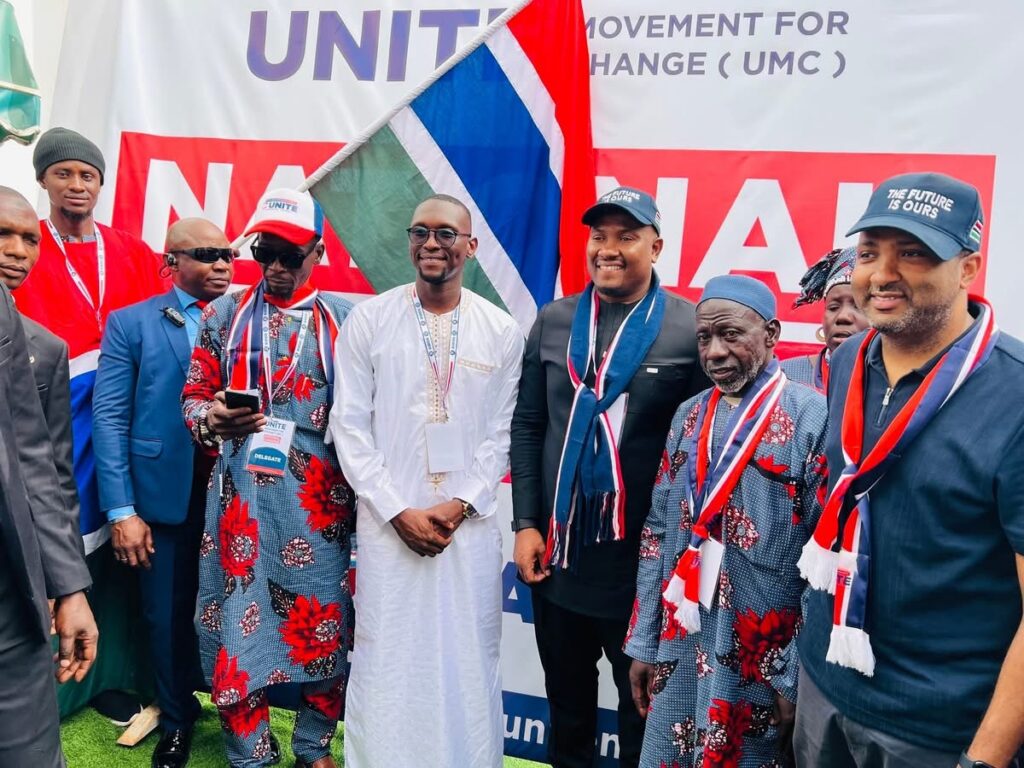
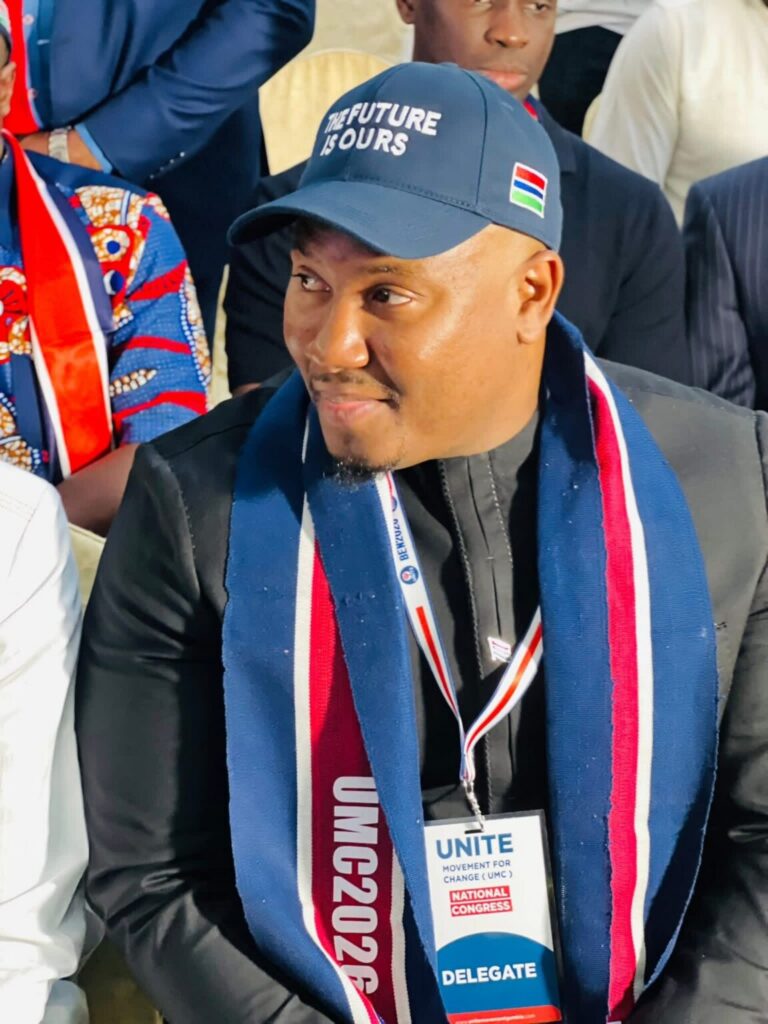
The United Movement for Change has energised Gambian politics, but its legal status remains unclear, as the Elections Act clearly distinguishes political movements from political parties. The UMC’s first congress was a lively display of organisation, symbolism, and youthful energy.
Yet beneath the excitement is a hard legal reality: under the Elections Act, a political party only exists once it’s officially registered. As observers like Political Scientist Essa Njie point out, the movement’s growing momentum may be running into the rigid framework of Gambian electoral law.
There are moments in a nation’s political life when spectacle outpaces structure, when the choreography of a movement seduces the public imagination long before the law has caught up.
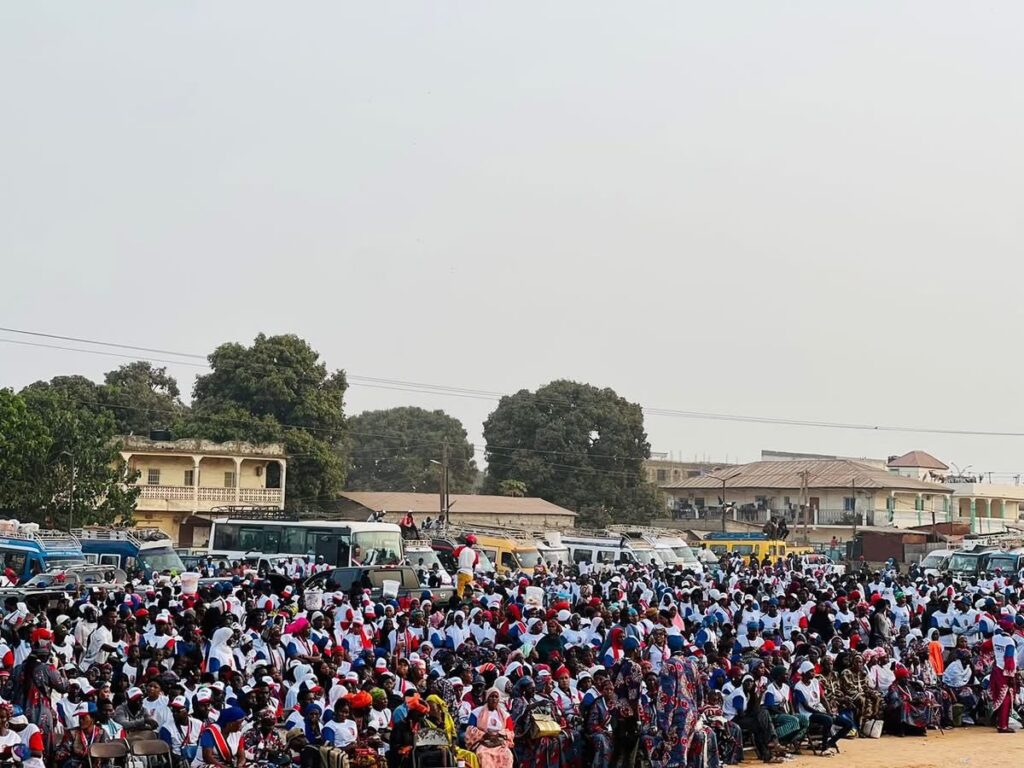
The inaugural congress of the United Movement for Change (UMC) was one such moment: a carnival of political possibility, a gathering of musicians, artists, diaspora returnees, and youthful optimism.
It was, by any measure, one of the most successful political mobilisations in recent Gambian history, vibrant, disciplined, and symbolically rich.
Beneath all the colour and choreography lies an unshakable legal fact: UMC isn’t recognised as a political party under Gambian law. No matter the crowd size, diaspora excitement, or flawless organisation, nothing can replace the one thing the Elections Act requires registration.
The Elections Act does not speak in riddles. Its interpretation section defines a political party in one decisive sentence: “a political party means an association of Gambian citizens organized to acquire and exercise political power and registered as such in accordance with this Act.”
The final clause — “and registered as such” — is the hinge upon which everything turns. Without registration, there is no party. Without registration, there is no sponsorship of candidates. Without registration, there is no place on the ballot. This is not a philosophical distinction. It is a legal status, and only the Independent Electoral Commission (IEC) can confer it.
Much of the current confusion stems from a misreading of Section 104 of the Elections Act, which outlines the purposes for which political parties may be established. It speaks of shaping political will, disseminating political ideas, and sponsoring candidates for public elections.
But Section 104 does not define what a political party is. It does not grant party status. It does not create a category called “party but not registered party.” It merely describes the functions of a political party once it exists.
Political scientist Essa Njie has been a clear voice in the debate, pointing out in a widely shared commentary that UMC’s leaders, especially Ahmed Talib Bensouda, have misunderstood Section 104.
He explains that the definition of a political party is found only in the interpretation section and is based solely on registration. Njie’s point isn’t partisan; it’s a reminder that no amount of political excitement can outweigh the actual wording of the law.
If Section 104 describes the purpose of political parties, Section 106 describes the process by which they come into legal existence. It states that “the Commission shall, on a written application, register a political party,” provided that the applicant meets the statutory requirements.
These include the submission of a constitution, a list of executive members, audited accounts, regional offices, and a prescribed number of signatures from registered voters.
Only after these conditions are met does the IEC issue a certificate of registration. Only then does an organisation become a political party.
UMC’s earlier bid to register under the name UNITE was turned down due to procedural issues: irregular signatures, mismatched forms, and incomplete paperwork. These weren’t political roadblocks but simple administrative missteps. The movement never submitted a corrected application, time slipped by, the election calendar grew tighter, and eventually, the window closed.
The Elections Act draws a clear legal line between political movements and political parties, and that line begins with the statute’s interpretation section. A political party, the law states, is an association of Gambian citizens organized to acquire and exercise political power and registered as such under the Act.
The final clause is not ornamental. It is the legal threshold. Without registration, an organization cannot be recognized as a political party, regardless of its size, structure, or political ambition.
Much of the current public confusion arises from a misreading of Section 104, which outlines the purposes for which political parties may be established. It speaks of shaping political will, disseminating political ideas, and sponsoring candidates.
But Section 104 does not define what a political party is. It does not grant party status. It merely describes the functions of a political party once it already exists.
As political analyst Essa Njie has argued, the definition of a political party is found only in the interpretation section, and that definition hinges entirely on registration.
The operational heart of the law is Section 106, which sets out the process by which a political party comes into legal existence. It requires a written application to the Independent Electoral Commission, accompanied by a constitution, executive list, audited accounts, regional offices, and a prescribed number of signatures from registered voters.
Only after these requirements are met does the IEC issue a certificate of registration. Only then does an organisation become a political party under Gambian law.
The consequences of non‑registration are straightforward. A movement may gather, organise, hold congresses, elect executives, and mobilize supporters. It may even articulate a national political vision.
But it cannot sponsor a candidate for public office. It cannot appear on the ballot. The IEC cannot treat it as a political party. The law recognizes only two categories of candidates: those sponsored by registered political parties and those contesting as independents. There is no third category for movements, associations, or civic platforms, however politically vibrant they may be.
This is why the UMC, despite its impressive congress and organisational strength, remains a political movement rather than a political party. It has not been registered under Section 106, and the IEC cannot recognize it as a party by sentiment or by spectacle.
The law is blind to crowds and colour. It sees only compliance. Until registration occurs, the movement’s leader can only enter the December elections as an independent candidate or through sponsorship by a registered party. The Elections Act leaves no room for improvisation.
UMC’s congress was a showcase of sharp political organization. It broke away from the coronation style of Gambian politics—no godfathers, no inherited power, no secretive selection. Delegates cast their votes, and leaders rose through a process that felt modern, democratic, and genuinely refreshing.
But the law doesn’t reward symbolism; it rewards compliance. UMC has built a strong political machine but hasn’t secured the legal framework needed to propel it into the December elections.
It’s easy to think that Ahmed Talib Bensouda, with a father among the nation’s most respected legal figures, a lawyer for a sibling, and a circle of experienced advisers, would have handled this situation flawlessly.
But political players often mix up political legitimacy with legal legitimacy. Crowds don’t grant legal status. Congress doesn’t grant legal status. Momentum doesn’t grant legal status. Only registration does.
The IEC is not a political actor. It is an administrative body with a narrow mandate: register parties that comply, reject those that do not, nominate independent candidates, and nominate candidates of registered parties.
It cannot recognise a movement as a party. It cannot accept a congress as proof of party status. It cannot bend the law because a movement is popular. It cannot allow a non‑registered group to sponsor a candidate. The IEC’s hands are tied by the very law that gives it life.
The Elections Act is unforgivingly clear. UMC’s leader has only two lawful options: contest as an independent candidate, which is the cleanest and most legally defensible route; or be sponsored by a registered political party, which requires coalition negotiation and political compromise.
There is no third option. A movement cannot sponsor a candidate. A movement cannot appear on the ballot. A movement cannot be treated as a party by the IEC. The law is blind to spectacle. It sees only compliance.
UMC has managed to do what many Gambian parties haven’t: spark genuine inspiration. Its congress signaled a bold generational ambition and rejected the old ways of politics built on coronation and patronage.
It’s clear that Gambians, especially the youth, crave a new political language. But inspiration doesn’t equal registration, and mobilization isn’t the same as legal recognition. The movement now faces the point where its political energy must meet the demands of electoral law.
The crowds may be big, the colors vibrant, the music moving, but the ballot is ruled by statutes, not feelings. To turn momentum into real electoral power, UMC must first work within the laws it aims to serve. As the elders say, what’s clear should stay clear.
By Alagi Yorro Jallow








Recent Comments