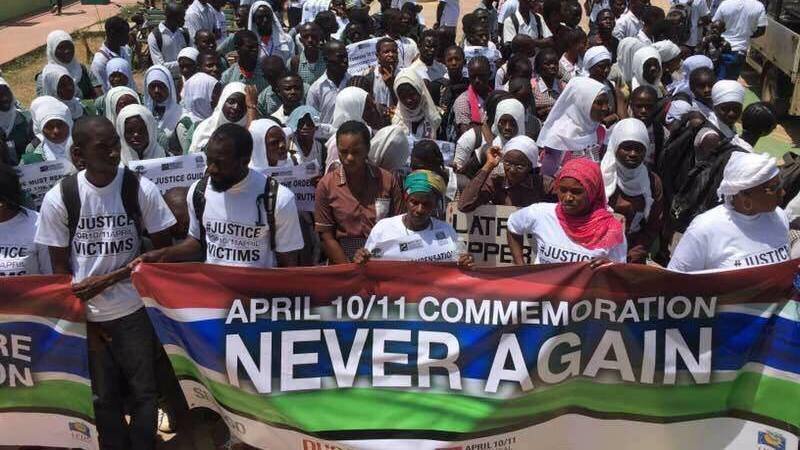
Victims and families affected by the April 10–11 student killings have renewed calls for justice and full reparations, more than two decades after the incident.
In a statement issued on 6 April 2026, survivors and concerned citizens said many victims are still waiting for compensation despite findings from both the Lartey Commission and the Truth, Reconciliation and Reparations Commission.
Both bodies established responsibility for the killings and recommended prosecutions, compensation, and institutional reforms.
However, the group said implementation has been slow, leaving many victims “unpaid or only partially compensated.”
The April 2000 protests, during which security forces opened fire on student demonstrators, are widely regarded as a defining moment in the country’s recent history.
Victims argue that the lack of accountability at the time set a precedent for further abuses during the rule of former president Yahya Jammeh.
The statement also raised concerns about what it described as “selective support,” pointing to reports that some victims outside the established reparations framework have received financial assistance, while recognised victims continue to wait.
The group is calling on the government, National Assembly, and relevant institutions to complete all outstanding reparations, ensure transparency in the management of recovered assets, and implement a clear plan to prosecute those responsible.
They also urged authorities to unify all victim-support mechanisms under a single national framework and to involve victims in decision-making processes.
Describing reparations as a legal obligation rather than charity, the group said: “Justice delayed for over 25 years is justice denied.”
The government has previously said it remains committed to implementing recommendations from the TRRC, including reparations and accountability measures.
By Adama Makasuba



Recent Comments