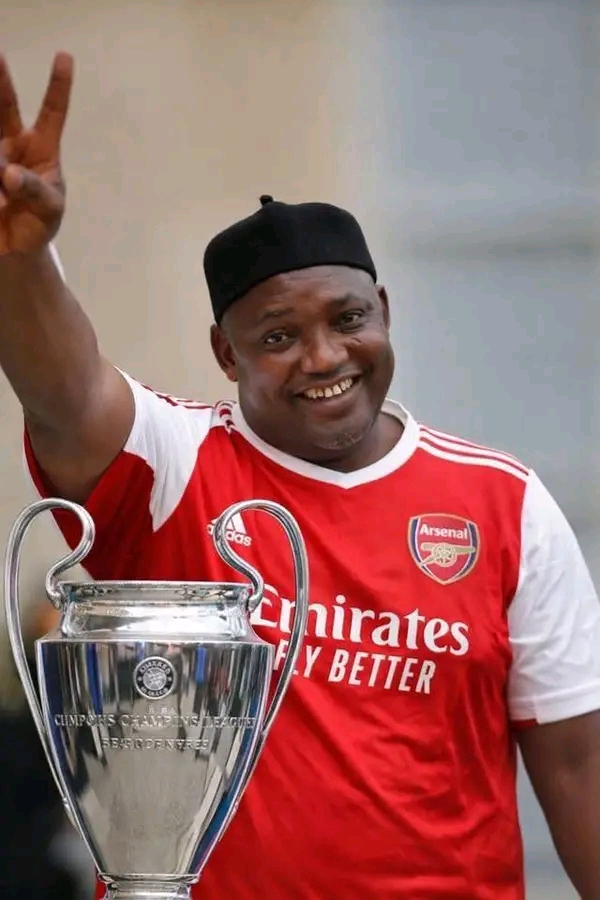
There are countries where politics commands the national imagination, and there are countries where football governs the bloodstream. The Gambia, in its small, spirited way, has always belonged to the latter.
We are a footballing republic masquerading as a political one, a nation where the English Premier League holds more emotional authority than the Constitution, and where our leaders reveal their truest selves not in policy documents or party congresses, but in the colors they wear on match day.
To understand Gambian politics, one must set aside the manifestos and the coalitions and instead consult the Premier League table, for in this land, the stadium is the real National Assembly, and the weekend fixtures are the true state of the nation address.
Before Arsenal’s resurrection in 2026, The Gambia had already lived through a football‑political drama so surreal that even Shakespeare would have struggled to script it.
During the 2016–2017 political impasse, as the world watched Yahya Jammeh refuse to concede defeat, foreign journalists discovered a curious subplot: Jammeh was a Manchester United fan, and Adama Barrow was an Arsenal fan. Two presidents, two clubs, two philosophies, one tiny country caught in the middle. International media seized on it with delight.
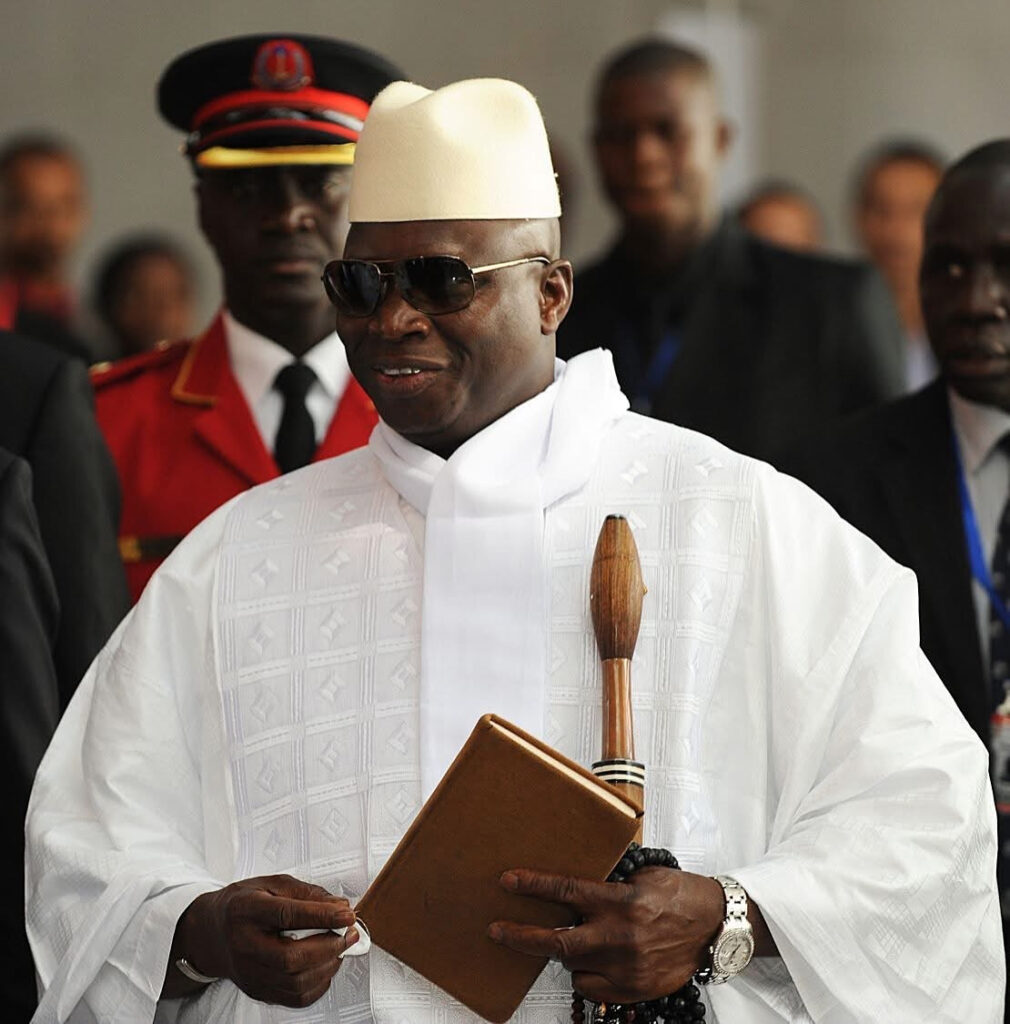
Headlines joked that the real transition of power was not political but footballing from Old Trafford to the Emirates. Some even quipped that Jammeh’s refusal to step down was “the last stand of a United fan unwilling to hand the country to an Arsenal man.” A joke, yes, but satire thrives on such coincidences. And now, in 2026, the irony has matured like fine palm wine.
The red of North London has found unlikely apostles in Banjul, Gunjur, and the Ministry of Information. President Adama Barrow, a lifelong Arsenal loyalist, has endured more heartbreak than any political scandal could ever deliver.
For twenty‑two years, he waited, prayed, and suffered, and then 2026 arrived like divine mercy. Arsenal finally lifted the Premier League trophy, and for one glorious night, State House became a branch of the Emirates Stadium. But Barrow is not alone in this footballing theology.
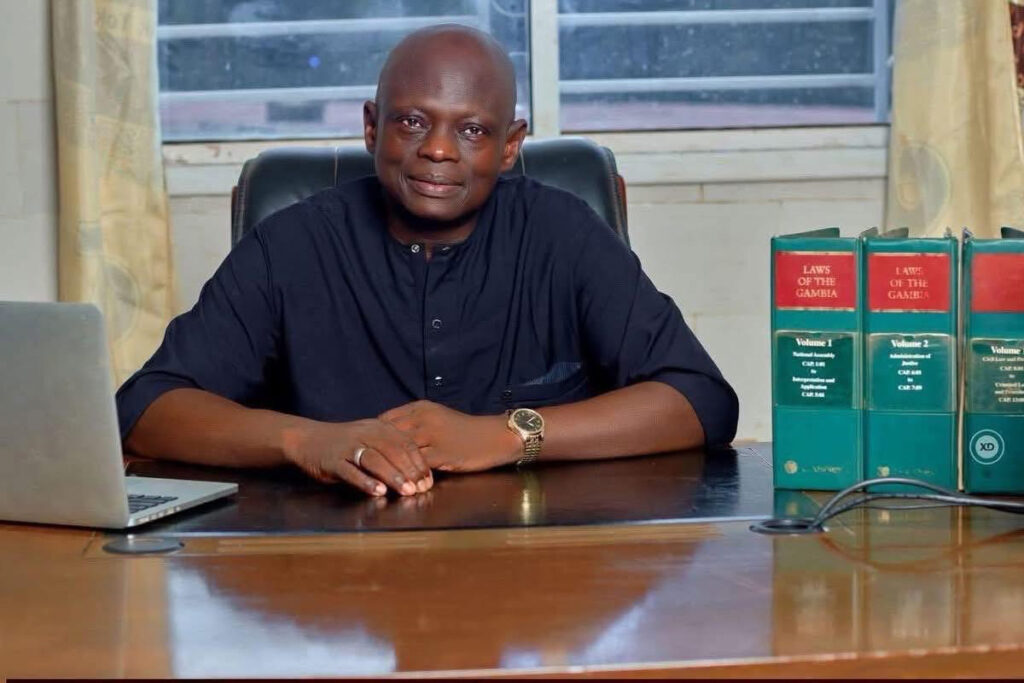
Dr. Lamin J. Darbo, the philosopher‑lawyer of Gunjur, treats Arsenal not as a club but as a moral philosophy, a belief in beautiful football, principled play, and the eternal hope that justice, like a well‑timed through ball, eventually finds its mark. Arsenal’s resurrection felt like a vindication of his worldview: that discipline matters, that principles matter, that beauty matters, and that even long droughts end.
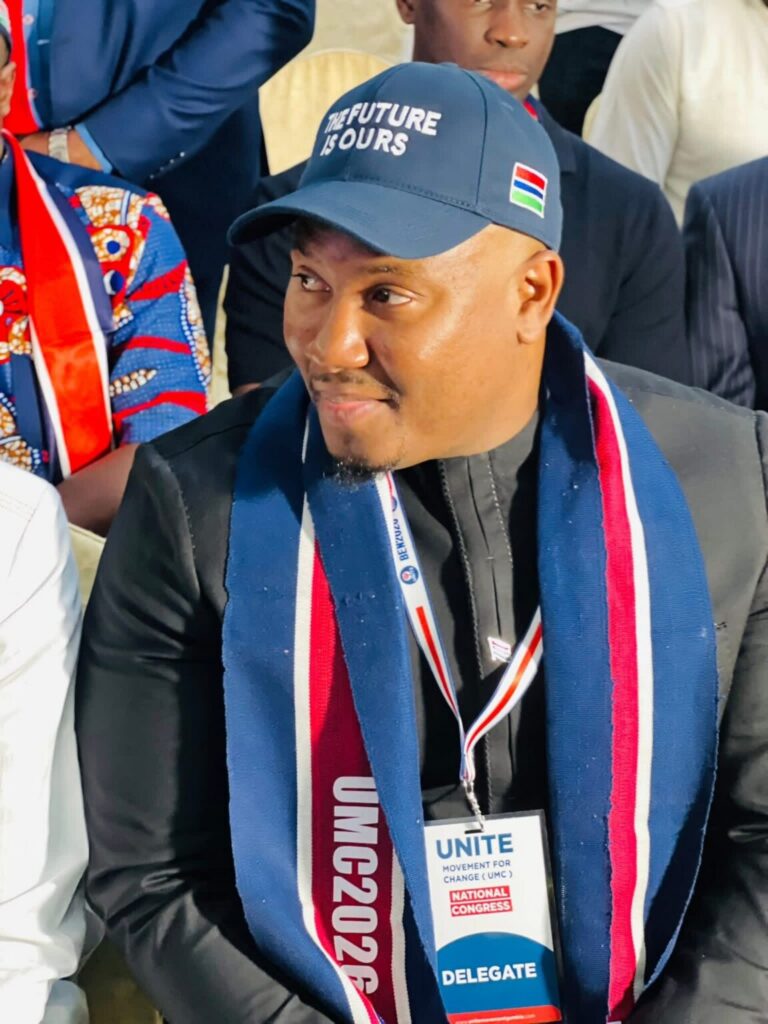
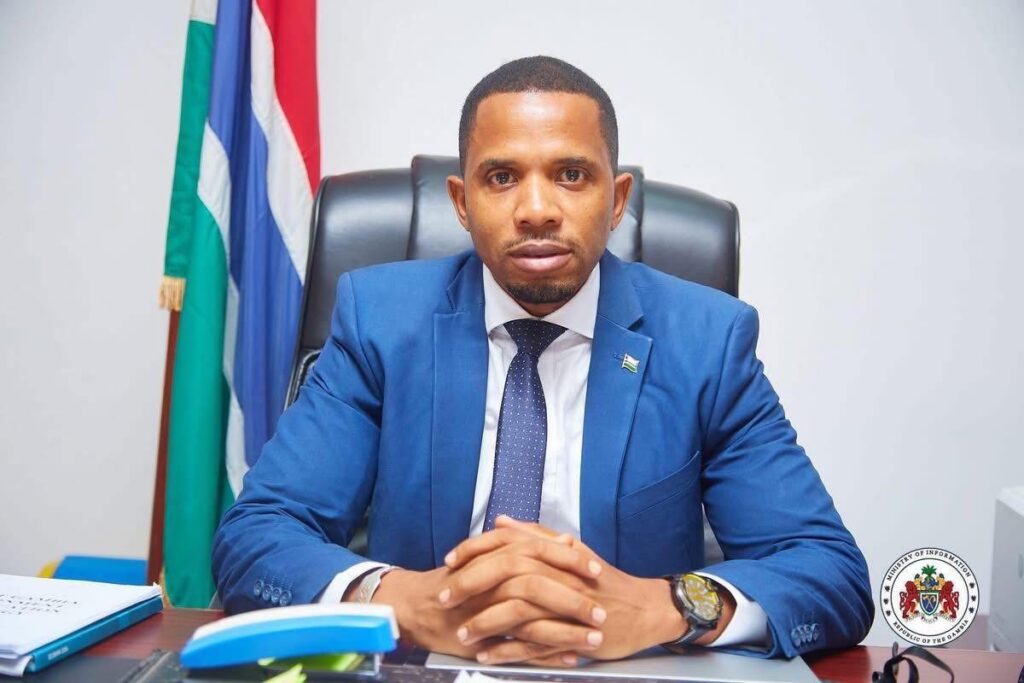
And then comes the newest cardinal in the Arsenal cathedral: Dr. Ismaila Ceesay, the young, sharp, maverick Information Minister a former university lecturer who once lectured on political theory by day and defended Arsenal by night. His rise from Citizen Alliance leader to government spokesman has added a new flavour to the Arsenal Republic: youthful swagger, academic precision, and the audacity to defend both government and club with equal passion. He is the bridge between the old Arsenal faithful and the new generation of Gunners who believe that football, like politics, rewards courage.
Together, Barrow, Dr. Darbo, and Dr. Ceesay form the Arsenal Intellectual Wing of Gambian politics — a coalition built not on ideology, but on the shared trauma of supporting a club that specializes in emotional damage.
On the far side of the football world sits the Manchester United Federation. Long before the 2017 crisis, Yahya Jammeh was already famous internationally as a devoted Manchester United supporter. His passion for Old Trafford was so strong that foreign journalists joked the real handover wasn’t political but footballing—from a United man to an Arsenal man.
Talib Ahmed Bensouda, the Mayor of KMC, sports United red with the confidence of someone whose club has found its swagger again. Welcoming Louis Saha to his office wasn’t just a courtesy; it was a diplomatic meeting between KMC and Old Trafford.
Together, Jammeh and Talib form the Manchester United Continuity Alliance, a blend of nostalgia, pride, and the belief that United’s glory days are just one transfer window away.
And then there is Ousainou Darboe, the elder statesman, the constitutional purist, the man whose political journey spans decades. He is an EPL fan, that much is certain. But his club allegiance remains one of the great unsolved mysteries of Gambian political trivia. Some say he is Arsenal. Some whisper he is United. Others insist he is Chelsea or Liverpool.
But the truth is simple: no one knows. And perhaps that is the point. In a country where football banter can ignite more passion than a press conference, neutrality is a survival strategy. Darboe has mastered the art of political diplomacy and football diplomacy, too. He is the Non‑Aligned Movement of Gambian football.
Here’s where the satire turns Shakespearean: the APRC faction loyal to a Manchester United president is in coalition with the NPP led by an Arsenal president. In football terms, it’s like Sir Alex Ferguson and Arsène Wenger sharing a dugout, impossible, unthinkable.
Yet here we are. Only in The Gambia could a United–Arsenal coalition outlast some political alliances. If Shakespeare were around today, he’d ditch Hamlet for The Tragedy of Old Trafford and the Comedy of the Emirates.
So, what does Arsenal’s 2026 win mean for President Barrow, without getting into predictions or politics? More than anything, it’s a moment of personal vindication. For twenty-two years, he’s weathered the drought, the jokes, the memes, and the yearly heartbreaks that would test any die-hard fan.
This victory doesn’t hint at elections or political futures; it simply gives him a rare burst of pure joy, a reminder that patience can pay off, that long waits can end in light.
Amid the constant pressures of national leadership, it’s a chance for him to breathe, smile, and feel like the football gods have finally acknowledged his loyalty. Not a political sign, just a personal win—a small, human triumph in a life lived under the public eye.
In The Gambia, the Premier League is the true parliament, and the stadium serves as the real National Assembly. Weekends are reserved for swapping politics for debates on whether Arsenal’s drought-breaking win is a miracle or just long-overdue luck.
That’s the charm of the moment Arsenal’s victory brings a smile to President Barrow, Manchester United’s revival gives Talib Bensouda something to brag about, Dr. Lamin J. Darbo enjoys philosophical satisfaction, Dr. Ismaila Ceesay feels youthful validation, and Ousainou Darboe finds yet another excuse to keep his club loyalty under wraps.
Let them enjoy it. Let them joke with each other, argue about VAR instead of constitutional clauses, and celebrate goals rather than grievances. Arsenal’s 2026 triumph has given President Adama Barrow something rare for a head of state: a moment of pure joy.

It’s not a prophecy, a political omen, or any kind of forecast, just personal vindication after twenty‑two years of heartbreak, a reminder that even the longest waits can end in dawn. For a man who has carried the weight of national duty, this win is a small, human comfort: the universe finally repaying his footballing loyalty.
If Arsenal can rise after twenty-two years, if Manchester United can find its swagger again, and if APRC and NPP can share the same political dugout, then surely, just surely, The Gambia can survive another Premier League season. Here, football is the only coalition that never falls apart.
By Alagi Yorro Jallow




Recent Comments