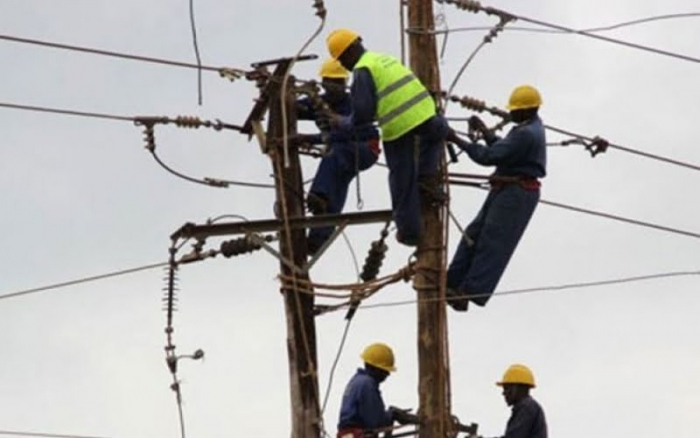
Residents of Bakary Sambou-ya in the West Coast Region say they are facing serious hardship after a prolonged electricity outage that has lasted for five days, disrupting homes and businesses during the holy month of Ramadan.
The power interruptions reportedly began on Monday, with residents complaining of extended blackouts and unstable electricity supply.
Many households say they are unable to preserve food items due to the lack of refrigeration, forcing some to dispose of perishable goods.
“I have thrown away a lot of fish I bought because there is no electricity to preserve them,” Abdoulie Gaye, a resident of the community said, explaining the losses he has suffered since the outage began.
Several residents believe the problem is linked to the transformer serving the area, which they claim has been repeatedly repaired by the National Water and Electricity Company (NAWEC).
According to them, the transformer often produces low voltage, making it difficult for electrical appliances to function properly even when power briefly returns.
Gaye said the weak supply has made it impossible to operate some household equipment. “I still cannot use my washing machine because the power is too low,” he added.
The blackout comes shortly after NAWEC announced it would introduce “minimal load shedding” during Ramadan and the Christian Lenten season due to increased electricity demand.
However, residents of Bakary Sambou-ya say the situation they are experiencing goes far beyond minimal power cuts.
Small business owners say the outage has also affected their livelihoods, as many depend on electricity to operate.
“This prolonged outage has badly affected my business,” said Ousman Keita, a shop owner in the community, calling on the authorities to urgently address the situation.
Workshop owner Buba Sambou echoed similar concerns, saying the blackout has made it impossible for him to carry out his daily work.
Residents said technicians from NAWEC have been visiting the community regularly, but the power supply remains unstable, leaving many hoping for a permanent solution to the recurring problem.
By Adama Makasuba







Recent Comments