In a country where access to rural education remains a pressing challenge, one man’s vision is transforming a village near Brikama, not just through classrooms, but chickens, crops and a radical belief in self-reliance.
On the edge of Jalambang, a remote village in the outskirts of Brikama where dirt paths wind through scrubland and birdsong fills the air, Muctarr Bojang, popularly known as Mucki, strolls across the school grounds he built from scratch. He pauses to wave at a line of children heading to class, their sandals kicking up dust.
“They know what to do if they see a snake,” he says, smiling. “And what to do if one bites.”
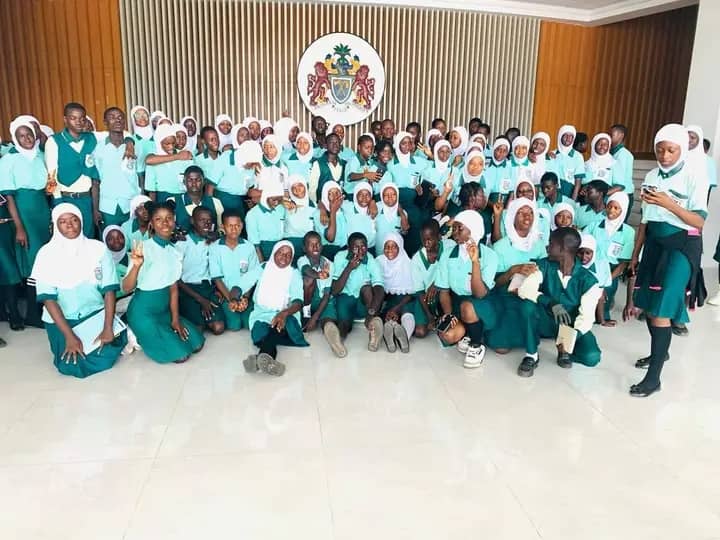
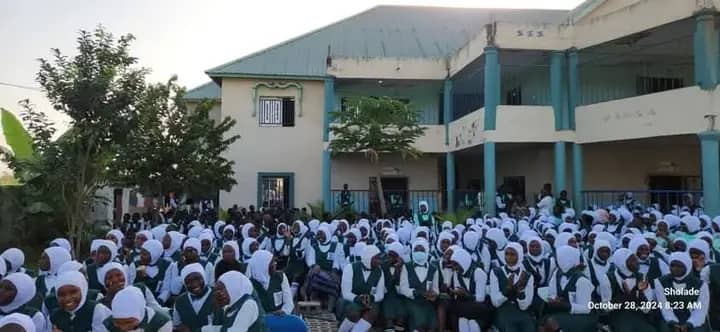
Wildlife, it turns out, is part of the curriculum at Mansa-Colley Bojang nursery and Lower Basic School. But so are agriculture, nutrition and a deep sense of ownership, all rare in rural Gambian schools. Founded in 2010, the school now serves over 500 pupils, a far cry from the 38 children Mucki first welcomed into three borrowed classrooms.
“I came here as a birdwatcher,” he says, recalling the moment everything changed. “I used to bring tourists to see colourful birds. But then I realised there was no school. The nearest one was six kilometres away. That’s when I knew I had to do something.”
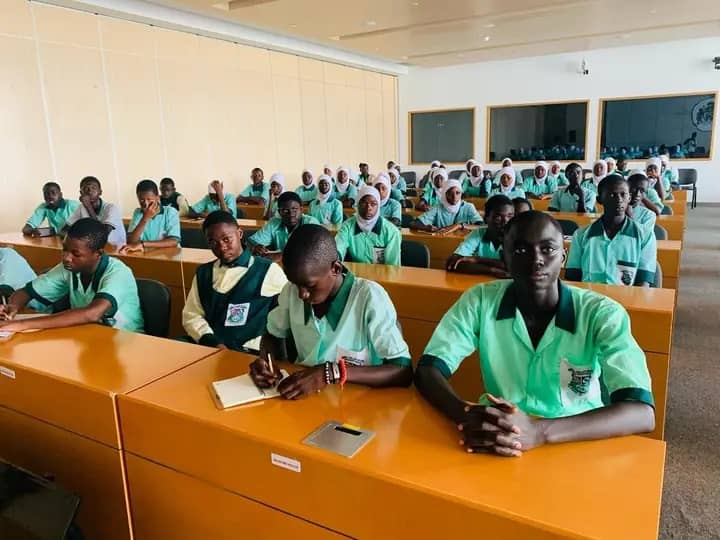
With help from a Rotary Club in the Netherlands, Mucky began building what would become the first school many in the community had ever known. Classrooms went up. Desks arrived. And soon, the children came; dozens, then hundreds and now nearly 2000.
A school fed by chickens and onions
Behind the main building, Mucki opens the door to a chicken house humming with life. This is no petting zoo. It’s a vital part of the school’s self-sufficiency model. With support from another Rotary Club, this time in Cambridgeshire, the school’s poultry project now produces around 400 eggs a day.
“We sell some to restaurants, use others for school meals and with the money, we buy stationery for the kids,” Mucki explains. “Nothing is wasted.”
Next to the chicken house lies the garden, the true heart of the school’s food programme. Neatly arranged beds of onions, tomatoes and black-eyed beans stretch out across the yard, each marked with a board painted with a student’s name: Yusuf Abdullahi, Fatou Jatta.
Every child from the age of seven is given a plot to tend. “The more you grow, the more you eat,” says Mucki, explaining how yields from each garden bed directly influence lunch portions. “We’re not punishing anyone. It just means if you only grow a little, you might only get a quarter loaf of bread.”
It’s a simple system, but it drives serious motivation. Children arrive before dawn to water their plants while the sun is low and return in the evening to tend their crops.
“They love it,” Mucki says. “Because what they grow, they eat. It gives them pride. We say: grow what you eat, eat what you grow.”
Building for the future
The system is about more than food. It teaches responsibility, connects education to lived experience, and grounds abstract subjects like science and agriculture in real, tangible work. And it’s paying off.
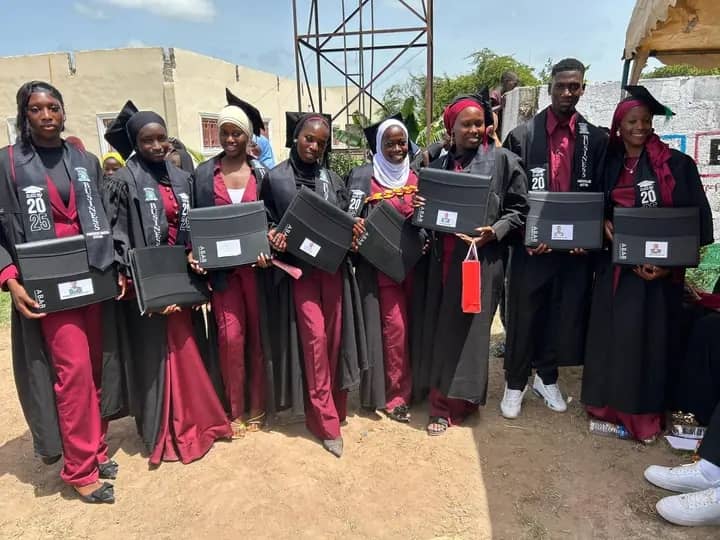
With the chicken house and garden providing both nourishment and income and generous sponsors covering school fees, Mucki has been working around the clock to make Mansa-Colley Bojang the best school in The Gambia.
Today, that ambition is no longer a dream. The school now ranks among the country’s top five, with pupils consistently achieving some of the highest grades in both national and sub-regional exams over the past five years. On the athletics field, too, the school has become a force, regularly placing in the top five in national school competitions.
Mucki credits the school’s success to community spirit and grit. “It’s not just me,” he says. “It’s everyone; the teachers, the kids, the parents, the sponsors. We built this together.”
No child pays to attend. Instead, the school relies on European sponsors who cover costs through donation packages. “Without them,” Mucki says, “we couldn’t do what we do.”
Now, his focus is shifting to the future. Plans are underway to build a secondary school on a new site, allowing the current Gate 5 cohort, the oldest year group, to continue their education in two years’ time.
For Mucki, who once came here simply to admire birds, it’s been a transformative journey. “I never thought I’d be a school founder,” he says. “But I saw a gap. And now, we’ve built something beautiful.”
As the sun dips behind the trees and the scent of soil and onions lingers in the air, children laugh in the distance, tending to their garden beds. In a village that once had no school, learning has taken root, and it’s it’s flourishing.
By Adama Makasuba




Recent Comments