The Gambia government has said that the ongoing electricity supply challenges are mainly affecting parts of the Greater Banjul Area and sections of the West Coast Region, especially during peak evening hours, and not the entire country as claimed in some public discussions.
The government acknowledged the frustration being experienced by customers ahead of Tobaski but stated that provincial regions are “largely unaffected” by the current load-shedding situation.
The government also noted that the electricity disruptions may affect water supply in some communities because water production and distribution depend heavily on stable electricity.
Authorities dismissed claims that the crisis is mainly caused by unpaid debts, saying the disruptions are instead linked to technical problems within the regional electricity supply network, which they say is also affecting neighboring countries.
According to the statement, the situation has been worsened by geopolitical developments and fuel supply disruptions affecting regional energy suppliers and some generation plants.
“These are exceptional and temporary circumstances, not a collapse of the national electricity system,” the statement said.
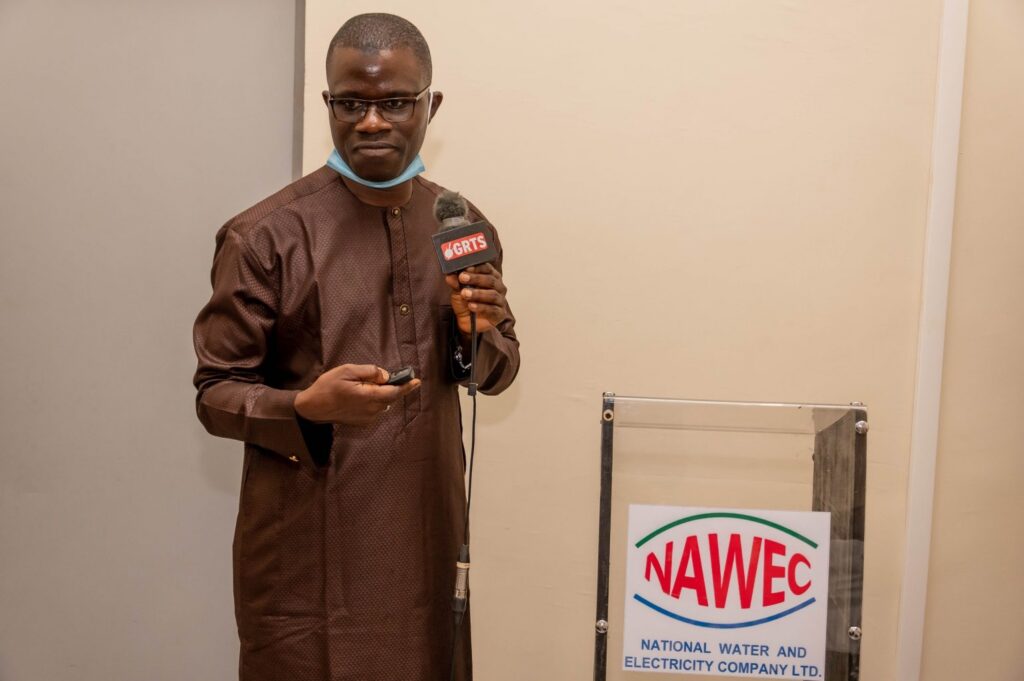
The government further stated that national electricity generation has not stopped, adding that the National Water and Electricity Company continues to operate and rehabilitate generators while expanding local generation capacity.
Officials said efforts are underway to bring additional generators online with the aim of achieving nearly 50 megawatts of internal generation capacity in the near future.
The statement also referenced the OMVG regional interconnection project, explaining that the initiative was designed to provide member states with more affordable and reliable electricity imports while strengthening domestic generation capacity over time.
Government said disturbances within interconnected regional systems can affect supply across borders.
Authorities further revealed that contracting processes are in their final stages for a major 50MW solar energy project in Soma, alongside other generation and transmission projects intended to reduce reliance on imported electricity.
The government assured the public that NAWEC technical teams and regional partners are working “around the clock” to stabilize the electricity system and restore reliable supply as quickly as possible.
“This is a difficult but temporary technical challenge occurring at an unfortunate time,” the statement added.
By Adama Makasuba







Recent Comments