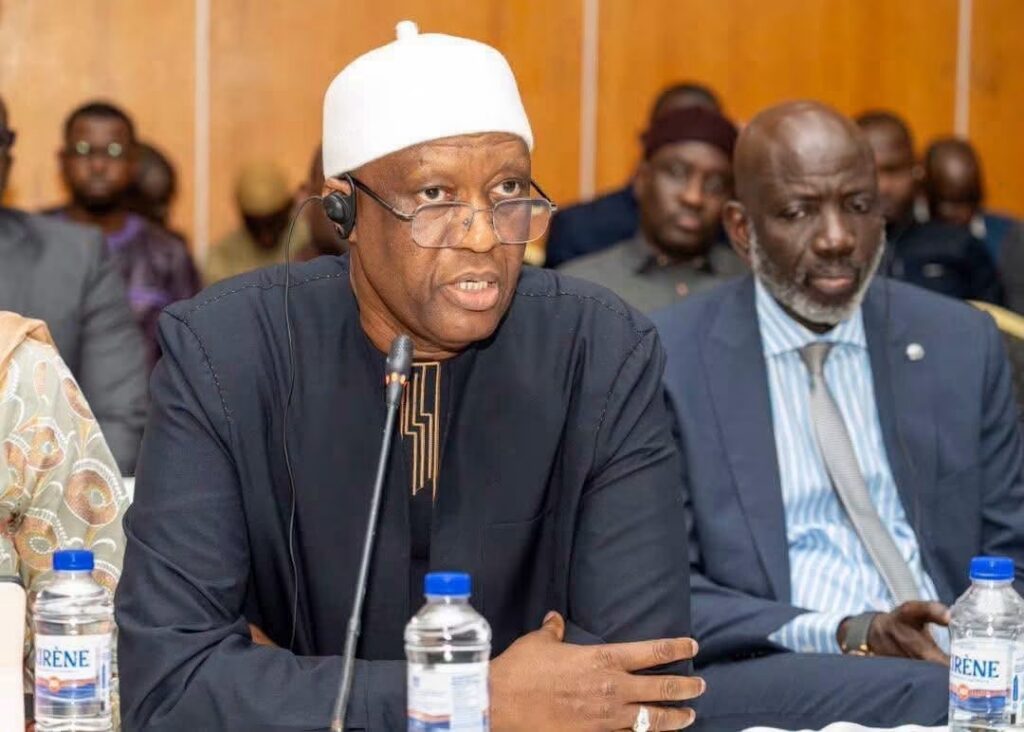
Gambia Revenue Authority Commissioner General Yankuba Darboe has urged African countries to strengthen cooperation to protect the continent’s tax revenues and tackle the growing challenge of illicit financial flows.
Darboe said African countries cannot effectively protect their resources while dealing with increasingly complex cross-border businesses and financial transactions on their own.
He was speaking at the West African Tax Administration Forum’s Annual General Meeting High-Level Policy Dialogue in Accra, Ghana, under the theme “Leadership, Policy Coherence and Regional Cooperation for Sustainable Development.”
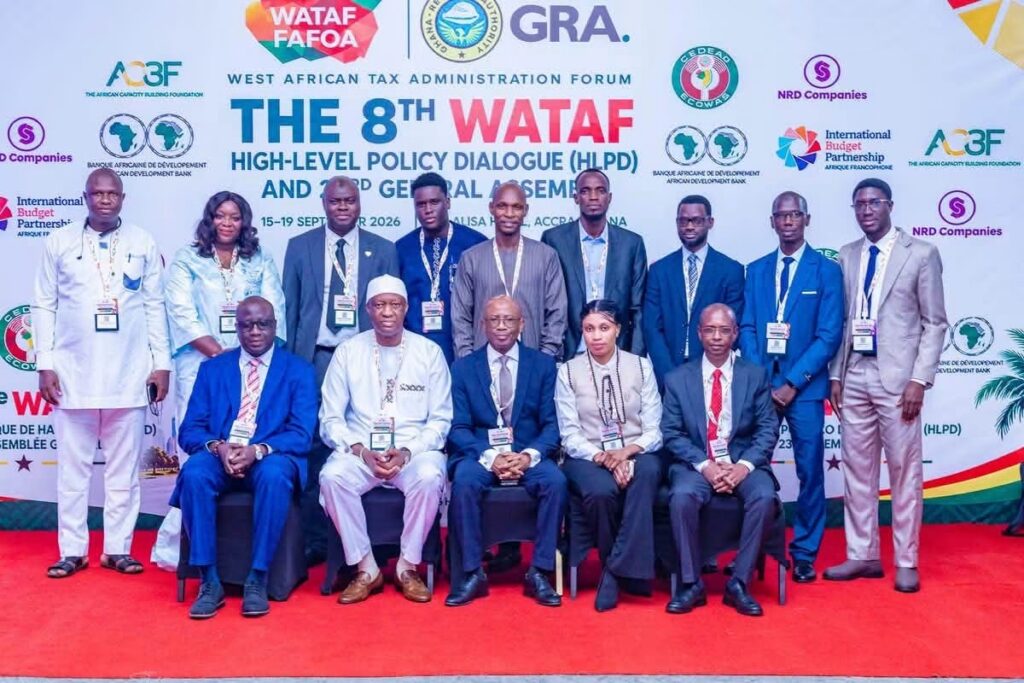
Darboe said sustainable development depends on sustainable financing, which in turn requires stronger domestic resource mobilisation.
“Africa’s development cannot be outsourced,” he said.
He argued that although foreign investment, development assistance and concessional financing remain important, African countries must increase their ability to finance development from resources generated within the continent.
According to Darboe, tax revenues are essential for financing public services and infrastructure, including schools, hospitals, roads, electricity and security.
But he warned that African countries continue to lose significant resources through illicit financial flows, trade misinvoicing, aggressive tax planning and other practices that undermine national tax bases.
Darboe cited an estimate that Africa loses about US$88.6 billion annually through illicit capital flight.
“We cannot speak about mobilising Africa’s resources without also speaking about protecting Africa’s tax base,” he said.
He said the expansion of multinational businesses and the digital economy has made regional cooperation increasingly important for tax administrations.
Darboe called for stronger information sharing, tax intelligence cooperation and greater collaboration among auditors, investigators, transfer pricing specialists and data experts.
“Our cooperation must become as sophisticated as the taxpayers and transactions we administer,” he said.
He also called for greater coordination among African countries in international tax negotiations, arguing that countries can have a stronger influence when they identify common interests and present coordinated positions.
Darboe said Africa should strengthen cooperation on digital taxation, transfer pricing, tax transparency, beneficial ownership and efforts to combat illicit financial flows.
Turning to leadership, he said tax reforms require more than technology and new systems.
“Technology can modernise systems, but leadership sustains reform,” he said.
Darboe said tax leaders must understand emerging technologies, develop skilled staff, communicate effectively and maintain institutional integrity while implementing reforms.
He also stressed the importance of political support for sustainable tax reforms.
As WATAF marks 15 years of cooperation among West African tax administrations, Darboe urged the organisation to focus increasingly on practical cooperation, technical capacity-building and coordinated action.
He said African countries may have separate tax systems, but they share common challenges that require collective responses.
“Africa has fifty-four countries and fifty-four national tax systems. But on the fundamental issues where our interests converge, Africa does not need fifty-four competing voices,” Darboe said. “Africa needs one coherent voice.”
By Adama Makasuba




Recent Comments