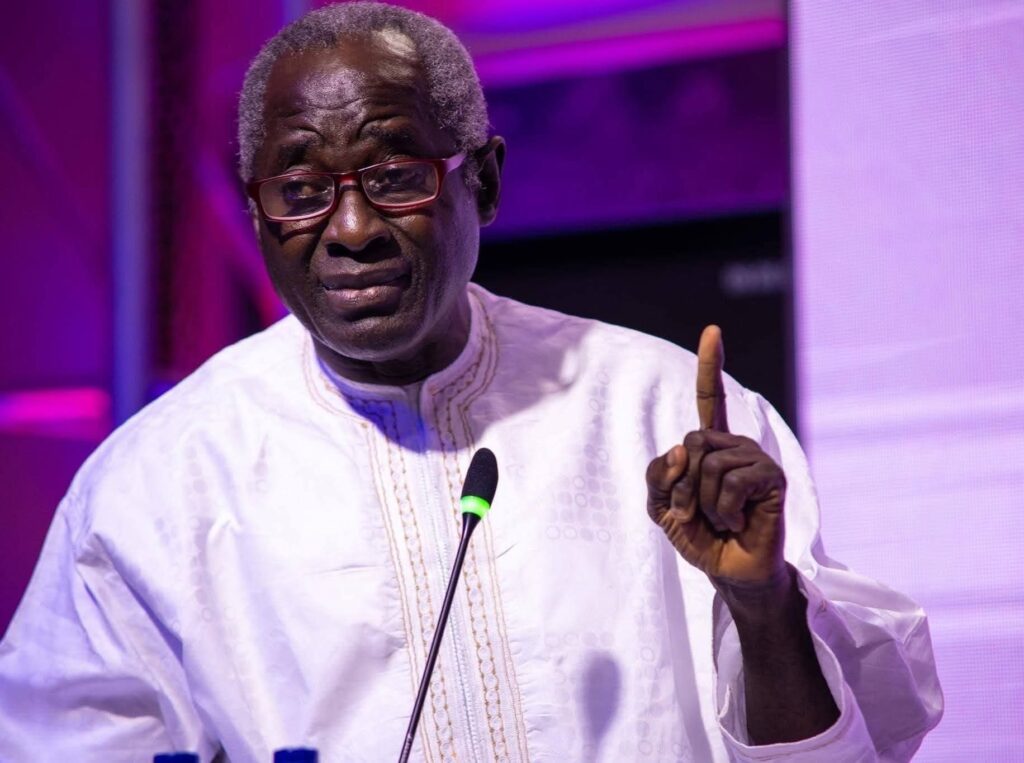
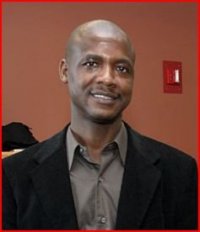
As The Gambia honours Halifa Sallah at 73, we revisit the journey of a man who confronted corruption in the First Republic, resisted dictatorship in the Second, helped architect the 2016 transition, and passed the political torch with dignity.
From the prison cells of the 1980s to the frontlines of the 2016 impasse, Halifa Sallah has consistently walked the road of truth without fear. By stepping aside for the young to rise, he leaves a legacy of courage, humility, and democratic renewal.
This is the story of a patriot who never bowed—a statesman who chose principle over power and stands as the Republic’s moral compass—scholar, coalition builder, and rare leader who made way for the next generation.
Some birthdays merely mark time; others prompt a nation to reflect on its core ideals. Sering Ababacarr Halifa Sallah’s birthday is a moment for The Gambia to celebrate the moral foundation he has built across four decades of principled struggle.
Halifa Sallah is not simply a politician. He is a statesman forged in the furnace of history, a scholar who turned ideas into action, and a patriot who refused to bend to tyranny, corruption, or convenience. His journey is not the story of a man seeking power—it is the story of a man seeking justice.
Long before he became a national figure, Halifa Sallah was already confronting the failures of the First Republic. In the 1980s, as corruption, patronage, and authoritarian tendencies tightened their grip on the PPP regime, Halifa, alongside comrades Sam Sarr and Amie Sillah, dared to challenge the system. Their activism led to their imprisonment at Mile II, a notorious symbol of state repression.
Halifa left prison with resolve. He authored a pamphlet on the inhumane prison conditions, one of the country’s earliest calls for reform. When silence was safer, he chose truth. When conformity paid, he chose conscience, setting a lifelong pattern. Halifa Sallah does not wait for history; he confronts it.
When the 1994 coup ushered in the AFPRC military junta, it marked a turning point in The Gambia’s history. Many intellectuals retreated into silence, but Halifa Sallah and Sidia Jatta did the opposite. When Decree Number 4 attempted to criminalize criticism of the military, they openly challenged it. They were arrested and arraigned before the Banjul Magistrates’ Court in what became the first major test of civilian resistance against Yahya Jammeh’s rule.
This moment tested Halifa’s courage. He refused intimidation, co‑option, or betraying the people’s right to speak. Throughout the dictatorship, he stayed a consistent voice for reason and constitutionalism. He turned down ministerial roles Jammeh offered, preferring principle over privilege.
When Yahya Jammeh launched his infamous witch‑hunting campaign, detaining, humiliating, and torturing innocent villagers, Halifa again stood firm. His advocacy helped halt the campaign, and for his efforts, he was imprisoned once more. But as always, he emerged unbroken.
Looking ahead to the 2016 Coalition, history will forever remember Halifa Sallah as one of its architects—the political miracle that ended 22 years of authoritarian rule.
While others fought for positions, Halifa fought for structure. While others negotiated for power, he negotiated for unity. He drafted frameworks, mediated disputes, and insisted on principles that would hold the coalition together.
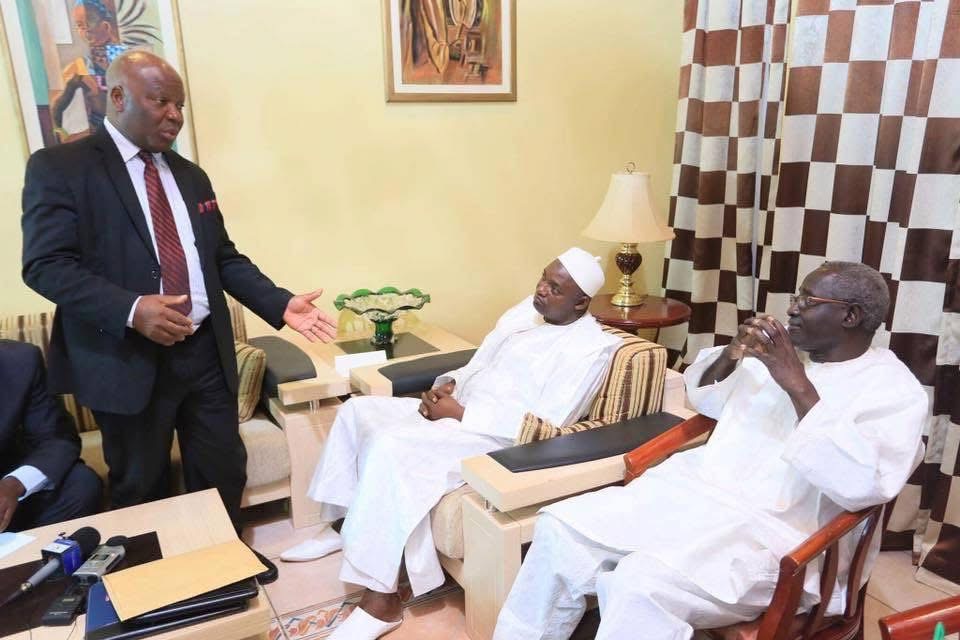
When the political impasse erupted after Jammeh rejected the election results, Halifa Sallah stepped forward as the calm voice of the nation. His press conferences became national therapy sessions, measured, factual, constitutional, and reassuring. He diffused panic, restored stability, and helped guide the transition that installed Adama Barrow as president.
In that moment, Halifa did not act as a partisan figure. He acted as a statesman. He acted as a patriot. He acted as the nation’s moral compass.
Halifa Sallah is one of the few Gambian politicians whose intellectual contributions rival his political ones. As a sociologist, he introduced Gambians to the works of Plato, Thrasymachus, and the great thinkers of political philosophy. He taught that democracy is not merely voting—it is understanding. It is sovereignty. It is citizenship. His motto, “Sovereign people,” is not a slogan. It is a philosophy.
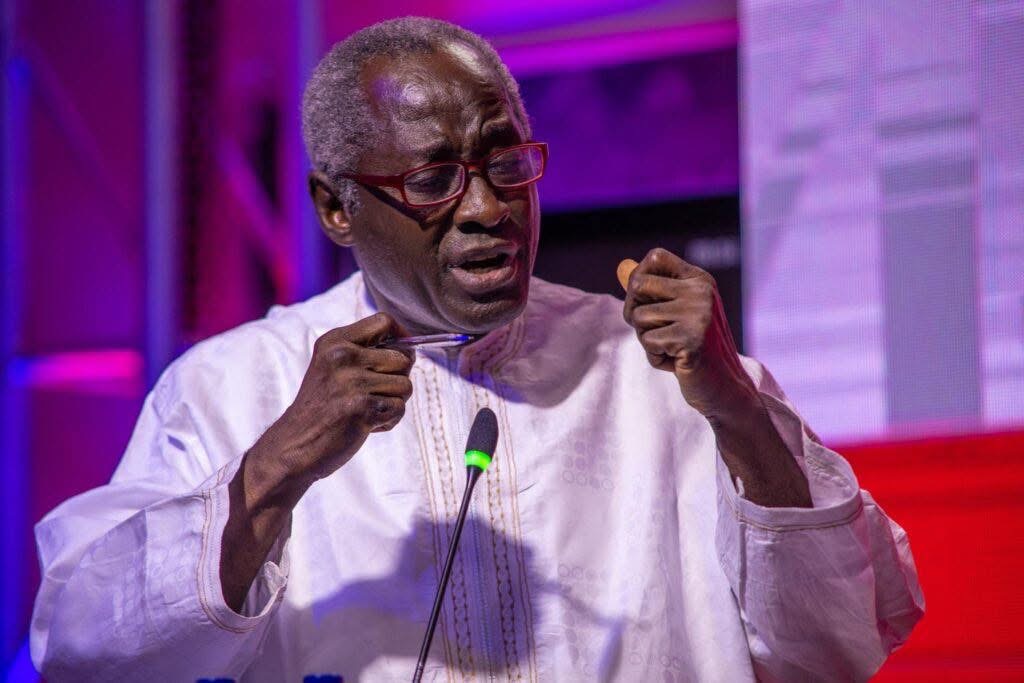
It is a reminder that power belongs to the people, not the politician. He infused Gambian political discourse with ideas, not insults; with arguments, not anger; with principles, not populism.
In a nation where shouting often replaces thinking, Halifa Sallah remained the quiet intellectual who improved the argument rather than raising his voice.
When Halifa Sallah contested the presidency and lost, he did something rare in Gambian and African politics: he conceded defeat with grace, humility, and dignity. He congratulated President Barrow without hesitation. He reminded the nation that losing an election is not losing one’s worth.
His concession was not weakness—it was leadership. It was a civic lesson. It was a gift to the nation. In a political culture where defeat is often met with denial, anger, or conspiracy, Halifa showed that democracy is strengthened not only by winners but by honorable losers.
In a political culture where leaders cling to power until death pries their fingers from the steering wheel, Halifa Sallah has once again chosen a different path—one that reflects his lifelong commitment to democratic ethics, institutional renewal, and generational responsibility.
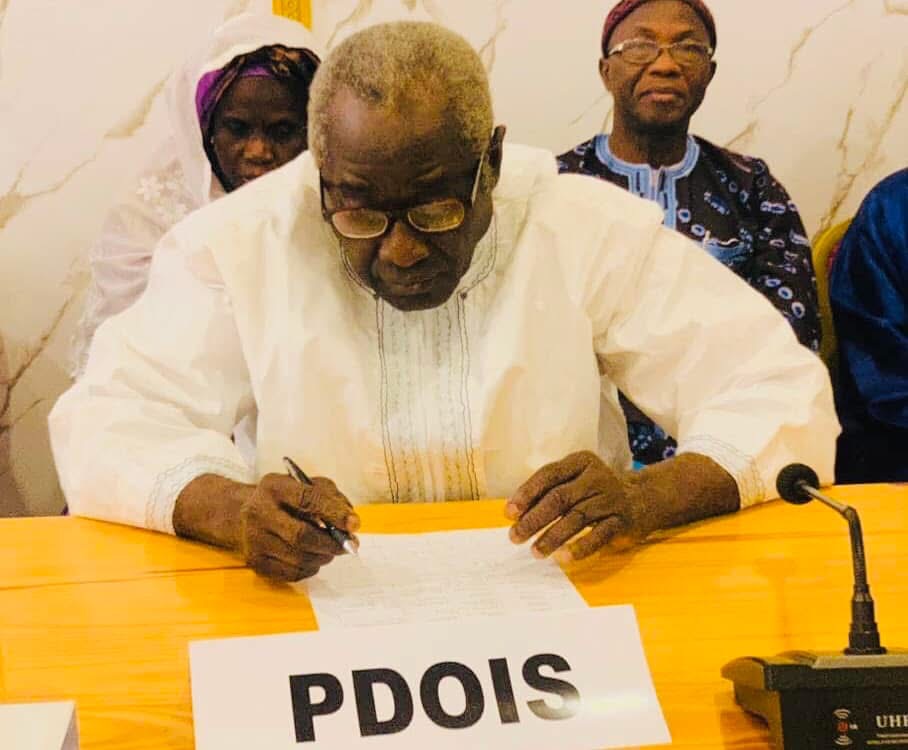
This marks the start of a new chapter in Gambian politics. After nearly four decades of shaping Gambian political consciousness, Halifa and his comrades have stepped aside, not in defeat, not in bitterness, but in deliberate, principled transition. They have passed the baton to a younger generation of leaders within PDOIS, allowing Swaebou Touray and a new Central Committee to steer the party into its next chapter. This is not retirement. This is leadership. This is political maturity of the highest order.
In a country where opposition parties often calcify around a single personality—where leaders become permanent fixtures, where parties transform into cults of loyalty rather than engines of ideas Halifa Sallah has broken the mold. He has demonstrated that true leadership is not measured by how long one holds power, but by how gracefully one lets it go.
While other parties recycle the same faces, rhetoric, and internal hierarchies, PDOIS has done what few Gambian political institutions have ever dared: institutionalize renewal.
Halifa and his colleagues have chosen to nurture, mentor, and guide the young rather than overshadow them. They have chosen continuity through transition rather than stagnation through entitlement. This is the essence of internal democracy. This is the antidote to political decay. This is how parties survive beyond their founders.
Halifa’s decision to step aside is not a withdrawal—it is a gift. It is a final civic lesson from a man who has spent his life teaching Gambians that democracy is not an event but a culture, not a slogan but a discipline.
With this transition, he has ensured that PDOIS remains a living institution rather than a historical relic. By empowering a new generation, he has shown that the future belongs not to those who cling to relevance, but to those who prepare others to inherit it.
In a nation where political leaders often refuse to leave the stage, Halifa Sallah has exited with dignity, purpose, and vision—reminding us once again why he remains one of the most principled figures in Gambian public life.
Halifa Sallah’s political journey is not defined by titles held or offices occupied. It is defined by the battles he fought for the soul of the nation: He confronted corruption in the First Republic. He resisted dictatorship in the Second Republic. He challenged military decrees in 1994. He exposed prison abuses in the 1980s. He halted witch‑hunting campaigns. He refused to be bought by power. He architected the 2016 coalition. He diffused the political impasse. He conceded defeat with dignity.
Few Gambians alive today have contributed more to the moral and democratic evolution of the Republic.
A BIRTHDAY WORTHY OF NATIONAL GRATITUDE
Today, we celebrate Halifa Sallah not only for his years but for his lived values: integrity, humility, courage, intellect, and unwavering devotion to the people. His conviction, patriotism, statesmanship, and morality continue to inspire.
May his legacy guide future principled leaders and remind The Gambia of the sacrifices made to protect democracy.
We salute the son of the Republic
who walked through prisons without hatred,
who faced soldiers without trembling,
who held truth like a calabash of fire
and never dropped it.
May the ancestors record his name in the book of the just,
for he chose the hard road,
the honest road,
The road where few men walk.
And may the young who inherit his torch
carry it with clean hands,
steady hearts,
and unbroken courage.
Today, we honour Halifa Sallah not because he sought power, but because he sought justice. Not because he won elections, but because he won respect. Not because he ruled, but because he served.
Happy Birthday to a national treasure.
Happy Birthday to a conscience of the Republic.
Happy Birthday to Halifa Sallah.
By Alagi Yorro Jallow




Recent Comments