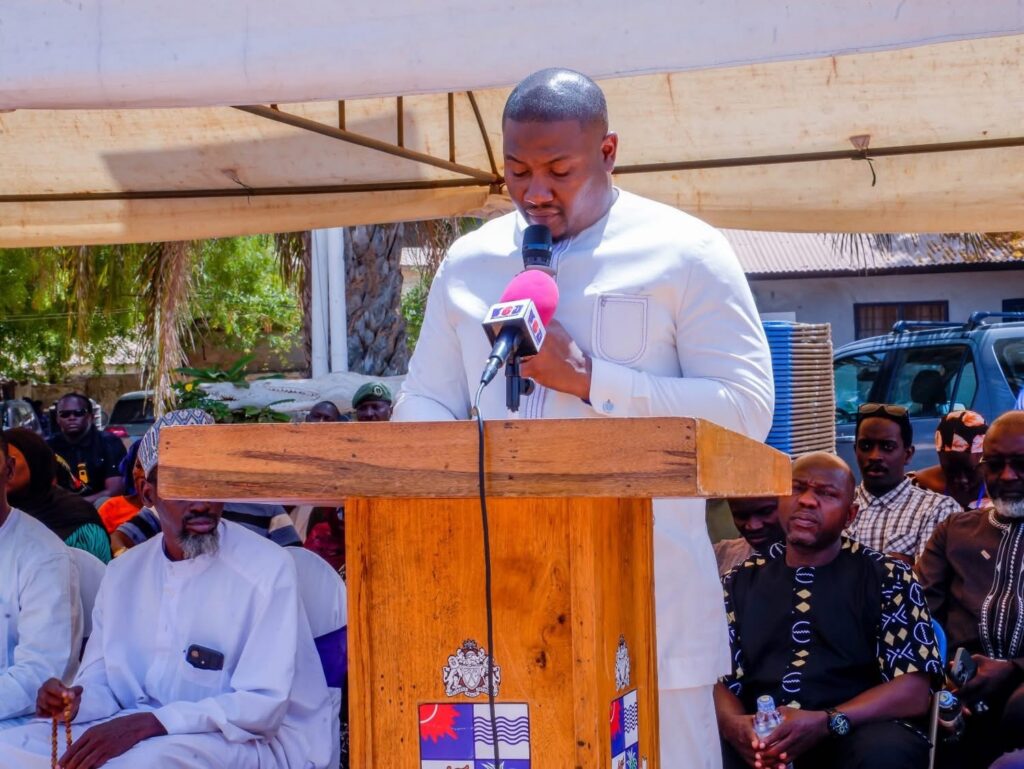
The leader of the United Movement for Change (UMC), Talib Ahmed Bensouda, has argued that the size of political parties should not determine leadership in any future opposition coalition, saying numerical strength alone is not enough to justify leading an alliance.
Speaking on Eye Africa TV, Bensouda said parties that believe they can secure victory on their own have no reason to join a coalition, insisting that coalition politics should be driven by national interest rather than competition over party size.
“Individual party numbers don’t matter. If your party can win you an election, then you don’t need to enter into a coalition,” he said.
His remarks come amid growing debate within opposition circles over coalition-building ahead of the 2026 presidential election and who should lead any potential alliance against incumbent President Adama Barrow.
Bensouda said that if a coalition is eventually formed, the key consideration should be the ability of a candidate to unite different political groups and attract broad public support.
“If a coalition is to be formed, we must elect a candidate who can unify us and will be accepted by Gambians,” he stated.
The Kanifing mayor also aligned himself with comments previously made by Essa Faal, agreeing that coalition leadership should not automatically go to the leader of the largest political party.
Drawing on lessons from the 2016 opposition alliance that removed former president Yahya Jammeh from power, Bensouda argued that coalition success cannot be measured solely by the size of participating parties.
“You see, in 2016, big political parties didn’t matter, even though UDP played a key role in that coalition. But still another scenario could have happened if UDP was not part of it and Mama Kandeh agreed to enter,” he said.
While reiterating that UMC is not opposed to coalition politics, Bensouda cautioned against rushing into alliances without first building trust among potential partners.
“We are not against coalition, but we must trust each other and have the same ideology. Being in a coalition where there is distrust against each other is something one has to be careful about before entering into it,” he said.
He added that opposition parties should carefully assess their compatibility before committing to any alliance, warning that coalitions built on suspicion rather than shared objectives are unlikely to endure.
By Adama Makasuba







Recent Comments