The Government of Japan has provided €67,591 (approximately D5,651,932.38) in support of the provision of Braille equipment to the Gambia Organisation of the Visually Impaired (GOVI), in a move aimed at improving access to educational materials and strengthening inclusive education for students with visual impairments.
The support, provided through Japan’s Grant Assistance for Grassroots Human Security Projects, comprises two Braille printers and seven Optical Character Recognition (OCR) readers, which will enable visually impaired students to access textbooks and other learning materials independently.
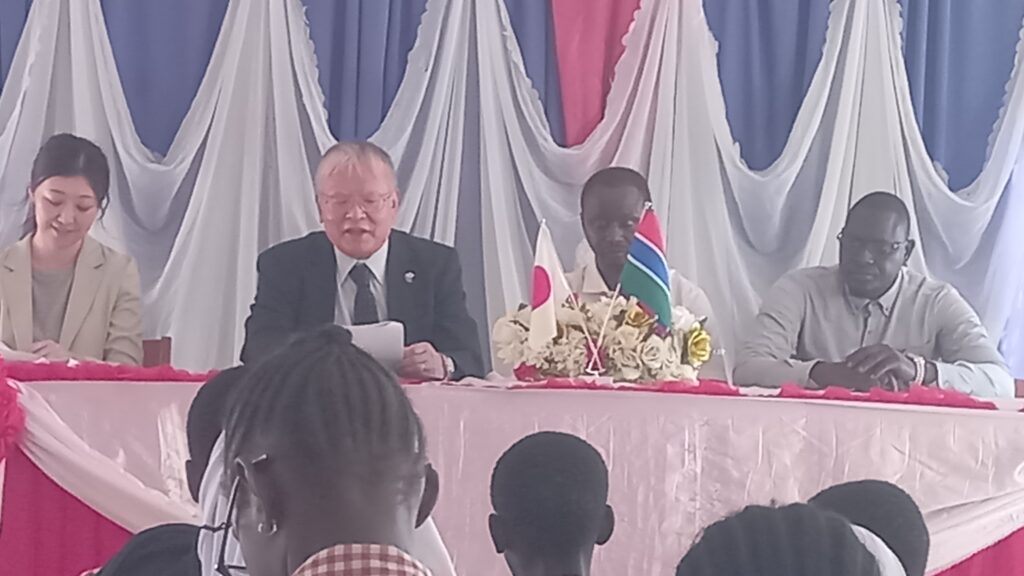
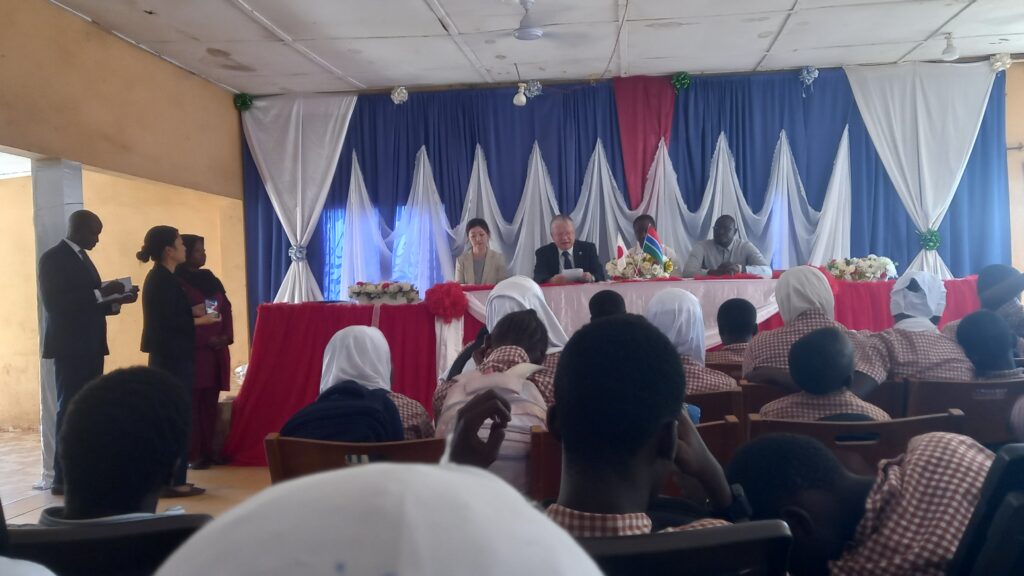
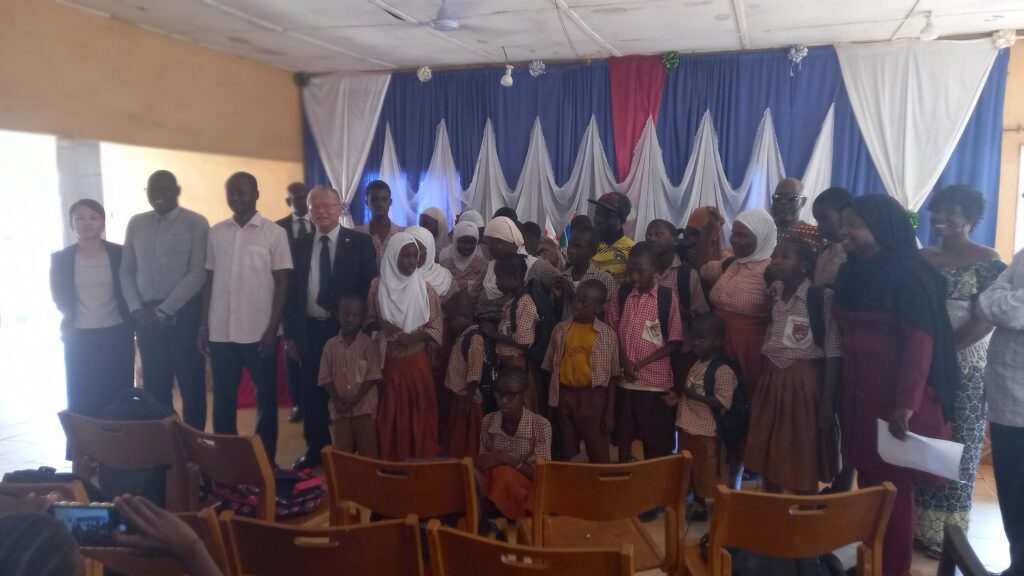
The equipment was officially handed over during a ceremony held on Monday at the GOVI Resource Centre in Kanifing, attended by representatives of the Government of Japan, the Ministry of Basic and Secondary Education, GOVI officials, teachers and students.
Speaking at the ceremony, Japan’s Ambassador to The Gambia, based in Senegal, His Excellency Mr Takeshi Akamatatsu, said the project reflected Japan’s commitment to supporting the education and daily lives of persons with visual impairments in The Gambia.
He commended GOVI for its continued efforts in promoting the welfare and educational development of visually impaired persons, while also recognising the dedication of teachers working daily to support students in their learning journey.
Ambassador Akamatatsu who was accompanied by his deputy noted that every child deserved an environment in which they could develop their full potential, pursue their interests and achieve their dreams, stressing that access to textbooks and appropriate learning materials remained a major challenge for children with visual impairments.
He explained that the two Braille printers would facilitate the production of textbooks and other educational materials in Braille, while the seven OCR readers would allow students to listen to printed texts aloud.
He expressed optimism that the equipment would make learning materials more accessible, enabling students to deepen their knowledge and study independently at their own pace.
According to him, the significance of the project extended beyond the provision of equipment, as it was also about creating an enabling environment in which students could learn independently, develop their ideas and shape their future.
He added that the ability to access learning materials independently would not only improve students’ academic performance but also strengthen their confidence and open up opportunities for further education and employment.
Ambassador Akamatatsu reaffirmed Japan’s commitment to working with The Gambia towards building an inclusive society where everyone has equal opportunities to learn and participate in social life.
Addressing the students, he encouraged them to remain committed to their education, explore new opportunities and believe in their abilities as they work towards achieving their dreams.
He also expressed appreciation to all those who contributed to the successful implementation of the project, particularly GOVI and the relevant authorities of the Government of The Gambia.
For his part, GOVI Executive Director, Mr Lamin Colley, acknowledged the contribution of Madam Sawa Hoshino, the project consultant, for facilitating the realisation of the initiative.
Mr Colley disclosed that the project had also enabled GOVI to train an IT specialist who is responsible for administering and managing the equipment to ensure its effective use.
He described the education of blind persons as particularly costly, noting that the Japanese government’s intervention would significantly ease some of the challenges faced by visually impaired students.
He said the equipment enables students to access educational materials, complete their assignments and improve their participation in mainstream education.
Mr Colley, however, called for additional support in capacity building and exchange visits to strengthen service delivery and expand educational opportunities for persons with visual impairments across the country.
He said the organisation had witnessed improvements in students’ education and expressed optimism about further fruitful engagements with its partners.
Meanwhile, Mr Amadou Gaye, Special Needs Education Officer at the Ministry of Basic and Secondary Education, welcomed the initiative, describing it as complementary to the government’s ongoing efforts to promote inclusive education and improve access to learning for children with special educational needs.
The ceremony was chaired by GOVI Chairperson, Bintou Sanyang, while students of the organisation entertained the gathering with musical performances.
By Madi S. Njie







Recent Comments