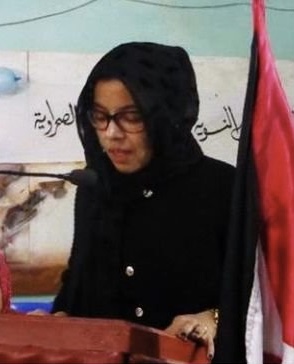
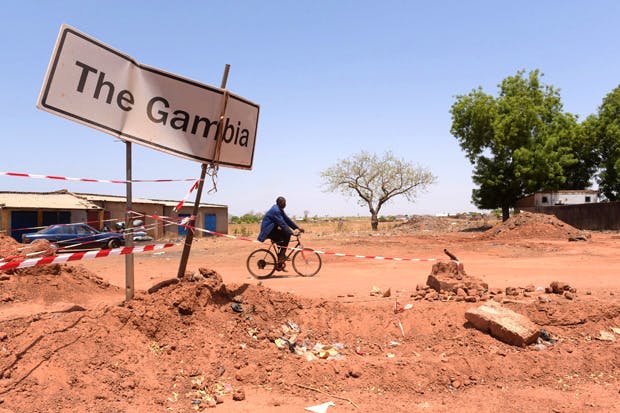
I arrived in The Gambia carrying the usual luggage of diplomacy: folders, notes, carefully rehearsed interventions and the invisible exhaustion that follows those who spend their lives defending causes the world has learned to postpone indefinitely.
Officially, I had come to participate in the presentation of the periodic report of the Sahrawi Republic before the African Commission on Human and Peoples’ Rights. It was a mission defined by institutional language, legal frameworks and procedural deadlines. Another chapter in the long diplomatic life of a people still struggling to complete their decolonization.
But somewhere between the Atlantic breeze of Banjul and the quiet dignity of ordinary Gambians, something inside me shifted.
I had expected a conference.
I had not expected an encounter with Africa itself.
There are countries that impress you immediately with scale, ambition or spectacle. And then there are countries like The Gambia, whose power resides in something far less visible and infinitely more enduring: moral calmness. A kind of civilizational modesty. The confidence of a people who do not need to constantly announce their worth in order to possess it.
The Gambia does not overwhelm you.
It disarms you.
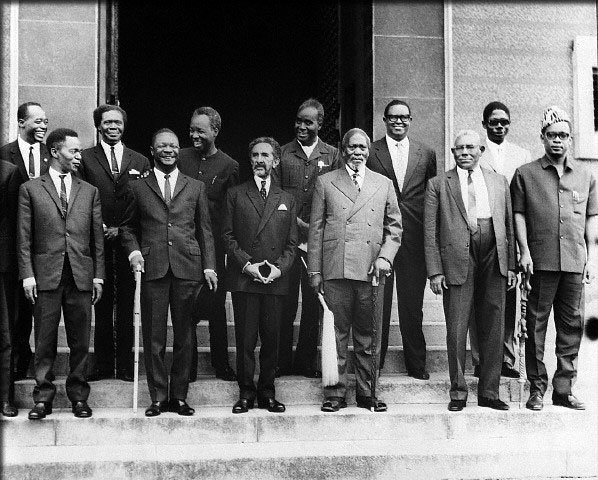
Perhaps that feeling became stronger because I knew I was walking through the homeland of Sir Dawda Kairaba Jawara, one of the last representatives of a generation of African statesmen who believed leadership was not performance but responsibility. Men who emerged from the fragile dawn of independence carrying the burden of imagining Africa not as a marketplace of competing interests, but as a shared historical destiny.
For many outside the continent, Jawara is merely a historical figure. A former president. A diplomatic reference. A footnote in archives discussing African mediation and postcolonial statehood.
But for some of us Africans, especially those who come from wounded geographies, certain names carry emotional weight beyond biography. They become symbols of an era when Africa still attempted to speak to itself with sincerity.
As a Sahrawi woman born into exile and raised inside one of the longest unresolved struggles on the continent, I have spent much of my life moving through institutions built on the language of international legality while witnessing the repeated failure of international morality. Over the years, diplomacy can harden you. Not because you stop believing in justice, but because you become too familiar with the machinery of selective empathy.
And yet in The Gambia, unexpectedly, I felt that hardness soften.
Not because the country is perfect. No country is.
But because there remains, beneath its political structures and economic limitations, a profoundly human rhythm that much of the modern world has already lost.
I noticed it first in the way people looked at one another.
Not through the hurried indifference one finds in many capitals, where survival has transformed human beings into moving transactions. In Banjul, conversations still breathe. Smiles still arrive before suspicion. Human interaction has not yet been entirely consumed by performance, cynicism or the desperate need to appear important.
There was dignity in ordinary gestures.
The woman arranging fruit beneath the heat of the afternoon sun.
The taxi driver speaking about politics with sincerity instead of spectacle.
The young people carrying ambition without losing tenderness.
The elders whose silence seemed fuller than most public speeches.
Again and again, I found myself distracted from my own mission by the overwhelming desire to simply observe.
Because somewhere along the way, many of us Africans have become so busy trying to prove our modernity to the world that we have started abandoning the very qualities that once made this continent spiritually exceptional.
The Gambia reminded me that simplicity is not backwardness.
That gentleness is not weakness.
That humility can itself be a form of civilization.
Inside the halls of the African Commission, discussions revolved around rights, institutions, legal obligations and state responsibilities. The language was formal, precise and necessary. But outside those halls, another Africa continued to exist quietly: alive in markets, in prayer, in laughter, in music drifting through evening streets, in communities that still understand something fundamental about coexistence.
And I could not stop thinking about the contradiction.
How can a continent so rich in human depth continue to suffer from such political shallowness?
Africa has given the world extraordinary lessons in survival, resilience and collective humanity, yet Africans themselves are too often forced to experience their own continent through the vocabulary of crisis. We are described through conflict indexes, migration statistics, humanitarian appeals and security briefings. Rarely through beauty. Rarely through emotional intelligence. Rarely through the extraordinary social tenderness that still survives among ordinary African people despite everything history has inflicted upon them.
The tragedy is not only that the world misunderstands Africa.
It is that Africans are increasingly beginning to misunderstand themselves.
And perhaps that is why The Gambia affected me so deeply.
Because in its quietness, I recognized something endangered.
Not merely a country, but a certain idea of Africa.
An Africa that does not need to imitate anyone to possess value.
An Africa still capable of moral softness without collapsing into weakness.
An Africa where memory remains alive.
An Africa where people still look at one another and see human beings before identities, passports or geopolitical calculations.
As a Sahrawi, these things matter profoundly to me.
Our struggle has never only been about territory. It has also been about preserving meaning. About refusing disappearance. About insisting that history cannot simply erase a people because larger powers find their existence inconvenient.
For fifty years, Sahrawis have lived between exile and resistance while carrying an almost impossible emotional burden: defending hope against fatigue. Defending identity against normalization. Defending dignity against the global habit of forgetting.
And perhaps because of that history, I arrived in The Gambia unusually sensitive to the emotional atmosphere of place.
Some countries feel exhausted by themselves.
Others feel disconnected from their own soul.
But The Gambia still feels inhabited by itself.
That may sound like a strange sentence, but anyone who has traveled enough will understand exactly what I mean.
There are nations where development arrived carrying alienation. Places where modernity entered like a storm and left behind populations who no longer recognize themselves in their own reflection. Places where people learned how to consume the world before learning how to preserve themselves.
The Gambia, despite all its challenges, still possesses a kind of internal coherence. A social warmth. A spiritual continuity. A human scale that protects it from becoming emotionally unrecognizable.
And maybe that is why leaving felt unexpectedly painful.
When my visit ended, I realized I was not departing from a diplomatic mission alone. I was leaving behind a conversation with Africa that I did not want to end.
I came carrying the defensive posture that diplomats from wounded nations inevitably develop. The instinctive caution of those accustomed to explaining their people’s suffering to audiences who often consume injustice abstractly. But I left carrying something far more personal: grief for the Africa we are losing, and gratitude for the fragments of it that still survive.
In the land of Dawda Jawara, I encountered not nostalgia, but continuity.
A reminder that Africa is not merely a political geography.
It is also a moral possibility.
And for a brief moment in The Gambia, walking through its streets, listening to its people, breathing its quiet dignity, I remembered what it feels like to believe in that possibility again.
By Abida Mohamed Buzeid,
Sahrawi writer and diplomat








Recent Comments