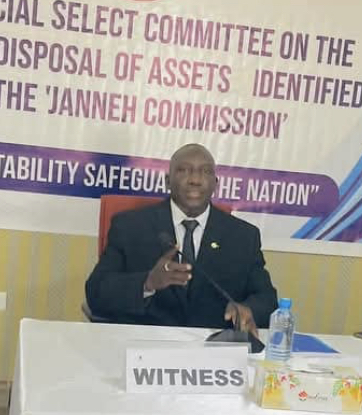
The Registrar General at the Ministry of Justice, Abdoulie Colley, has told a parliamentary inquiry he has no personal records relating to the sale and disposal of assets linked to former President Yahya Jammeh.
Mr Colley was giving evidence before the National Assembly’s Special Select Committee investigating the handling of Jammeh’s vast portfolio of properties, some of which have been sold off by the state following the ex-leader’s ouster in 2017.
Appointed acting Registrar General in December 2018 and confirmed in May 2021, Mr Colley said the Ministry’s role mainly involved civil documentation, intellectual property, and government land leases.
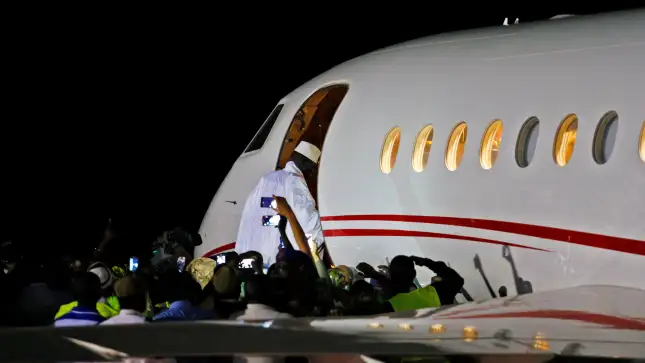
But during questioning, he admitted to having limited knowledge of key documents and decisions related to Jammeh’s properties.
“I don’t have those records,” he told the committee, explaining that the work had been collaborative and that some events occurred before his official appointment.
When pressed by Counsel Ajie Sai Kah on why he hadn’t provided relevant documents ahead of his testimony, he responded: “This is tax you are talking about. If it was land or other properties, I would have kept records of it.”
He added that his first formal assignment concerning Jammeh-linked assets only began after the current inquiry was launched.
The Registrar General also revealed that he received a directive via an internal memo from the Deputy Director of Civil Litigation, reportedly authored by Solicitor General Hussein Thomasi, instructing him to cancel leases on several properties.
“I was asked to cancel the main properties,” he said, adding that some were subsequently sold.
Mr Colley told the committee that it was not unusual for the Solicitor General to act on behalf of the government in land sales.
But when reminded that land transactions fall under the jurisdiction of the Minister of Lands, he said, “That’s what I said, the Minister of Lands can lease and allocate, but the Solicitor General sells it, yes, in my opinion.”
The committee raised concerns about the Ministry’s internal record-keeping, especially regarding high-value state assets.
Mr Colley acknowledged the gaps and affirmed that possessing unregistered leaseholds was not unconstitutional, but “not encouraged or entertained” by the Ministry.
On properties linked to Jammeh abroad, Mr Colley said he had no knowledge of them, suggesting the Ministry of Foreign Affairs or the Attorney General’s Chambers might be better placed to assist.
Counsel Kah stressed the principle of institutional continuity and reminded Mr Colley of his duty to remain informed of previous dealings.
He agreed that proper documentation was essential and pledged to assist the committee in retrieving the necessary files.
Mr Colley is expected to return for further questioning as the investigation continues into what happened to the assets once controlled by the former president, who ruled Gambia with an iron fist for over two decades.
By Adama Makasuba





Recent Comments