Part 1
As Tobaski approaches, soaring ram prices expose not just economic hardship but a deeper crisis of poverty so pervasive that what should be a festival of dignity now shames the nation. Today, it is the people who are sacrificed before the ram.
The growing gulf between elites and ordinary Gambians turns a ritual of faith into a gauge of inequality. The price of a ram is now the measure of our collective failure.
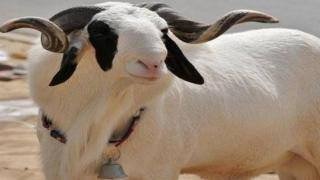
Tobaski has become a real challenge for many average Gambians, with the cost of essentials such as ram, onions, Irish potatoes, rice, oils, and clothing straining family budgets. In The Gambia, current Eid al-Adha ram prices reportedly range from D18,000 to D80,000 depending on size and breed.
For context, smaller rams are sold for about D18,000 to D35,000, while larger or premium breeds, such as “Ladoum,” can reportedly cost D56,000 to D80,000.
These prices are often quoted in central marketplaces like the Ram Market and Trade Fair Ground. The result is that many families find it increasingly difficult to celebrate the festival, as the rising expenses underscore worsening poverty.
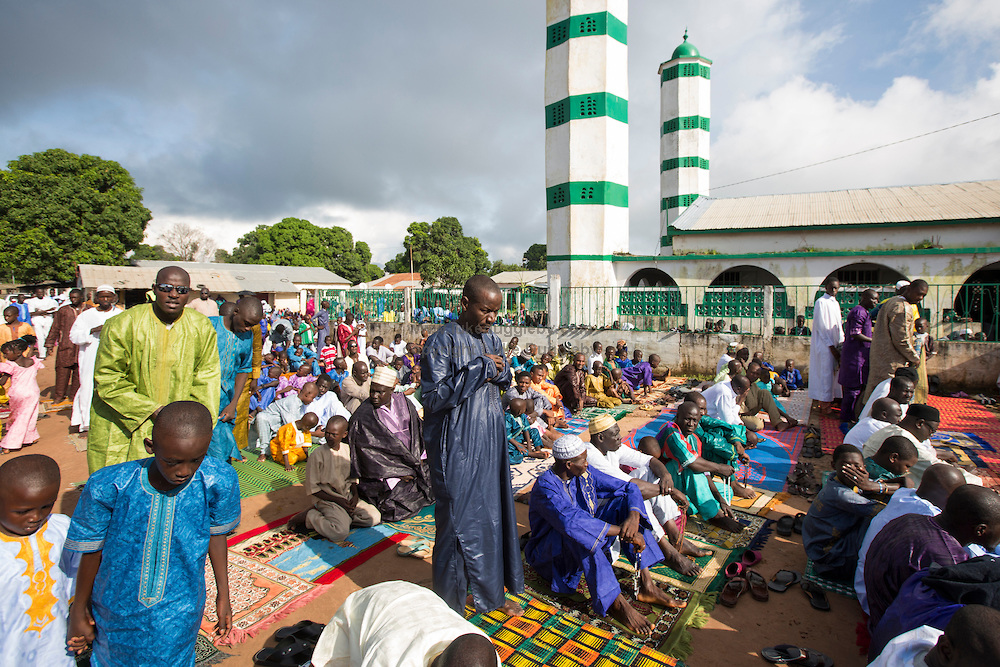
Tobaski is less than a week away, Wednesday the 27th, the great festival of sacrifice, devotion, and dignity. A day when Gambian households, no matter how modest, aspire to a clean compound, a new dress, and above all, a ram for the Qurbani.
But this year, as in recent years, Tobaski has become a nightmare for thousands of families. The price of rams has climbed beyond the reach of the conscientious Muslim.
The cost of living has risen like a curse. Inflation bites. Poverty deepens. And the government’s economic policies offer no relief. Across the country, Gambians are struggling or still struggling with rage, shame, and despair to buy a simple Tobaski ram.
The ritual that once symbolised devotion has become a test of survival. The faithful negotiate with butchers the way drowning men negotiate with the sea. The Tobaski ram, once a symbol of faith, has become a symbol of economic inequality.
And yet, Islam is merciful; poverty is not. Only those truly able are required to sacrifice. Yet even hardworking parents must bargain with debt, despair, and fears of rising rent prices before payday.
The market is now a theater of humiliation: men whispering to sellers, women calculating costs, and youths witnessing their parents’ worry. This has become a crisis of dignity, not just economics.
Fatoumatta, a Niuminka mother of three in Lamin village, saves diligently, putting aside a little each week in hopes of buying a modest ram. Each visit to the market, however, greets her with higher prices: a ram costing D18,000 last year now starts at D20,000. Sellers echo buyers—
“Everyone is suffering. We don’t know what to do.” This story is national, not unique. Civil servants, teachers, nurses, doctors, and police officers remain the most punished class in the country; their salaries are withheld, and they are unable to pay rent, buy food on credit, or afford Tobaski rams. Homes crumble, children are withdrawn from school, and dreams quietly die.
Tobaski should not be a competition of status, nor a public performance of who can buy the biggest ram. It should be a moment of reflection, a reminder that sacrifice is measured not by the size of the animal, but by the sincerity of the heart. But sincerity cannot fill empty pockets. Faith cannot replace fair wages. Devotion cannot substitute for economic justice.
Elite greed breeds mass poverty, and mass poverty tears the moral fabric of a nation. The thieves President Adama Barrow vowed to jail and the thieves he never dared to touch now roam freely, distributing Tobaski rams and brown envelopes as political currency.
In this season of hardship, politicians of every stripe are buying votes with livestock. The poor, cornered by hunger, accept the rams and whisper “Astaghfirullah” after the feast. I have not heard President Barrow declare war on the spiraling poverty wracking the nation. I have not heard him vow to unplug the life support machine sustaining the overfed elite who fly abroad to use the toilet while their people queue for bread.
The Gambian elite are few, rich, and shameless. They flaunt their wealth in a land where even animals in the wild have a better sense of economic justice.
Political economist Henry George once observed that no one ever saw a herd of buffalo in which a few were fat, and the rest were starving.
No flock of birds where two or three were swimming in grease, and the others were all skin and bone. Yet here we are, a republic where the poor yawn with envious red eyes while the elite feast.
We call ourselves the “Smiling Coast,” but most Gambians smile through depression. We boast of natural resources, yet our people cannot afford a ram.
We claim the economy is “doing well,” but what does “doing well” mean when the market screams otherwise?
The Ministry of Finance recently claimed inflation is “climbing down.” Yet the market, the ram seller, the mother shopping, and the civil servant all disagree. If inflation is down, why do Tobaski rams cost D18,000 to D80,000? Why do politicians pre-buy votes with rams? Why is the middle class still struggling, and why are government workers still hungry?
Under both Jammeh and Barrow, nothing has changed for ordinary Gambians. The health system remains inadequate, the elite vacation abroad, and people dream of unattainable lives. Aristotle warned: “Poverty is the parent of revolution and crime.” We are raising children who know hunger more intimately than hope.

Across West and Central Africa, the U.N. World Food Programme reports that 36 million people are struggling to meet basic food needs, a number expected to rise to 52 million during the lean season. Conflict, climate shocks, and inflation have uprooted more than 10 million people.
Even Morocco, which is wealthier and more stable, urged citizens to forgo buying sheep this year due to inflation and climate pressures. Islamic scholars remind us: the sacrifice is not obligatory for those who cannot afford it. But those who can afford it have a duty to share with their poorer neighbours. Yet in The Gambia, the poor are not only struggling to buy rams but also to buy rice.
I ask daily: Why are Gambians so poor? Governments come and go, but the paradox of poverty in opulence remains. The elite get richer and fitter while the people sink deeper into debt, want, and illness. Inequality in access to health care. Inequality in access to justice. Inequality in access to the national patrimony. Inequality in who gets jailed for stealing and who gets rewarded for it.
Mother Jones once said, “If he had stolen a railroad, he would be a United States senator.” In The Gambia, they steal roads, airports, seaports — and then port themselves into the ruling party to enjoy their loot undisturbed.
Mr. President, the people are hungry. Your insecticide is not killing the mosquitoes of crime and corruption. Your advisers are rich, handsome, and useless. Your commissions have written reports that gather dust. Your audit findings name thieves you refuse to jail.
Ask yourself: Why are my people hungry? Why does poverty grow daily? Why do thieves find refuge in politics? Why do helpless people clothe criminals with loyalty?
Every Tobaski, the nation fixates on one question: How much is a ram? It’s no longer just an animal; it’s a symbol of indictment. When a ram costs more than a civil servant earns, the republic is in trouble. When a teacher has to borrow money to perform a ritual meant for those who can afford it, the republic is failing.
When the poor accept rams from the very thieves who keep them poor, the republic is morally bankrupt. The price of a ram lays bare the structure of inequality. It shows a political class that eats without shame, a government that governs without urgency, and a society that has learned to live with suffering.
The price of a ram is the cost of justice. It’s the cost of truth. It’s the cost of hope. It’s the cost of a republic. Until the republic faces its flaws, the ram will remain costly, the people will remain hungry, and the nation will remain hurt.
Tobaski is a mirror. It reveals who we are. It exposes the inequality we pretend not to see. It shows us a nation where the poor sacrifice their pride while the elite sacrifice nothing.
This year, as families struggle to buy a ram, let us remember: the true sacrifice is not the animal. The true sacrifice is the dignity Gambians lose every day to poverty, corruption, and neglect.
May this Thanksgiving awaken our leaders. May it soften their hearts. May it remind them that a nation cannot feast when its people starve.
And may the poor find relief — not from politicians bearing rams, but from justice bearing truth. As our elders say, “When truth walks, it walks with its own authority.”
To be continued in part two
By Alagi Yorro Jallow







Recent Comments