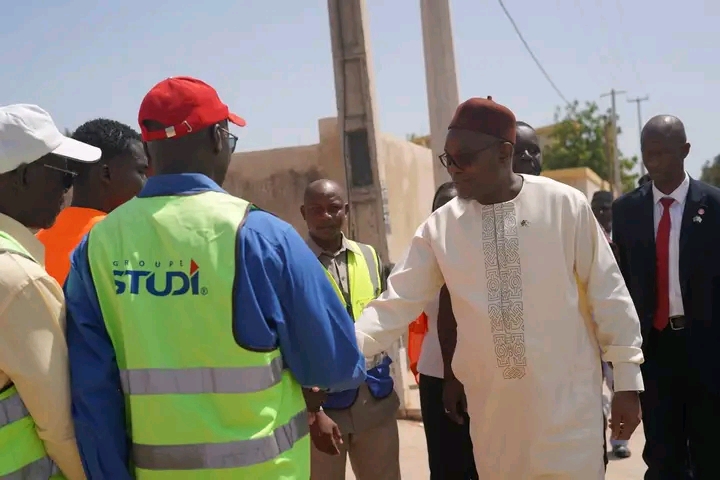
Vice President Mohammed B. S. Jallow has led an emergency assessment of critical drainage infrastructure in Banjul, warning that blocked drains could expose the capital to serious flooding during the upcoming rainy season.
He toured key drainage channels, including the Grand Street drainage system and Tobacco Road, following reports of indiscriminate waste disposal into drainage networks.
Accompanied by senior government officials, representatives of the National Disaster Management Agency, engineers from the Ministry of Works, contractors and officials of the Banjul City Council, Jallow assessed the condition of the drainage infrastructure and ongoing maintenance efforts.
During the inspection, the Vice President stressed the importance of keeping drainage channels clear to reduce the risk of flooding in the city.
“Grand Street is the main artery of Banjul’s drainage system. If it is blocked, Banjul floods. If it is clear, flooding can be prevented,” Jallow said.
He expressed concern over the dumping of waste into drains and called on residents to play their part in protecting public infrastructure by reporting individuals engaged in illegal dumping activities.
The Vice President also praised communities for their vigilance and cooperation in efforts to safeguard the city from flooding and environmental hazards.
Jallow further highlighted what he described as ongoing improvements in Banjul’s infrastructure under the administration of Adama Barrow, saying recent developments have contributed to the city’s transformation and encouraged renewed investment by residents and property owners.
They said the inspection forms part of government’s broader flood preparedness measures as meteorological forecasts point to the start of the rainy season.
Authorities have repeatedly warned that blocked drainage systems remain one of the leading causes of urban flooding in Banjul, urging residents to dispose of waste responsibly to protect lives, property and public infrastructure.
By Adama Makasuba







Recent Comments