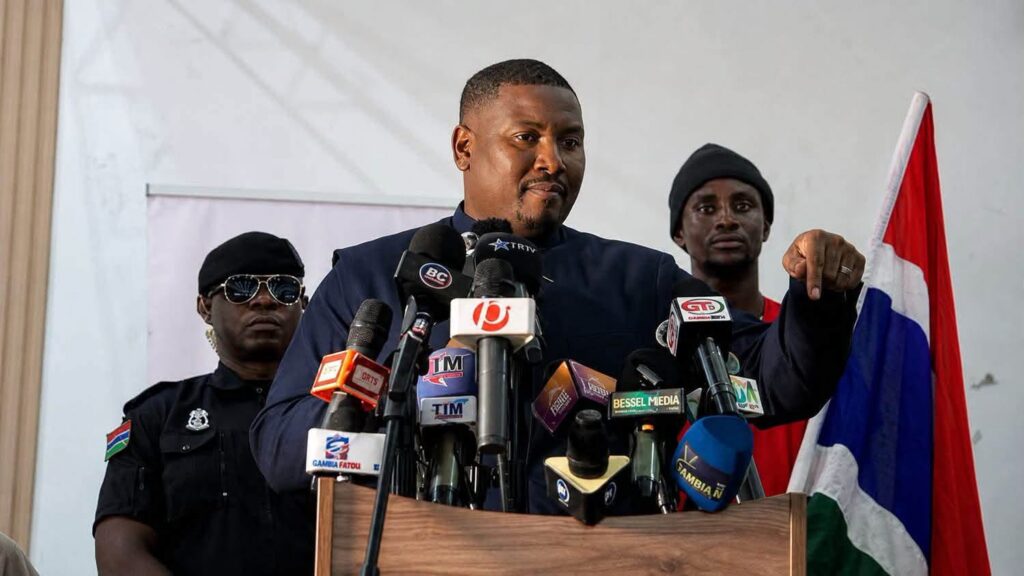
Coalition 2026 presidential candidate Talib Ahmed Bensouda has warned that the Gambian dalasi could lose further value against the CFA franc if President Adama Barrow secures another term, as he called for a change in economic leadership.
Speaking at a Coalition 2026 rally in Jookul, Niamina East, Central River Region South, Bensouda said the rising cost of exchanging CFA francs reflected what he described as wider economic challenges facing the country.
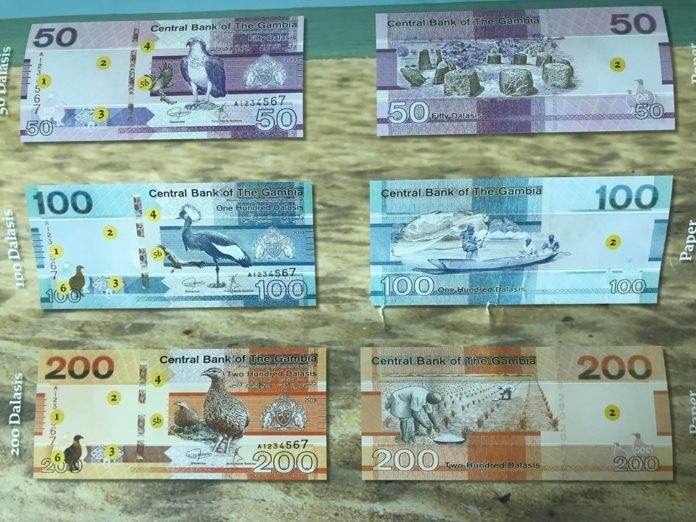
He claimed that an amount of CFA francs that previously cost between D200 and D230 now costs about D650, warning that the figure could rise to D1,000 if Barrow remains in office.
The figures and projection could not be independently verified, and Bensouda did not specify the amount of CFA francs used in the comparison.
“I studied economics, and I know something about economics and foreign exchange,” Bensouda said, arguing that his academic background had given him an understanding of currency and economic issues.
He said The Gambia needed leadership capable of addressing the factors affecting the value of the dalasi and improving the country’s economic situation.
Bensouda also criticised the government’s development record, saying his visits to Niamina had not convinced him that sufficient development had taken place under the current administration.
He urged voters to consider a change of leadership in the December 2026 presidential election, presenting Coalition 2026 as an alternative to the incumbent government.
The Coalition 2026 candidate also raised concerns about irregular migration, commonly referred to as the “backway”, accusing the government of failing to adequately address both the dangers associated with the journeys and the conditions that push young people to attempt them.
Bensouda said he had not heard President Barrow meaningfully address the issue, which continues to concern families and communities across The Gambia.
He further argued that young people needed greater representation in national decision-making.
Bensouda presented UNITE, a political party led by young people, as an example of the type of leadership he believes can better understand the economic pressures, limited opportunities and other challenges facing Gambian youth.
He said a younger generation of leaders could bring different perspectives to developing policies aimed at addressing those concerns.
By Adama Makasuba






Recent Comments