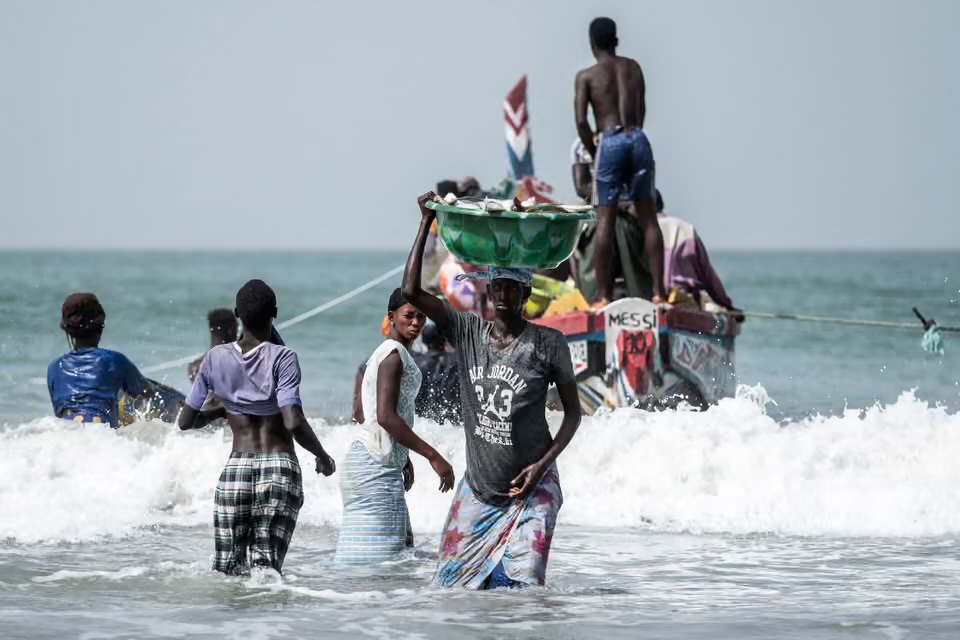
Fisheries authorities have seized 197 bags of juvenile fish, weighing an estimated 19.7 tonnes, in a major surveillance operation targeting illegal fishing activities.
The Permanent Secretary at the Ministry of Fisheries, Water Resources and National Assembly Matters, Buba Sanyang, said the juvenile fish were intercepted during a recent operation by a multi-agency surveillance team.
Each bag was said to weigh about 100kg, meaning the total seizure amounted to almost 20 tonnes of juvenile fish.
The operation involved officials from the Department of Fisheries and its Monitoring, Control and Surveillance unit, representatives from the Brufut Fishing Centre, police officers, the Gambia Navy and Anti-Crime Unit personnel.
PS Sanyang said the operation forms part of ongoing efforts by the ministry to strengthen fisheries monitoring and enforcement, improve compliance with national fisheries laws and protect the country’s marine resources.
He said surveillance teams regularly visit fishing areas to monitor the activities of fishermen and women and check whether fishing operations comply with the law.
It was during one of these routine exercises, he said, that the team encountered fishermen allegedly involved in the illegal movement of large quantities of juvenile fish.
“Imagine when those juvenile fish return back to the ocean, what impact would that have for us as a country,” Mr Sanyang said.
He said the operation also highlighted some of the challenges facing effective fisheries surveillance and provided authorities with an opportunity to identify areas where enforcement could be strengthened.
The surveillance operations are designed to monitor compliance with the Fisheries Act and regulations, detect illegal, unreported and unregulated fishing, inspect boats, fishing gear and catches, and investigate suspected illegal fishing activities.
The ministry is particularly concerned about the capture of juvenile fish before they reach maturity and reproduce.
PS Sanyang said the government was determined to tackle illegal, unreported and unregulated fishing, warning that the harvesting of juvenile fish was prohibited under Gambian law and could also undermine international efforts to protect fisheries resources.
He also addressed the participation of foreign nationals in the country’s fishing sector.
According to the Permanent Secretary, foreign fishermen are not permitted to conduct fishing activities in the country’s inland waters but are allowed to operate within designated coastal waters under the applicable rules.
He said the ministry also wants to create more opportunities for Gambians to participate directly in the fishing industry rather than allowing foreign operators to dominate the sector.
“We want to bridge the gap by creating avenue for our own Gambians to come to the sector,” he said.
PS Sanyang disclosed that the ministry was working towards procuring fibre boats to encourage more Gambians to enter the fishing business.
He said increasing Gambian participation could also help address fish shortages that sometimes occur when foreign fishermen return to their countries during periods such as the Koriteh feast.
He said such departures can affect fish supplies, particularly around coastal communities, and can leave some fish landing sites with reduced activity.
The latest seizure highlights the continuing pressure on The Gambia’s fisheries resources and the authorities’ efforts to prevent illegal practices that could threaten fish stocks and the livelihoods of communities dependent on fishing.
The ministry said stronger surveillance, enforcement and greater participation by Gambians will be critical to ensuring the country’s fisheries remain productive for future generations.
By Adama Makasuba







Recent Comments